Post covid Alzheimer's
June 16, 2026
22 min
Full
180 of 364
June 16, 2026
Post covid Alzheimer's
0:00 / 22:39
Excerpt playback isn’t available for this episode — use the full-episode link.
Search the Record
Moment search isn’t open for this episode yet
When it opens, you’ll be able to type any phrase and jump straight to the second it was said.
Dr John Campbell Episodes Around June 16, 2026
Episode 180 of 364 — walk the feed in the order it was published.








 22:39This episode
Post covid Alzheimer's








Summary
69% higher risk of Alzheimer's for older COVID survivors
https://www.cidrap.umn.edu/news-perspective/2022/09/possible-69-higher-risk-alzheimers-older-covid-survivors
Older COVID-19 survivors,
69% higher risk of developing Alzheimer's disease,
within 1 year of infection
Medical records of 6,245,282
65 years and older
Medical visits but no previous diagnosis of Alzheimer's disease
February 2020 to May 2021
410,748 participants tested positive for COVID-19
5,834,534 did not test positive
COVID-19 survivors had a 69% higher risk of a new diagnosis of Alzheimer's disease within 1 year of infection than their uninfected peers
Hazard ratio 1.69; 95% (1.53 to 1.72)
Most at risk
Ages 85 and older, HR = 1.89
Women, HR = 1.82
Association of COVID-19 with New-Onset Alzheimer’s Disease
https://content.iospress.com/articles/journal-of-alzheimers-disease/jad220717
Journal of Alzheimer's Disease, vol. 89, no. 2, pp. 411-414, 2022
13th September 2022
Infectious etiology of Alzheimer’s disease, postulated for decades
So, is SARS-CoV-2 infection associated with increased risk for Alzheimer’s disease?
Retrospective cohort study
N = 6,245,282 older adults (age ≥65 years),
People with COVID-19 were at significantly increased risk for new diagnosis of Alzheimer’s disease
Within 360 days after the initial COVID-19 diagnosis
Propensity-score matching
COVID-19 cohort = 0.68%
non-COVID-19 cohort = 0.35%
(hazard ratio or HR:1.69)
TriNetX Analytics Platform
de-identified electronic health records
Over 95 million patients
Inpatient and outpatient visits
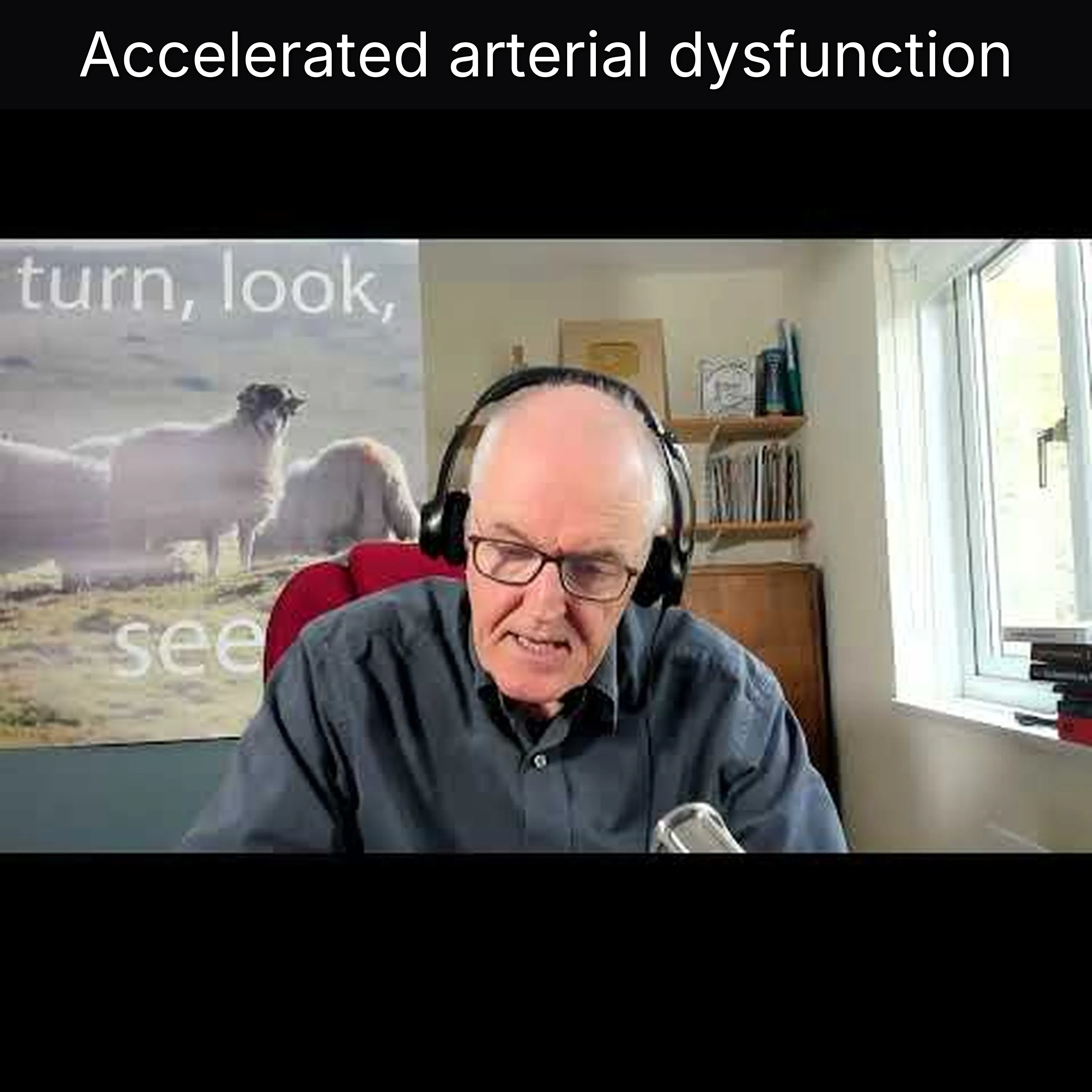
68 health care organizations
28% of the US population
50 states, covering diverse geographic, age, race/ethnic, income, and insurance groups
Our findings call for research to understand the underlying mechanisms and for continuous surveillance of long-term impacts of COVID-19 on Alzheimer’s disease
Not clear whether COVID-19 triggers or accelerates development of Alzheimer's disease
SARS-CoV-2 has been associated with inflammation and central nervous system disorders
Prior infections, especially viral infections, and inflammation
Dr. Pamela Davis
We thought we had turned some of the tide on it by reducing general risk factors such as hypertension, heart disease, obesity and a sedentary lifestyle