
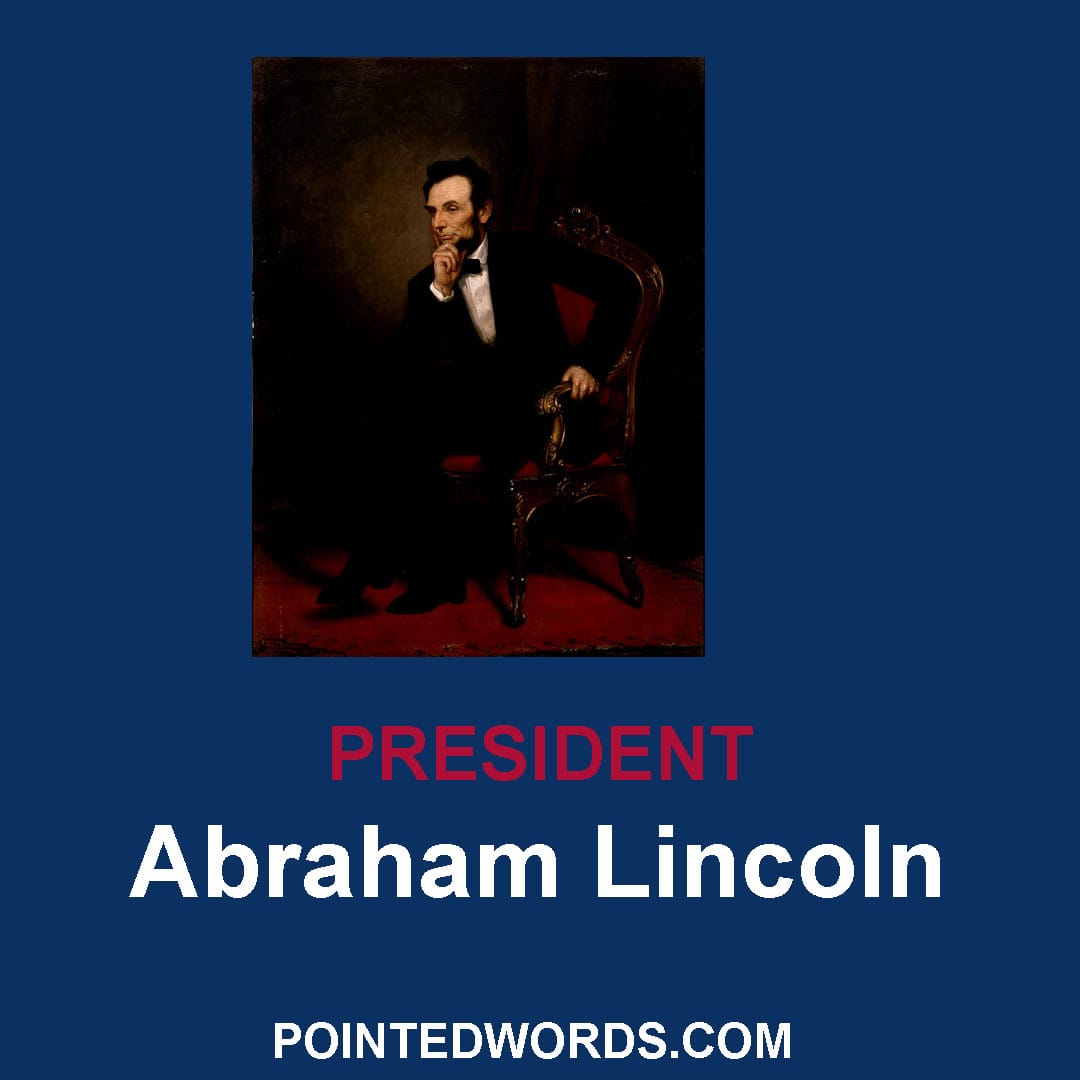
Profile of President Abraham Lincoln
Abraham Lincoln was the 16th President of the United States (1861–1865). The first President from the newly formed Republican Party, he successfully led the nation through its greatest moral, constitutional, and political crisis: the American Civil War. He fundamentally redefined the purpose of the United States. Initially declaring that his paramount objective was to save the Union—with or without slavery—he evolved to issue the Emancipation Proclamation in 1863, transforming the war into a crusade to abolish human bondage. Lincoln wielded unprecedented executive power. To prevent the border states from seceding and to suppress rebellion, he suspended the writ of habeas corpus, arrested secessionist lawmakers, and authorized the shutdown of anti-war newspapers, sparking intense debates about presidential overreach during wartime. Beyond the Civil War, his domestic legacy fundamentally built the modern American West. In 1862, he signed the Homestead Act (granting land to Western settlers), the Pacific Railway Act (funding the first Transcontinental Railroad), and the Morrill Land-Grant Act (creating agricultural and mechanical colleges). Just five days after the surrender of the primary Confederate army at Appomattox Court House, Lincoln was assassinated by Confederate sympathizer John Wilkes Booth at Ford's Theatre on April 14, 1865, becoming the first U.S. President to be assassinated. "He inherited a shattered nation, waged the bloodiest war in American history to save it, and destroyed the institution of slavery in the process. Abraham Lincoln is the definitive American President." Day 56 | Abraham Lincoln: The Savior of the Union The mythology of Abraham Lincoln is so universally known that it often obscures the brilliant, pragmatic, and fiercely ambitious politician underneath. Born in a dirt-floor log cabin in Hardin County, Kentucky, in 1809, Lincoln’s early life was defined by grueling physical labor and crushing poverty. Largely self-educated by reading borrowed books by the firelight, he moved to Illinois, where he failed in business but found his true calling in the law and Whig politics. Lincoln served a single, unremarkable term in the U.S. House of Representatives in the 1840s, where his opposition to the Mexican-American War made him deeply unpopular back home. He returned to his Springfield law practice, seemingly finished with national politics. However, the passage of the Kansas-Nebraska Act in 1854—which opened the Western territories to slavery—drew him back into the arena. Joining the newly formed Republican Party, Lincoln challenged political giant Stephen A. Douglas for the U.S. Senate in 1858. Though he lost the election, the legendary "Lincoln-Douglas Debates" elevated him to national stardom. His eloquent, razor-sharp argument that "A house divided against itself cannot stand" became the moral rallying cry for the North. Elected President in a four-way race in 1860, Lincoln won the Electoral College without carrying a single Southern state. In response to his election, seven Southern states seceded before he even took the oath of office, forming the Confederacy and seizing federal property. When Confederate forces fired on Fort Sumter in April 1861, the Civil War began. As Commander-in-Chief, Lincoln was a master of political strategy. He constructed a "Team of Rivals" cabinet, appointing the very men who had run against him for the Republican nomination—William Seward, Salmon P. Chase, and Edward Bates—ensuring every faction of the North was represented in his administration. He suffered through years of devastating military defeats and incompetent generals, constantly clashing with cautious commanders like George McClellan, before finally finding his relentless wartime architect in Ulysses S. Grant. Politically, his defining masterstroke was the Emancipation Proclamation. Waiting for a...
February 22, 2026
8 min
256 of 290
February 22, 2026
Profile of President Abraham Lincoln
0:00 / 8:09
Excerpt playback isn’t available for this episode — use the full-episode link.
Search the Record
Moment search isn’t open for this episode yet
When it opens, you’ll be able to type any phrase and jump straight to the second it was said.
Lisa McClain Episodes Around February 22, 2026
Episode 256 of 290 — walk the feed in the order it was published.
 8:09This episode
Profile of President Abraham Lincoln
Summary
Abraham Lincoln was the 16th President of the United States (1861–1865). The first President from the newly formed Republican Party, he successfully led the nation through its greatest moral, constitutional, and political crisis: the American Civil War.
He fundamentally redefined the purpose of the United States. Initially declaring that his paramount objective was to save the Union—with or without slavery—he evolved to issue the Emancipation Proclamation in 1863, transforming the war into a crusade to abolish human bondage.
Lincoln wielded unprecedented executive power. To prevent the border states from seceding and to suppress rebellion, he suspended the writ of habeas corpus, arrested secessionist lawmakers, and authorized the shutdown of anti-war newspapers, sparking intense debates about presidential overreach during wartime.
Beyond the Civil War, his domestic legacy fundamentally built the modern American West. In 1862, he signed the Homestead Act (granting land to Western settlers), the Pacific Railway Act (funding the first Transcontinental Railroad), and the Morrill Land-Grant Act (creating agricultural and mechanical colleges).
Just five days after the surrender of the primary Confederate army at Appomattox Court House, Lincoln was assassinated by Confederate sympathizer John Wilkes Booth at Ford's Theatre on April 14, 1865, becoming the first U.S. President to be assassinated.
"He inherited a shattered nation, waged the bloodiest war in American history to save it, and destroyed the institution of slavery in the process. Abraham Lincoln is the definitive American President."
Day 56 | Abraham Lincoln: The Savior of the Union
The mythology of Abraham Lincoln is so universally known that it often obscures the brilliant, pragmatic, and fiercely ambitious politician underneath. Born in a dirt-floor log cabin in Hardin County, Kentucky, in 1809, Lincoln’s early life was defined by grueling physical labor and crushing poverty. Largely self-educated by reading borrowed books by the firelight, he moved to Illinois, where he failed in business but found his true calling in the law and Whig politics.
Lincoln served a single, unremarkable term in the U.S. House of Representatives in the 1840s, where his opposition to the Mexican-American War made him deeply unpopular back home. He returned to his Springfield law practice, seemingly finished with national politics. However, the passage of the Kansas-Nebraska Act in 1854—which opened the Western territories to slavery—drew him back into the arena. Joining the newly formed Republican Party, Lincoln challenged political giant Stephen A. Douglas for the U.S. Senate in 1858. Though he lost the election, the legendary "Lincoln-Douglas Debates" elevated him to national stardom. His eloquent, razor-sharp argument that "A house divided against itself cannot stand" became the moral rallying cry for the North.