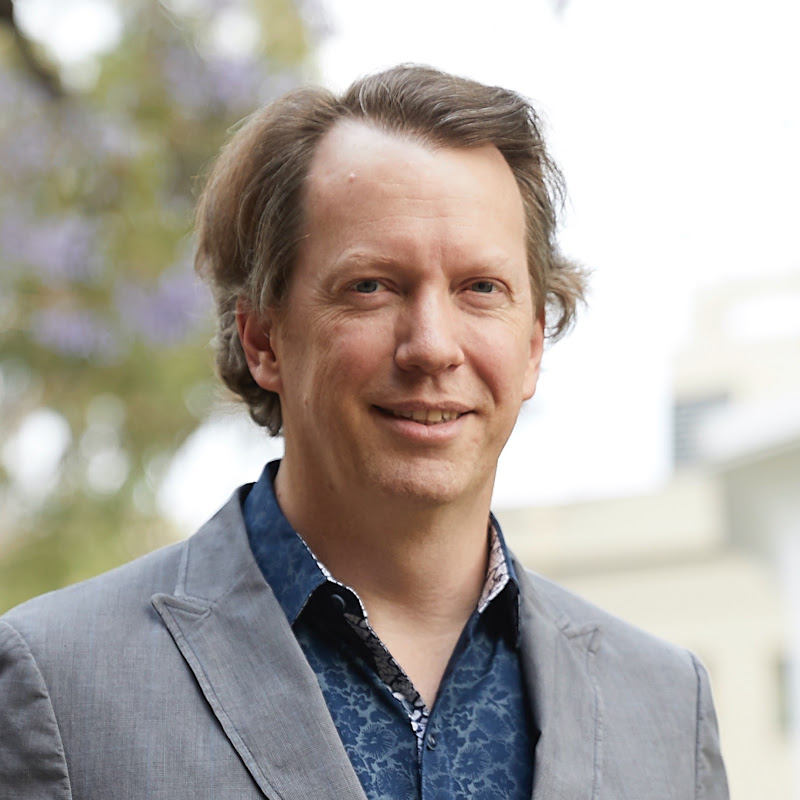
151 | Jordan Ellenberg on the Mathematics of Political Boundaries
June 14, 2021
1 hr 23 min
151
Full
164 of 432

Episode 151 · June 14, 2021
151 | Jordan Ellenberg on the Mathematics of Political Boundaries
0:00 / 1:23:44
Excerpt playback isn’t available for this episode — use the full-episode link.
Search the Record
Moment search isn’t open for this episode yet
When it opens, you’ll be able to type any phrase and jump straight to the second it was said.
Sean Carroll Episodes Around June 14, 2021
Episode 164 of 432 — walk the feed in the order it was published.














 1:23:44This episode
151 | Jordan Ellenberg on the Mathematics of Political Boundaries














Summary
<p>Any system in which politicians represent geographical districts with boundaries chosen by the politicians themselves is vulnerable to gerrymandering: carving up districts to increase the amount of seats that a given party is expected to win. But even fairly-drawn boundaries can end up quite complex, so how do we know that a given map is unfairly skewed? Math comes to the rescue. We can ask whether the likely outcome of a given map is very unusual within the set of all possible reasonable maps. That's a hard math problem, however — the set of all possible maps is pretty big — so we have to be clever to solve it. I talk with geometer Jordan Ellenberg about how ideas like random walks and Markov chains help us judge the fairness of political boundaries.</p> <p><em>Support Mindscape on </em><a href="https://www.patreon.com/seanmcarroll" rel="noopener noreferrer" target="_blank"><em>Patreon</em></a><em>.</em></p> <p>Jordan Ellenberg received his Ph.D. in mathematics from Harvard University in 1998. He is currently the John D. MacArthur professor of mathematics at the University of Wisconsin. He competed in the International Mathematical Olympiad three times, winning a gold medal twice. Among his awards are the MAA Euler Book Prize and a Guggenheim Fellowship. He is the author of <a href="https://www.jordanellenberg.com/book/how-not-to-be-wrong/" rel="noopener noreferrer" target="_blank"><em>How Not to Be Wrong</em></a> and the novel <a href="https://www.jordanellenberg.com/book/the-grasshopper-king/" rel="noopener noreferrer" target="_blank"><em>The Grasshopper King</em></a>. His new book is <a href="https://www.jordanellenberg.com/book/shape/" rel="noopener noreferrer" target="_blank"><em>Shape: The Hidden Geometry of Information, Biology, Strategy, Democracy, and Everything Else</em></a>.</p> <ul> <li><a href="https://www.jordanellenberg.com/" rel="noopener noreferrer" target="_blank">Web site</a></li> <li><a href="https://people.math.wisc.edu/~ellenber/" rel="noopener noreferrer" target="_blank">Wisconsin web page</a></li> <li><a href="https://scholar.google.com/citations?user=b7P6YbkAAAAJ&hl=en" rel="noopener noreferrer" target="_blank">Google Scholar publications</a></li> <li><a href="https://www.amazon.com/Jordan-Ellenberg/e/B001K8IUCG" rel="noopener noreferrer" target="_blank">Amazon author page</a></li> <li><a href="https://en.wikipedia.org/wiki/Jordan_Ellenberg" rel="noopener noreferrer" target="_blank">Wikipedia</a></li> <li><a href="https://twitter.com/JSEllenberg" rel="noopener noreferrer" target="_blank">Twitter</a></li> </ul> <p><br /></p>
Episode details and artwork are published by the show’s own feed. Sentinel plays short cited excerpts and links every episode back to its publisher.