
Amna Nawaz
@PBSNewsHour·5.3M subscribers·62.2K videos
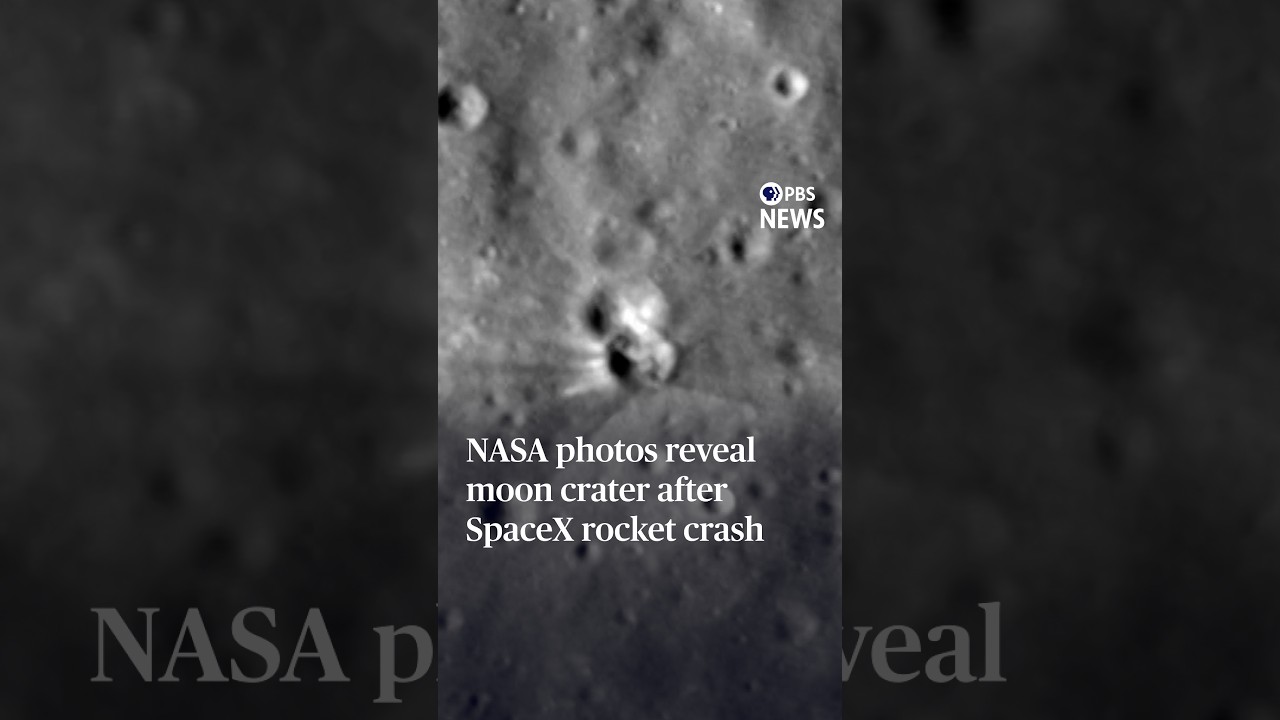
NASA photos reveal moon crater after SpaceX rocket crash
Posted
August 19, 2026
Views
8,456
Likes
480
Engagement
5.68%
August 19, 2026
8,456
480
5.68%
Every word spoken in this episode is indexed. Type any phrase to jump straight to the moment it was said.
Type any word or phrase that may have been spoken. Click a result to seek the player to that exact moment.
Try a name, a topic, or a quoted line
 1:39Now Playing
NASA has released the first images of the crater caused by a SpaceX rocket that crashed into the moon on Aug. 5.
The 60-foot-wide crater was photographed recently by NASA’s Lunar Reconnaissance Orbiter, capturing where the Falcon 9 rocket’s upper stage slammed into the moon at 5,400 miles per hour. Previously, the rocket spent more than a year of floating through space.
On one hand, the debris plume from the collision has provided scientists with a rare research opportunity to learn more about what materials make up the moon.
Yet, the SpaceX collision is also highlighting wider concerns about the amount of space debris spinning around Earth.
Tim McPhillips and Miles O'Brien explain.
Sign up for Here's The Deal with Lisa Desjardins
Subscribe for exclusive content in our newsletters
PBS News podcasts
Stream your PBS favorites with the PBS app
Find more from PBS News at
Subscribe to our YouTube channel
Sentinel Indexing in Progress
Metadata and chapters are available. Claim extraction for this episode is pending.
All video content is delivered via YouTube embedded players in accordance with the YouTube Terms of Service. Sentinel provides research tools that promote discovery and accountability across political media.