Bbc News
@bbcnews·20.1M subscribers·32.9K videos
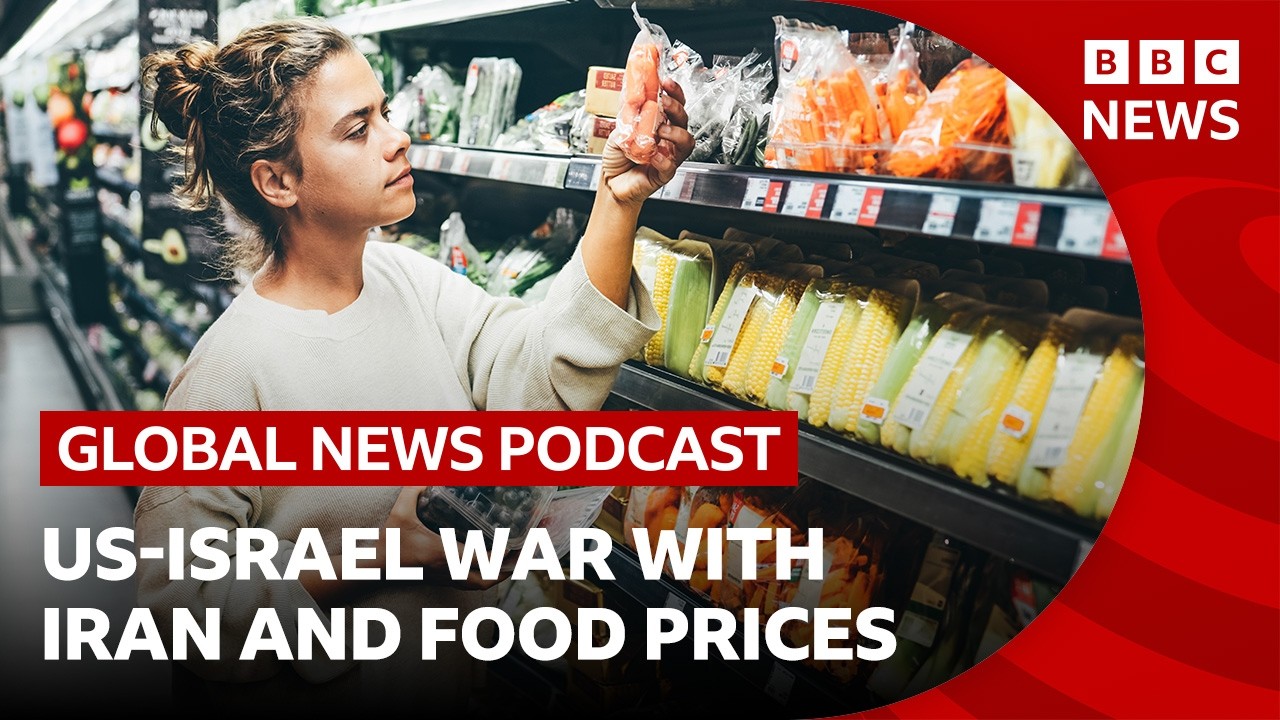
How the Iran war could raise food prices | Global News Podcast
Posted
March 23, 2026
Views
55,627
Likes
774
Comments
154
Engagement
1.67%
March 23, 2026
55,627
774
154
1.67%
Every word spoken in this episode is indexed. Type any phrase to jump straight to the moment it was said.
Type any word or phrase that may have been spoken. Click a result to seek the player to that exact moment.
Try a name, a topic, or a quoted line
 9:32Now Playing
The US-Israel war with Iran continues to create turbulence for the global economy. The head of the International Energy Agency has said the world is facing a worse crisis than the oil shock of the 1970s and the fallout from the Ukraine war combined.
It's not just a problem of fuel supply — it's the uncertainty of what will happen to the cargos of ships that can't make the journey through the Strait of Hormuz.
Iran's effective blockade of the Strait has led to higher costs for fuel and fertiliser, both crucial elements of food production. About a third of all fertilizer shipped globally goes through the waterway from Gulf states, and there are now warnings about the impact on global supplies and food prices.
Farmers say that they will have to pass on the higher costs of growing to consumers, making groceries more expensive. Plus, planting seasons are being missed. The United Nations has warned that an additional 45 million people could face acute hunger if the war lasts through June.
We speak to Michelle Fleury, the BBC's business correspondent in New York.
New episodes of the Global News Podcast are published twice a day. You can listen here
And you can find more of our YouTube episodes here
#Food #Iran #BBCNews
Sentinel Indexing in Progress
Metadata and chapters are available. Claim extraction for this episode is pending.
All video content is delivered via YouTube embedded players in accordance with the YouTube Terms of Service. Sentinel provides research tools that promote discovery and accountability across political media.