
Bbc
@bbc·15.6M subscribers·32.3K videos
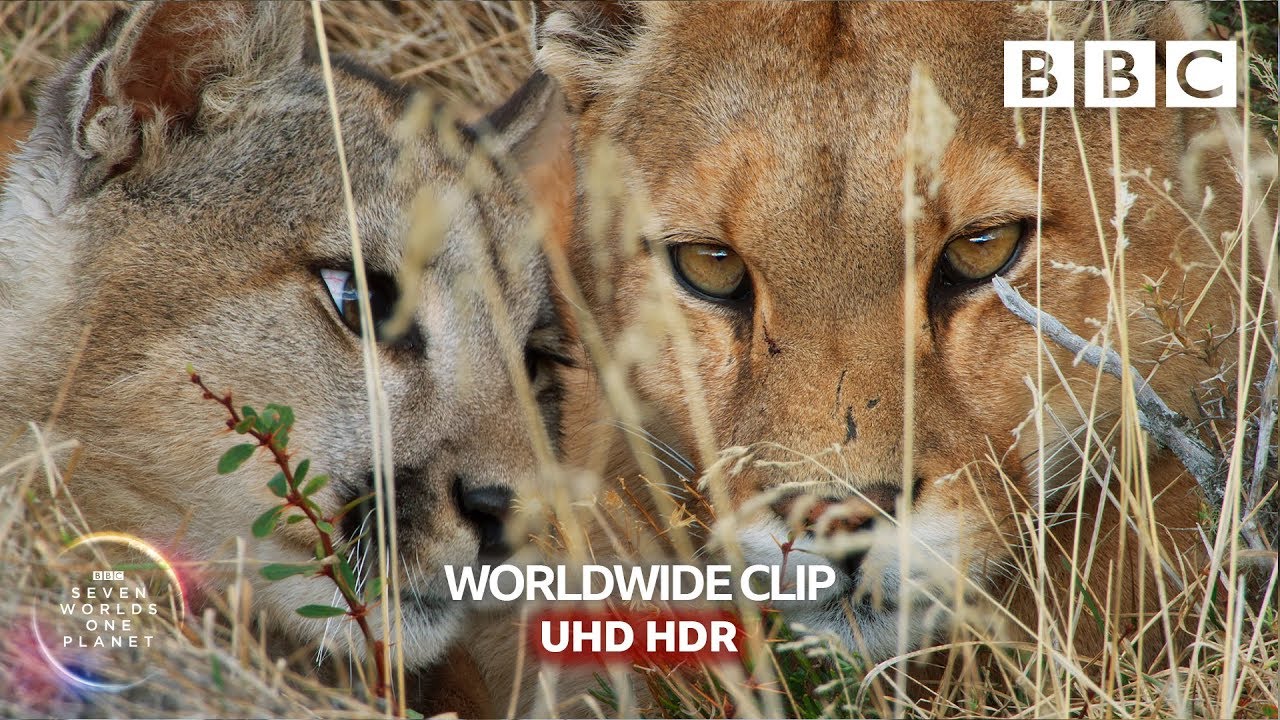
Puma mum risks serious injury hunting guanaco for hungry cubs - Seven Worlds, One Planet | BBC Earth
Posted
November 10, 2019
Views
121,538
Likes
1,140
Comments
94
Engagement
1.02%
November 10, 2019
121,538
1,140
94
1.02%
Every word spoken in this episode is indexed. Type any phrase to jump straight to the moment it was said.
Type any word or phrase that may have been spoken. Click a result to seek the player to that exact moment.
Try a name, a topic, or a quoted line
 3:20Now Playing
Subscribe and 🔔 to the BBC 👉
Watch the BBC first on iPlayer 👉 Subscribe and 🔔 to BBC Earth 👉
Presented in UHD HDR. A mother puma takes on South America's most challenging prey in this intense chase. Pumas are big cats, but guanacos, relatives of the camel, stand at two metres tall and weight three times the amount of a female puma. Will this big cat mother be able to provide a meal for her growing cubs?
Pumas are the widest ranging mammal in the Americas, thanks to their extraordinary adaptability and an eye for opportunity. They hold the Guinness World Record for more names than any other animal including mountain lion, cougar and the night screamer.
Asia is the largest and most extreme continent on our planet, stretching from the Arctic Circle in the north to the tropical forests on the equator. The animals here face the hottest deserts, tallest jungles and highest mountains found anywhere on Earth. But the continent has not always looked like this. These extreme worlds were created when India collided with the rest of Asia 30 million years ago, shaping the continent as we know it today. Animals here have adapted to the extreme environments in almost unbelievable ways.
In the frozen lands of the Kamchatka peninsula in Russia, bears seek out active volcanoes – despite the dangers. And on the Siberian coast, a remarkable spectacle appears for a few weeks during the summer – tens of thousands of walruses haul themselves on to a beach in one of the largest gatherings of mammals seen anywhere in the world. In China, mysterious blue-faced monkeys walk upright through some of the least-explored forests on Earth, whilst the baking deserts of Iran are home to what has to be the world's most bizarre snake. On the barren plateaus of India, garishly coloured lizards fight like miniature kung fu masters as they try to find a mate before they die.
The south of the continent couldn't be more different. When India collided with Asia, the Himalayas were formed. These mountains blocked clouds, helping to create the monsoon. Heavy rains fell and tropical forests, full of life, developed to the south. Here, baby orangutans learn to climb the tallest jungle trees on the planet and a female Sumatran rhino - one of the rainforest's rarest inhabitants – sings a mournful and haunting song. Will anyone return her call? These forests - home to thousands of incredible species - are in danger of being lost forever. Under threat from deforestation and human development, today the largest continent on Earth is running out of space for its wildlife. But there's hope in Asia's tropical waters, where endangered whale sharks gather to find food and get a helping hand from a surprising source.
Revealing the extraordinary wildlife stories and unseen wilderness of our seven unique continents.
Narrator: David Attenborough.
Seven Worlds, One Planet | Episode 3 South America | BBC Earth
#BBC #BBCSevenWorldsOnePlanet #BBCiPlayer #BBCEarth
Sentinel Indexing in Progress
Metadata and chapters are available. Claim extraction for this episode is pending.
All video content is delivered via YouTube embedded players in accordance with the YouTube Terms of Service. Sentinel provides research tools that promote discovery and accountability across political media.