
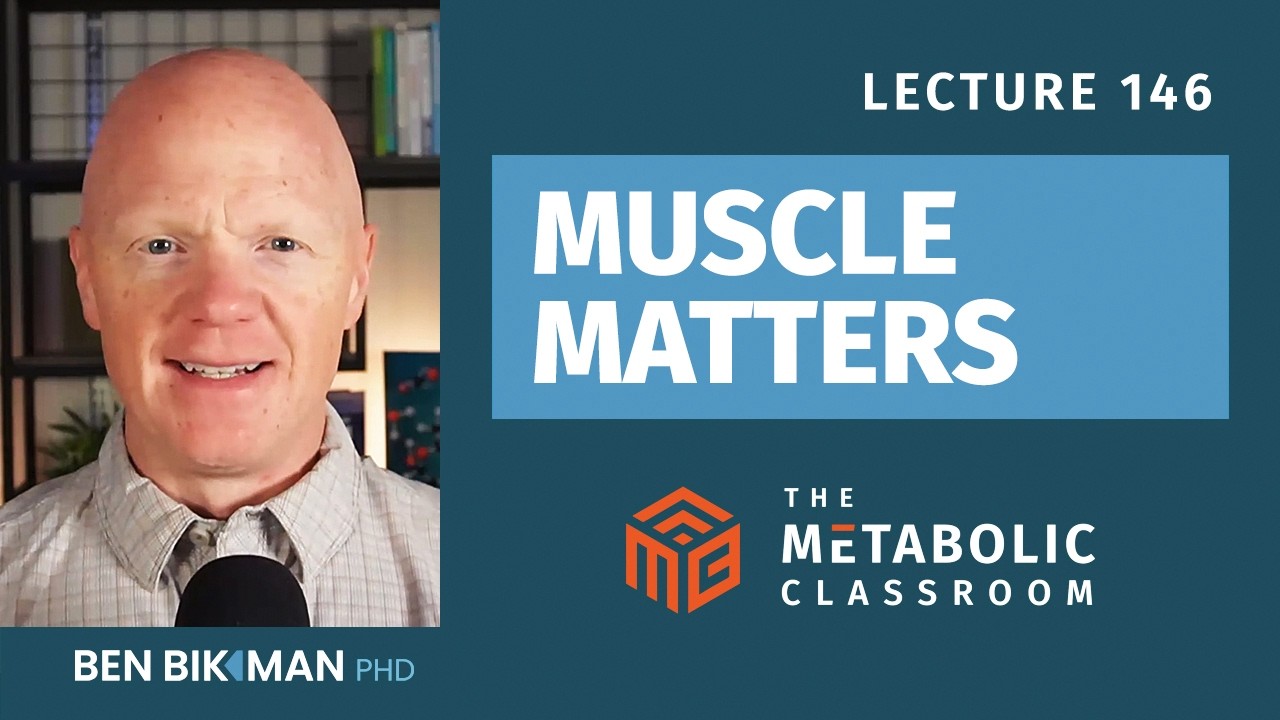
146: The Muscle Biology Behind Diabetes Risk
April 20, 2026
20,574
1,259
74
6.48%
Search the Record
IndexedEvery word spoken in this episode is indexed. Type any phrase to jump straight to the moment it was said.
Type any word or phrase that may have been spoken. Click a result to seek the player to that exact moment.
Try a name, a topic, or a quoted line
Ben Bikman Episodes Around April 20, 2026
See what was published immediately before and after this episode.



 35:02Now Playing
146: The Muscle Biology Behind Diabetes Risk



Chapters
YouTube Description
as posted by the channel📢 Ask Dr. Bikman’s Digital Mind (multilingual):
📢 Dr. Bikman’s Community & Coaching Site
Topic:
Muscle is the body’s main site of insulin-stimulated glucose disposal, but different muscle fiber types handle glucose differently, with slow-twitch type 1 fibers generally supporting better insulin sensitivity. Even so, the most important factor is not just fiber type, but total muscle mass—making exercise, especially resistance training, a powerful tool for protecting metabolic health.
Summary:
In this lecture, Dr. Ben Bikman explores how skeletal muscle fiber type influences insulin sensitivity and diabetes risk. While muscle is the body’s largest site of insulin-stimulated glucose disposal, not all muscle behaves the same. Different fiber types carry different amounts of the molecular machinery needed to respond to insulin, take up glucose, store it, and burn it.
He begins by distinguishing the two major muscle fiber types: type 1 slow-twitch and type 2 fast-twitch. Type 1 fibers are more oxidative, with greater mitochondrial density, while type 2 fibers are more glycolytic and fatigue more quickly. Importantly, type 1 fibers contain more insulin receptors, GLUT4 transporters, and key enzymes involved in glucose handling, helping explain why a higher proportion of these fibers is associated with better insulin sensitivity.
Dr. Bikman then connects these differences to real-world metabolic risk. Studies show that individuals with fewer type 1 fibers can have significantly lower insulin sensitivity—even when they appear healthy by standard markers. He also explores how these patterns may contribute to ethnic differences in diabetes risk across populations.
The key takeaway is that fiber type is not destiny. While genetics plays a role, exercise can improve muscle’s glucose-disposal capacity. Most importantly, total muscle mass matters more than fiber type alone, making resistance training a powerful tool for protecting metabolic health.
References:
For complete show notes and references, we invite you to become an Insider subscriber. You’ll enjoy realtime, livestream Metabolic Classroom access which includes live Q&A with Ben after the lecture, unlimited access to Dr. Bikman’s Digital Mind, adfree podcast episodes, show notes and references, and Ben’s Weekly Research Review Podcast. Learn more
Translation Notes:
You can click the gear icon at the bottom of this video to auto-translate captions. For example, to translate into Polish, select Subtitles, choose Auto-Translate, then first choose English, then choose Auto-Translate again, then choose Polish.)
Also, Dr. Bikman’s Digital Mind can interact with you in many languages
In addition, our channel has access to YouTube’s innovative “auto-dubbing” feature. The process supports translations from English into many languages, with more to come. Click on the gear icon, then choose “Audio track” to access. (This availability is often delayed several weeks or more, so check back often.)
Timestamps (approximate):
NOTE: The information presented is not intended to be a substitute for professional medical advice, diagnosis, or treatment. Dr. Bikman is not a clinician—and, he is not your doctor. Always seek the advice of your own qualified health providers with questions you may have regarding medical conditions.
#MuscleFiberTypes #InsulinResistance #Type2Diabetes #MetabolicHealth #MuscleAndMetabolism #SlowTwitch #FastTwitch #GlucoseDisposal #InsulinSensitivity #ResistanceTraining #AerobicExercise #MuscleMass #DiabetesRisk #EthnicityAndHealth #MetabolismMatters #DrBenBikman #MetabolicClassroom #BloodSugarControl #ExerciseScience #HealthScience
Ben’s favorite yerba mate and fiber
Exogenous ketonesA highquality option is the NSFcertified goBHB from Clean Form Nutrition, where you can use the code BEN10 for a 10% discount
Ben’s favorite mealreplacement shake(discountBEN10)
Guests & Subjects Covered
Sentinel Indexing in Progress
Metadata and chapters are available. Claim extraction for this episode is pending.
All video content is delivered via YouTube embedded players in accordance with the YouTube Terms of Service. Sentinel provides research tools that promote discovery and accountability across political media.