Big Think
@bigthink·8.8M subscribers·10.1K videos
Howard Bragman on Social Networking
Posted
January 8, 2009
Views
1,222
Likes
9
Engagement
0.74%
January 8, 2009
1,222
9
0.74%
Every word spoken in this episode is indexed. Type any phrase to jump straight to the moment it was said.
Type any word or phrase that may have been spoken. Click a result to seek the player to that exact moment.
Try a name, a topic, or a quoted line
 1:43Now Playing
New videos DAILY
Join Big Think Edge for exclusive video lessons from top thinkers and doers
----------------------------------------------------------------------------------
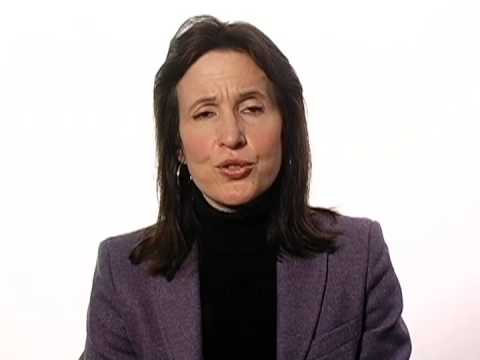
With over 100 active science missions, from the Hubble Space Telescope to studying ice shifts on Earth, working at NASA can be a dream come true for any astronomer or astrophysicist. Assistant director for Science Communication at NASA's Goddard Space Flight Center, Michelle Thaller explains what it's like to work at the world's most famous space and aeronautics organization.
----------------------------------------------------------------------------------
MICHELLE THALLER
Dr. Michelle Thaller is an astronomer who studies binary stars and the life cycles of stars. She is Assistant Director of Science Communication at NASA. She went to college at Harvard University, completed a post-doctoral research fellowship at the California Institute of Technology (Caltech) in Pasadena, Calif. then started working for the Jet Propulsion Laboratory's (JPL) Spitzer Space Telescope. After a hugely successful mission, she moved on to NASA's Goddard Space Flight Center (GSFC), in the Washington D.C. area. In her off-hours often puts on about 30lbs of Elizabethan garb and performs intricate Renaissance dances. For more information, visit
NASA.
----------------------------------------------------------------------------------
TRANSCRIPT:
MICHELLE THALLER: Hey Eleya, thank you for asking me about my day. What do I do at NASA. One of the things that I love about being a scientist is that I don’t really have a typical day; I do lots of different things.
So for example, one of my duties at NASA is thinking about the communications, thinking about all of our websites and our Twitter accounts and our Instagram feeds all of the ways that we get our information out to the public.
Right now at NASA we have over 100 active science missions, everything from rovers on Mars to the Hubble Space Telescope, to missions to Jupiter, to earth science missions that are tracking, for example, how the ice is melting in Greenland. And every single one of those 100 missions is putting out wonderful information and making discoveries. And I want people to know about them. I want people to meet the scientists that are doing this wonderful work.
So I actually try to manage all of the different information that’s coming in from all these missions find a good way to get it out to the public. And then I track and see how many people are liking us on Facebook, and “Was that press release particularly successful?”
So I’m a scientist that has specialized in communications. Sometimes I go on trips, I’ll be doing talks, for example, at a conference somewhere in Europe. I actually love coming to the United Kingdom.
Sometimes rarely for me, but I still do some scientific research, so I’ve been to telescopes all over the world.
When I was getting my doctorate I mainly used telescopes that were in Australia and South America and also in Arizona at Kitt Peak, and I used things like the Hubble Space Telescope. So sometimes you’re actually traveling somewhere to make your own discoveries and then going back to your office with your data and working on all of the different measurements you took and trying to make discoveries out of that.
It’s also very important for scientist to share their discoveries. If you make a wonderful discovery at a telescope but nobody ever hears about it, then that was basically a waste of time and money for you to do that. So we write about our discoveries in scientific journals, other scientists read them, and then we can collaborate and science moves forward, because we always work together as a group. And nothing in science happens individually, you’re always working with people.
So you’re going to meetings, you’re talking about strategy: “How are we going to fund a new spacecraft?” We’ve just been on a wonderful observing campaign where we observed a new kind of star, “What happens next? Who is going to make follow up discoveries?”
One of the things I love about being a scientist is working with really passionate, wonderful, friendly people and planning how we’re going to continue the science that we started.
So I love not having a typical day. My husband, for example, is an engineer and he actually builds and tests spacecraft.
So normally in his day he’s wearing something called a clean suit and that is a white plastic suit that covers all of you, your hair, your face and everything, so that as you work on spacecraft the spacecraft keep entirely clean. And he always texts me on his iPhone a little bunny symbol when he’s putting on his bunny suit. We call that a bunny suit, your cl...
For the full transcript, check out
Sentinel Indexing in Progress
Metadata and chapters are available. Claim extraction for this episode is pending.
All video content is delivered via YouTube embedded players in accordance with the YouTube Terms of Service. Sentinel provides research tools that promote discovery and accountability across political media.