Big Think
@bigthink·8.8M subscribers·10.1K videos
A Quick and Painless Black Hole | Melissa Franklin | Big Think
Posted
April 24, 2012
Views
298
Likes
5
Comments
1
Engagement
2.01%
April 24, 2012
298
5
1
2.01%
Every word spoken in this episode is indexed. Type any phrase to jump straight to the moment it was said.
Type any word or phrase that may have been spoken. Click a result to seek the player to that exact moment.
Try a name, a topic, or a quoted line
Episode Timeline
Every episode in order around the one you’re watching — click any card and the page flips straight to it.
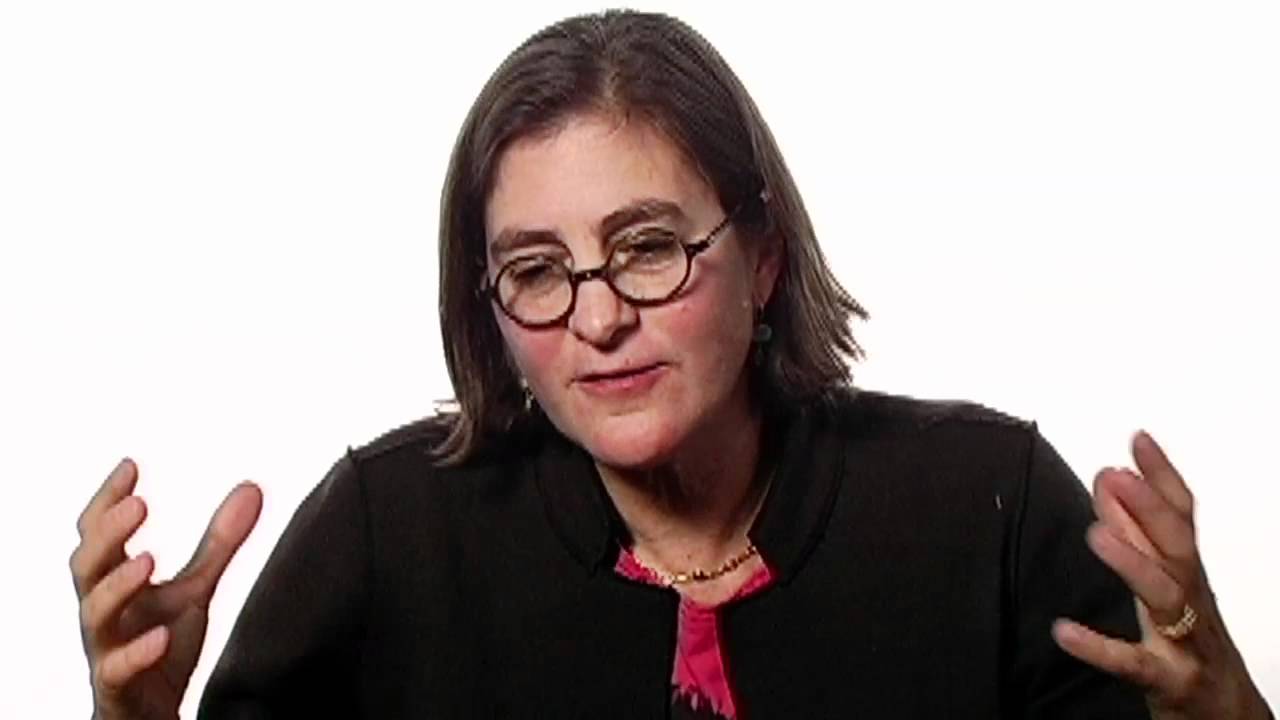 5:29Now Playing
A Quick and Painless Black Hole
New videos DAILY
Join Big Think Edge for exclusive videos
----------------------------------------------------------------------------------
Will the new Large Hadron Collider create an earth-consuming black hole? Highly unlikely, says the Harvard physicist, but if it did, “it wouldn’t be so bad.”
----------------------------------------------------------------------------------
Melissa Franklin:
Melissa Franklin is the first woman ever to achieve tenure in the Harvard physics department. She is an experimental particle physicist who has been working on the Collider Detector at Fermilab, an experiment designed generally to study the collisions of protons and anti-protons at the highest energies currently possible. In January, she will be working at the new Large Hadron Collider in Switzerland.
----------------------------------------------------------------------------------
TRANSCRIPT:
Question: What makes the Large Hadron Collider an important advance?
Melissa Franklin: Well, on the one hand, it’s just higher energy. Fermilab has a center of mass energy, total center matching 2TEV and Large Hadron Collider is 14TEV when it’s finally, after a while it will be 14 TEV. So, you’re just going to a higher energy which means you can really probe smaller distances, which you can make higher mass particles because you’ve got more energy. And so just from an experimentalist point of view, it’s just way cooler and we probably will see something interesting. From a theorist point of view, it reaches the energy where they say this symmetry breaking cause must show itself. It has to show itself, actually there’s an argument that probability is violated. The probability will be greater than one, unless we see something happening. So those are the two different views. So, in fact, the Large Hadron Collider is going to start at a lower energy than 14 TEVs, its going to start at 7 because there are some technical problems. And a lot of the experimentalists are still incredibly happy because for us it’s something new. You’re looking somewhere you’ve never looked before and it’s fascinating to see. The theorists are a little bit more grumpy. I don’t know if you’ve noticed, but in the New York Times and stuff, they’re very grumpy and they’re saying, “This is unacceptable.” Like I can’t believe it’s not going to turn on you and I’m getting old. That kind of a thing. So, those are the two different views. But everybody’s excited that it will turn on. It’s extremely difficult. These machines are extremely complicated. It’s extremely difficult to get them up and running. It usually takes a couple of years.
Question: What cool things could the LHC reveal?
Melissa Franklin: Okay, so I’m just interested to see what happens. There’s these string theorists, you probably know about them because they’re often in the news. And apparently they’re very smart. And they say there’s a new symmetry, which is very exciting. A new space-time symmetry called Super Symmetry so for all the particles we have they’re a Super Particle partners. Okay? Now, the symmetry would say that the Super Particle partners would have exactly the same mass as the particles, but that’s not true. We already know that. So, there’s a symmetry breaking there. But the String Theorists believe the Super Symmetry must exist even if incredibly badly broke. So they are absolutely hoping that we will find Super Symmetry and we are absolutely looking for them. And so, there’s a lot of experimentalists who do what the theorists say, unfortunately. And they are looking for Super Symmetry. And there’s other people who are looking – more renegade and I don’t know what they will find – or I will find.
Question: Is it a legitimate fear that the LHC could create an Earth-consuming black hole?
Melissa Franklin: Well, it’s a great idea, and people have written papers you know ten years ago. Could you create a really tiny black hole at a collider? And then the problem we were always thinking of, well how – this is funny because we were always thinking, well how would you know that you had created a black hole? Because it would decay immediately into – not only would decay, it would decay into hundreds of particles all very low energy and how could you tell? So, we were always thinking of not of the problem of creating a black hole, but how would we possibly see it before it’s completely gone?
Read the full transcript at
Sentinel Indexing in Progress
Metadata and chapters are available. Claim extraction for this episode is pending.
All video content is delivered via YouTube embedded players in accordance with the YouTube Terms of Service. Sentinel provides research tools that promote discovery and accountability across political media.