Big Think
@bigthink·8.8M subscribers·10.1K videos
Andrew Kuper Debates the Philosopher Peter Singer | Big Think
Posted
April 24, 2012
Views
10,308
Likes
104
Comments
43
Engagement
1.43%
April 24, 2012
10,308
104
43
1.43%
Every word spoken in this episode is indexed. Type any phrase to jump straight to the moment it was said.
Type any word or phrase that may have been spoken. Click a result to seek the player to that exact moment.
Try a name, a topic, or a quoted line
 5:33Now Playing
Andrew Kuper Debates the Philosopher Peter Singer
New videos DAILY
Join Big Think Edge for exclusive videos
----------------------------------------------------------------------------------
The president of LeapFrog Investments on why he disagrees with Peter Singer on global poverty.
----------------------------------------------------------------------------------
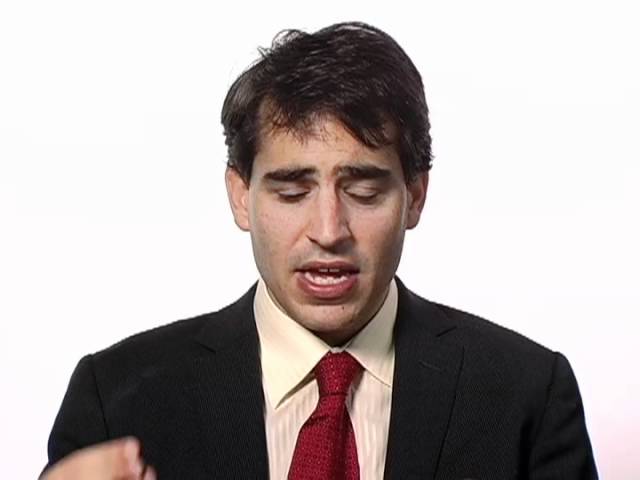
Andrew Kuper:
LeapFrog is the world’s first investment fund to focus on the insurance needs of low-income and financially excluded people. Launched by President Clinton and hailed by The Wall Street Journal and Private Equity International, LeapFrog has opened a new frontier for social investment and microfinance. Andy founded LeapFrog in January 2007, inspired by his extensive experience enabling entrepreneurs in emerging markets, and then co-built the firm with a team of former CEOs and pioneers in emerging markets insurance. Andy is a former Managing Director of Ashoka, which has financed and connected 2000 social entrepreneurs in over 60 countries. He worked with both Grameen and BRAC, the world's largest microfinance institutions, to market their social ventures. He also co-founded Kuper Research, which designed The Daily Sun, now sub-Saharan Africa's largest newspaper, with 5 million daily readers. Born and raised in South Africa, Andy is a serial social entrepreneur and author of books including Democracy Beyond Borders (Oxford) and Global Responsibilities (Routledge). He holds a PhD from Cambridge, where he was supervised by Nobel laureate Amartya Sen, who first stimulated Andy’s interest in market-based solutions to poverty.
----------------------------------------------------------------------------------
TRANSCRIPT:
Question: Why do you disagree with Peter Singer?
Andrew Kuper: Peter Singer and I had a really fun, fascinating and intensive knockdown debate about how we should address global poverty. Peter’s view is that we as individuals should give away a huge portion of our income to low income people and his reasoning is very interesting, he says, “Look, if you are walking to a lecture, say that you’re a lecturer or to your job, and you saw a child drowning in a puddle, you’re continuing to walk on to your lecture or job when you can rescue someone from almost certain death is morally reprehensible. And all you’re going to do is get your clothes muddy, maybe you’ll lose the clothes,” he says it’s a similar thing. By not giving away our income when we could be lifting people out of poverty that often kills them, we are in effect doing that morally reprehensible thing.
Now, I believe there’s a powerful emotional reaction to that by my difference with Peter is simple, I think that it’s not so easy in this complex global environment to get people out of the puddle. And that there are better mechanisms that we don’t disagree on getting people out of the puddle, there are much better mechanisms for helping people get out of poverty than just giving everything away.
Don’t get me wrong, I believe in charity, I just believe in one tool among many, many others. Now, why do I emphasize some of the others, I emphasize some of the others because I believe poverty is a systemic notion so you might give away a whole lot but if the system doesn’t include people if the economic system doesn’t include people, they’re not going to be lifted out of poverty. So you might give away money to people and it helps them to get food or something profoundly important like that or slowly increase their income but then you haven’t dealt with the macroeconomics of the country so the currency collapse and people are suddenly starving again.
Now, it goes well beyond that because now think about the use of your dollars because you could give them away but in South Africa, one of the and many, many developing countries, one of the major sources of income is tourism. The tourism industry supports millions and millions of people, it supports the economy, it’s the driver of the economy.
If you give everything to the point where you have just the bare subsistence amount to yourself, all of that goes away, there isn’t going to be that kind of system and a whole economic engine that employs millions and millions of people will simply disappear. Similarly you stop consuming higher end clothes, what happens to the millions of people in India, China, Sri Lanka, South Africa who are making those clothes? They’re going to be, probably, out of work so I think there’s a real danger in simplistic thinking, “I’ll give it away.”
We learnt this in the ‘70s with Food Aid, people said, “Give them food.”
Read the full transcript at
Sentinel Indexing in Progress
Metadata and chapters are available. Claim extraction for this episode is pending.
All video content is delivered via YouTube embedded players in accordance with the YouTube Terms of Service. Sentinel provides research tools that promote discovery and accountability across political media.