Big Think
@bigthink·8.8M subscribers·10.1K videos
Ann Fudge: "We Are Losing Civility and Openness" Ann Fudge | Big Think
Posted
April 24, 2012
Views
236
Likes
2
Engagement
0.85%
April 24, 2012
236
2
0.85%
Every word spoken in this episode is indexed. Type any phrase to jump straight to the moment it was said.
Type any word or phrase that may have been spoken. Click a result to seek the player to that exact moment.
Try a name, a topic, or a quoted line
Episode Timeline
Every episode in order around the one you’re watching — click any card and the page flips straight to it.
 3:45Now Playing
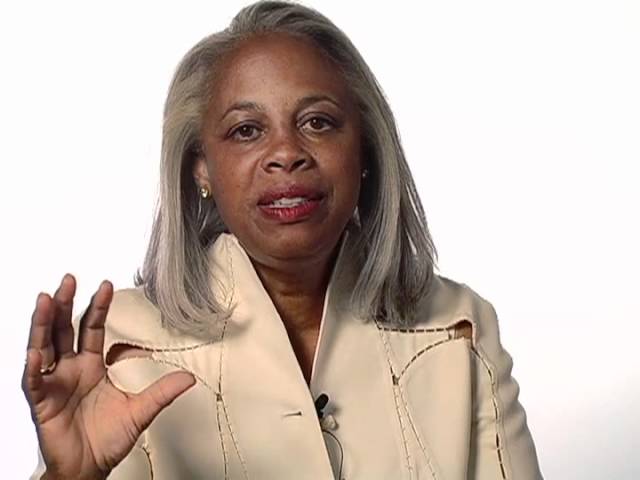
Ann Fudge: "We Are Losing Civility and Openness"
New videos DAILY
Join Big Think Edge for exclusive videos
----------------------------------------------------------------------------------
Young and Rubicam’s former CEO finds herself constantly in search of an answer to the question: What is the future of the democracy?
----------------------------------------------------------------------------------
Ann M. Fudge:
Ann M. Fudge is the Former Chairman and Chief Executive Officer of Young & Rubicam Brands, a global marketing communications network. Fudge received a BA degree from Simmons College and an MBA from Harvard University. She served as the chairman and chief executive officer of Young & Rubicam from 2003 to the end of 2006. Prior to joining Young & Rubicam, Ms. Fudge worked at General Mills and at General Foods, where she served in a number of positions including president of Kraft General Foods, Maxwell House Coffee Company and president of Kraft's Beverages, Desserts and Post Divisions. Ms. Fudge is a director of Novartis AG, the Gates Foundation and the Rockefeller Foundation and is on the board of overseers of Harvard University.
----------------------------------------------------------------------------------
TRANSCRIPT:
Topic: Democracy’s future
Ann Fudge: I think one of the interesting challenges for democracy in our time is the fact that we have so many opportunities for people to express their points of view, whether it’s on the internet and express their points of view not always looking at the facts. So it’s almost like the person who can go and stand up on a soap box and express their feelings, but maybe not really have all the facts. And the interesting dynamic I think which I’m sure we’re going to be studying for awhile and it’s been my career, marketing and communications, is how is communications helping or hurting democracy and how is the spread of the internet and how is the fact that there is so many blog sites, what we would call micro marketing back in the day, to target a lot of different audiences. How does that influence the conversation and the discourse? And I think one of the challenges that we have is sometimes we’re losing the very civility and the openness and the listening to other points of view.
I try to read a vast array of newspapers even if and particularly if I don’t believe or necessarily concur with everything that is in their editorials. But I find that there is always something that makes me pause and think about my view on something because I look at it. Because I look at these two things opposed to one another and say, “You know what? It’s not really black and white.” We really don’t live in a black and white world. There are so many shades of grey and there are elements of that that you know what, I agree with and I surprise myself and I think sometimes we lose that. People don’t allow themselves to be open to people who have different points of view. One of the things that I think is really important and exciting about the global world we live in is that we are so different. I love traveling and learning about new cultures because I think it helps me to open my mind more in the day-to-day living and work that I get involved with.
Question: Do global conversations like the World Economic Forum help?
Ann Fudge: I think they’ve helped to a degree because it starts a conversation and then those people go back. Still, when you think about it, it’s still a very small segment of the population. It’s only been what, maybe three or four years that NGOs have been actively included in the discussions, whereas they weren’t before. I think that inclusion back to listening to perspectives that may be different from yours has been helpful. I think we’ve got to do more of that. We tend to look at Davos, but sometimes the little mini Davos conversation that people can start in their own communities are extremely helpful and looking at things and listening to other perspectives.
Sentinel Indexing in Progress
Metadata and chapters are available. Claim extraction for this episode is pending.
All video content is delivered via YouTube embedded players in accordance with the YouTube Terms of Service. Sentinel provides research tools that promote discovery and accountability across political media.