Big Think
@bigthink·8.8M subscribers·10.1K videos
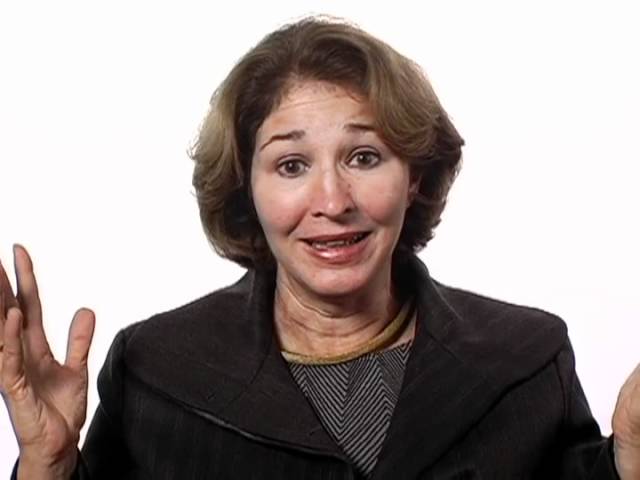
Anne-Marie Slaughter on the Rise of China | Big Think
Posted
April 24, 2012
Views
2,605
Likes
11
Comments
5
Engagement
0.61%
April 24, 2012
2,605
11
5
0.61%
Every word spoken in this episode is indexed. Type any phrase to jump straight to the moment it was said.
Type any word or phrase that may have been spoken. Click a result to seek the player to that exact moment.
Try a name, a topic, or a quoted line
See what was published immediately before and after this episode.
 3:39Now Playing
Anne-Marie Slaughter on the Rise of China
New videos DAILY
Join Big Think Edge for exclusive videos
----------------------------------------------------------------------------------
Anne-Marie Slaughter believes in a super-powerful China is inevitable.
----------------------------------------------------------------------------------
Anne-Marie Slaughter:
Anne-Marie Slaughter, is the Bert G. Kerstetter '66 University Professor of Politics and International Affairs at Princeton University. She is presently on leave, serving as Director of Policy Planning for the United States Department of State. She was Dean of the Woodrow Wilson School of Public and International Affairs at Princeton University from 2002-2009.
Slaughter came to the Wilson School from Harvard Law School where she was the J. Sinclair Armstrong Professor of International, Foreign, and Comparative Law and Director of the International Legal Studies Program. She is also the former President of the American Society of International Law, is a Fellow of the American Academy of Arts and Sciences, and has served on the board of the Council on Foreign Relations.
Drawing from this rich interdisciplinary expertise, Slaughter has written and taught broadly on global governance, international criminal law, and American foreign policy. Her most recent book is The Idea that Is America: Keeping Faith with Our Values in a Dangerous World, published in 2007 by Basic Books. She is also the author of A New World Order, in which she identified transnational networks of government officials as an increasingly important component of global governance. Slaughter has been a frequent commentator on foreign affairs in newspapers, radio, and television. She was also the convener and academic co-chair of the Princeton Project on National Security, a multi-year research project aimed at developing a new, bipartisan national security strategy for the United States, and was a member of the National War Powers Commission.
----------------------------------------------------------------------------------
TRANSCRIPT:
Slaughter: Well, the first thing to say about being in China is it’s breathtaking. I remember coming to New York as an undergraduate for the first time and feeling like the energy was just, perhaps it’s kind of coming up through the pavements. It was like an electric jolt. And that’s what being in China is like today, being in Shanghai, being in Beijing, even being in many of the interior cities. The place is growing so fast and there are so many changes and cultures colliding and ideas colliding and young people living completely different lives than their parents that there’s this palpable sense of energy and change. And that’s, of course, drawn young people and older people from all over the world who feed off that kind of energy, which, of course, just increases it. So, China is like a year-long buzz in the sense of being energized in many ways. That’s the first impression and that’s the impression that most people who go for a couple of weeks or even a month come back with and they say, as my mother has said, “They’re going to bury us.” You know, when you look at how fast their infrastructure is being built and you come back to New York and you realize, you know, their projects that have been ongoing for 5 or 10 years or in Europe. But if you’ve been there for a while, you actually see a quite different picture, because that change is definitely there, the development is extraordinary, but it creates a very fragile society, and I think a fairly fragile polity. Susan Shirk has this great book where she talks about China: Fragile Superpower, and what she’s talking about is anytime you uproot a culture as dramatically as this one has been uprooted and changed, you have a lot of people who are not connected to their village, to their traditional social structures who have very high expectations. These kids who come in from their villages to go to [Szechuan] or any of the big cities, they’re expecting a better life. They’re expecting a dream life where they are going to have a car and an apartment. Those expectations are hard to satisfy. And when things go wrong, you don’t have a lot of traditional structures to ensure order and to ensure taking care of people.
Read the full transcript at
Sentinel Indexing in Progress
Metadata and chapters are available. Claim extraction for this episode is pending.
All video content is delivered via YouTube embedded players in accordance with the YouTube Terms of Service. Sentinel provides research tools that promote discovery and accountability across political media.