Big Think
@bigthink·8.8M subscribers·10.1K videos
Big Think Interview with David Cutler | Big Think
Posted
April 24, 2012
Views
1,000
Likes
6
Comments
1
Engagement
0.70%
April 24, 2012
1,000
6
1
0.70%
Every word spoken in this episode is indexed. Type any phrase to jump straight to the moment it was said.
Type any word or phrase that may have been spoken. Click a result to seek the player to that exact moment.
Try a name, a topic, or a quoted line
Episode Timeline
Every episode in order around the one you’re watching — click any card and the page flips straight to it.
 18:03Now Playing
Big Think Interview with David Cutler
New videos DAILY
Join Big Think Edge for exclusive videos
----------------------------------------------------------------------------------
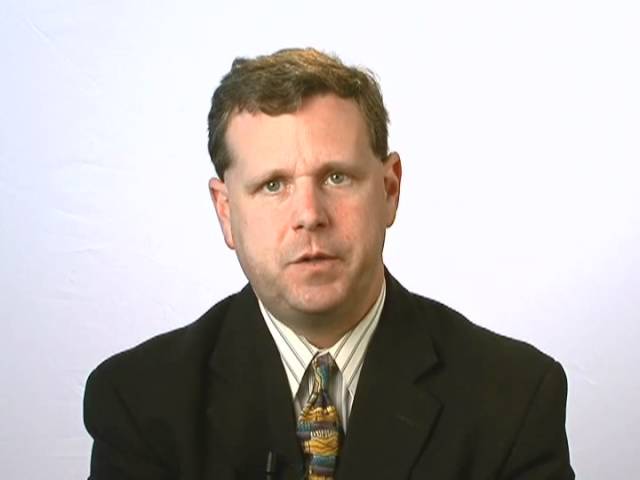
Big Think Interview with Harvard Professor of Economics, David Cutler.
----------------------------------------------------------------------------------
David Cutler:
David Cutler served at Harvard University as an Assistant Professor of Economics from 1991 to 1995, was named John L. Loeb Associate Professor of Social Sciences in 1995, and received tenure in 1997. He is currently the Otto Eckstein Professor of Applied Economics in the department of economics and Kennedy School of Government and recently completed a five-year term as associate dean of the Faculty of Arts and Sciences for Social Sciences.
Professor Cutler served on the Council of Economic Advisers and the National Economic Council during the Clinton Administration and was senior health care advisor to Barack Obama's Presidential campaign. Professor Cutler also advised the Presidential campaign of Bill Bradley. Among other affiliations, Professor Cutler has held positions with the National Institutes of Health and the National Academy of Sciences. Currently, Professor Cutler is a Research Associate at the National Bureau of Economic Research and a member of the Institute of Medicine.
Professor Cutler is the author of Your Money Or Your Life: Strong Medicine for America's Health Care System, published by Oxford University Press. This book, and Professor Cutler's ideas, were the subject of a feature article in the New York Times Magazine, "The Quality Cure", by Roger Lowenstein. Cutler was recently named one of the 30 people who could have a powerful impact on healthcare by Modern Healthcare magazine and one of the 50 most influential men aged 45 and younger by Details magazine.
----------------------------------------------------------------------------------
TRANSCRIPT:
David Cutler: David Cutler. I’m Professor of Economics at Harvard.
Question: What must healthcare reform accomplish?
David Cutler: I think of what reform has to accomplish is three things. One is it has to cover everybody. Both for moral reasons as well as economic reasons, it’s untenable to be in a society where any change in your circumstance, like, for example, a recession, can mean you’re out of the health care system.
Second, is it has to modernize the health care systems so that we really get money for what we put into it—we really get value for what we put into it. The misconception that you referenced is that the idea, the goal, is to save money. The goal is not to save money, the goal is to do things where they’re appropriate, and not do them where they’re not appropriate. Which is a way of looking at it that’s much more consistent with where people are and the values that we have.
And then the third thing that we need in reform is, we need a public health system that actually works to keep us healthy—to keep us safe—that reinforces our medical care system from things like H1N1 Flu, to Avian Flu, to food and water safety, to obesity and smoking cessation.
Question: What do people need to understand about the healthcare debate?
David Cutler: What people need to understand about health care reform is that we can improve the quality of care and lower spending at the same time. Think about those patients with chronic disease who are not getting treated appropriately. Treat them more appropriately, they don’t go to the hospital, they spend less and their quality of life—their length of life is increased. That’s what we can do if we really do it right. So, yes we need to save money, but we will save money as a by-product of having a system that works better.
We are not going to save money by taking a meat axe and just clawing off some part of health care spending. That’s what a lot of the alternative is, if we don’t do this, what’s going to happen? Probably, a lot of the employers will just say “Hey, you know what, we’re just going to stick you in health plan with very high cost sharing—you go out and deal with it.” Everything we know is that people will stop taking their medications to save money and their health will deteriorate.
We have to find a way, and we believe there are ways, where we can save money and we can improve health. And people know this, people know that the healthcare system costs more than it should and a part of that is because the thing doesn’t work right job and you wind up having people in very expensive circumstances after-the-fact, when you could have prevented it.
Read the full transcript at
Sentinel Indexing in Progress
Metadata and chapters are available. Claim extraction for this episode is pending.
All video content is delivered via YouTube embedded players in accordance with the YouTube Terms of Service. Sentinel provides research tools that promote discovery and accountability across political media.