Big Think
@bigthink·8.8M subscribers·10.1K videos
Big Think Interview With Gerald Chertavian | Big Think
Posted
April 24, 2012
Views
1,655
Likes
21
Comments
2
Engagement
1.39%
April 24, 2012
1,655
21
2
1.39%
Every word spoken in this episode is indexed. Type any phrase to jump straight to the moment it was said.
Type any word or phrase that may have been spoken. Click a result to seek the player to that exact moment.
Try a name, a topic, or a quoted line
Episode Timeline
Every episode in order around the one you’re watching — click any card and the page flips straight to it.
 30:04Now Playing
Big Think Interview With Gerald Chertavian
New videos DAILY
Join Big Think Edge for exclusive videos
----------------------------------------------------------------------------------
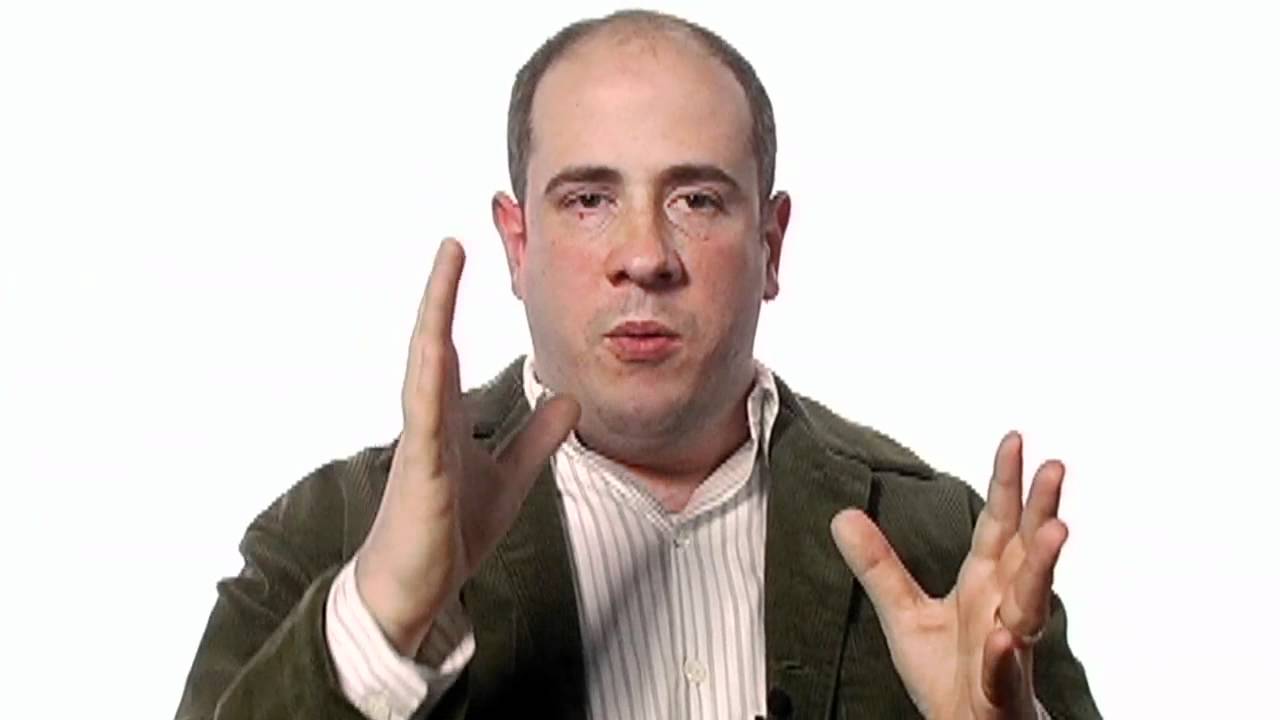
Big Think sits down with the Founder and CEO of Year Up.
----------------------------------------------------------------------------------
Gerald Chertavian:
Gerald Chertavian is the CEO and Founder of Year Up, a non-profit organization that provides intensive professional education to urban young adults. His organization was recently recognized by Fast Company and The Monitor Group as one of the top 25 organizations in the nation using business excellence to engineer social change. Prior to starting Year Up, Chertavian co-founded Conduit Communications and served as the head of marketing at Transnational Financial Services in London. He has been an active member of the Big Brother mentoring program since 1985, and was awarded New York’s outstanding member in 1989. He was also awarded the 2003 Social Entrepreneurship Award by the Manhattan Institute and the 2005 Freedom House Archie R. Williams, Jr. Technology Award. A graduate of Bowdoin College and Harvard Business School, Chertavian was born and raised in Lowell, MA.
----------------------------------------------------------------------------------
TRANSCRIPT:
Gerald Chertavian: My name's Gerald Chertavian, and I'm the founder and CEO of Year Up.
Question: Will business and charity become more linked in the coming years?
Gerald Chertavian: Absolutely. In fact, I think the whole movement of social entrepreneurship, which is about applying business principles to the nonprofit sector, it's solving social challenges in innovative ways and perhaps ways that weren't solved before. It's about what we call a tripartite partnership between the nonprofit sector, the private sector and the public sector, which is a new way -- it's a new social contract -- in terms of how we're going to solve social challenges in this country. And that is very different from the '60s and '70s, when government would scale up a nonprofit organization and have the resources to do that. So I think we're really in a paradigm shift as to how we collectively are going to solve social challenges in this country and who has skin in that game. And it's not just the government, it's not just the nonprofit sector and it's not just the private sector. Those three sectors have to work together differently than they have in the past. And I think many of the social entrepreneurs that I know and respect think about solving challenges in ways that really reflect that need to partner with those three legs of that stool.
Question: How do partnerships distinguish your organization from others?
Gerald Chertavian: There's a few ways I think we're very different from other organizations, the first of which is, we focus incessantly on what I call ABC -- attitude, behavior and communication skills. And that we know that employers -- that you hire for skills and you fire for behavior, right, when you think about how the labor force works? So we spend at least half of our time focused very, very clearly on making sure our young adults have the attitudinal, behavioral and communication skills they need to be professionals in the knowledge-based economy. Many training programs and often schools focus on just a skill or a kind of work competency. That's only half the equation. So yes, half of our time will be focused on a technical skill or a financial skill, something that will be kind of bought by the private sector. But half of our time is on ABC -- attitude, behavior and communications. So that's one big difference between ourselves and others.
A second difference is, we are so driven by the needs of our corporate and organizational partners, where -- and if you think about our economic model, you know, we receive contributions from those organizations. If we don't do well, we do not get paid. If we don't get paid, we go out of business. So our economic incentives are wholly aligned with success for our students. If students do well, we stay in business. And let me ask you: how many nonprofits is the payor the same person who's the recipient of the service? And I think that disconnect often means that the person you're providing the service to, you don't have to be beholden to them because they're not the payer. Whereas in our case we have clients; they're called companies. And if they're not happy, we're not in business.
So I think having aligned economic incentives as a general principle -- if one wants think about it in the nonprofit sector as to how do I better align those incentives to make sure that the work we're doing is --
Read the full transcript at
Sentinel Indexing in Progress
Metadata and chapters are available. Claim extraction for this episode is pending.
All video content is delivered via YouTube embedded players in accordance with the YouTube Terms of Service. Sentinel provides research tools that promote discovery and accountability across political media.