Big Think
@bigthink·8.8M subscribers·10.1K videos
Big Think Interview With Paula Johnson | Big Think
Posted
April 24, 2012
Views
233
Likes
6
Engagement
2.58%
April 24, 2012
233
6
2.58%
Every word spoken in this episode is indexed. Type any phrase to jump straight to the moment it was said.
Type any word or phrase that may have been spoken. Click a result to seek the player to that exact moment.
Try a name, a topic, or a quoted line
Episode Timeline
Every episode in order around the one you’re watching — click any card and the page flips straight to it.
 18:28Now Playing
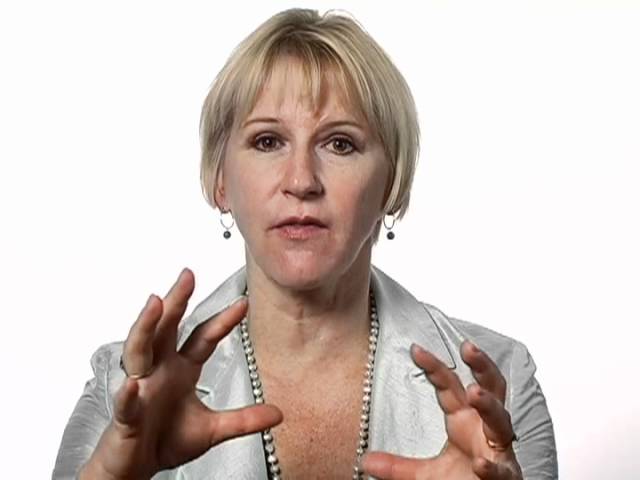
Big Think Interview With Paula Johnson
New videos DAILY
Join Big Think Edge for exclusive videos
----------------------------------------------------------------------------------
A conversation with the Executive Director of the Connors Center for Women’s Health and Gender Biology.
----------------------------------------------------------------------------------
Dr. Paula Johnson:
Dr. Paula Johnson is a women's health specialist and a pioneer in the treatment and prevention of cardiovascular disease. She conceived of and developed one of the first facilities in the country to focus on heart disease in women. At Boston's Brigham and Women's Hospital (BWH), Dr. Johnson was made chief medical resident in 1990--the first woman to hold that position in the history of the hospital. Dr. Johnson is serves as head of the Mary Horrigan Connors Center for Women's Health and Gender Biology and is chief of the Division of Women's Health at Brigham and Women's Hospital in Boston. She also directs the Center for Cardiovascular Disease in Women.
----------------------------------------------------------------------------------
TRANSCRIPT:
Question: Why is gender specific care important?
Paula Johnson: Gender-specific care is very important because if we reflect on where we are today scientifically—it’s the era of the potential of the genome, it’s the era of “the emergence of personalized medicine”—and if we think about sex-specific or gender-specific care (and I just want to be clear, sex is who we are genetically women have two X chromosomes. Men have an X and a Y. And gender is how we are responded to in society because of our sex). If we think about this era of the potential of science, and we think about the fact that men and women are different biologically—you know every cell has a sex, and that’s the phrase that the institute of medicine coined. The potential for the development of science, as we think about sex differences is just enormous.
What it means when we think about sex differences in health and diseases [is] that men and women differ in every aspect of health and disease. The potential for discovery here is tremendous. Today we only are at the very early stages of understanding what some of differences are, from a clinical standpoint, and we really have a long way to go before we fully understand the scientific basis for some of those differences.
Just to give you an example, if you look at a woman who has heart disease, where there are symptoms that make one think that she might blockages in her arteries, we know that those symptoms differ between men and women. Now that’s a clinical observation, what we don’t know is why we see those differences and symptoms. Then, if you do testing in a man or a woman, the qualities of the test, the sensitivity and the specificity the characteristic of the test differ, between man and women—certain tests are better in women that they are in men. And then, very interestingly when you actually look at the type of disease women have, so their arteries actually look like, the arteries can look different, and what we begin to understand is that some of the standard tests that we’ve been using for many years, that are based on the typical disease that man have, may not function as well in women.
We’ve had many years of women undergoing this test and being told that they are actually fine. So today we are on a different place, we understand that there are some of these differences, some of that knowledge is not as generalized as widely understood as we need it. What we don’t understand is, biologically, why we do we see those differences? So, as you can see, there is this cycle between clinical observation, science getting the word out, translations of that science to clinical care, and observation, once again feeding more science
Question: Are there health issues specific to women?
Paula Johnson: I wouldn’t say that there are specific issues that are unique to women, what I would say that there are issues that are either more prevalent in women: those need to be focused on. And [there are] some risks that impact women differently. So for example, if you look at diabetes—for reasons that we don’t fully understand, the impact of diabetes on women’s heart health seems to be more profound than it is in men. And so diabetes will wipe away some of the early protection woman have against heart disease. But women will be more likely to die of cardiovascular disease. And then, .....
Read the full transcript at
Sentinel Indexing in Progress
Metadata and chapters are available. Claim extraction for this episode is pending.
All video content is delivered via YouTube embedded players in accordance with the YouTube Terms of Service. Sentinel provides research tools that promote discovery and accountability across political media.