Big Think
@bigthink·8.8M subscribers·10.1K videos
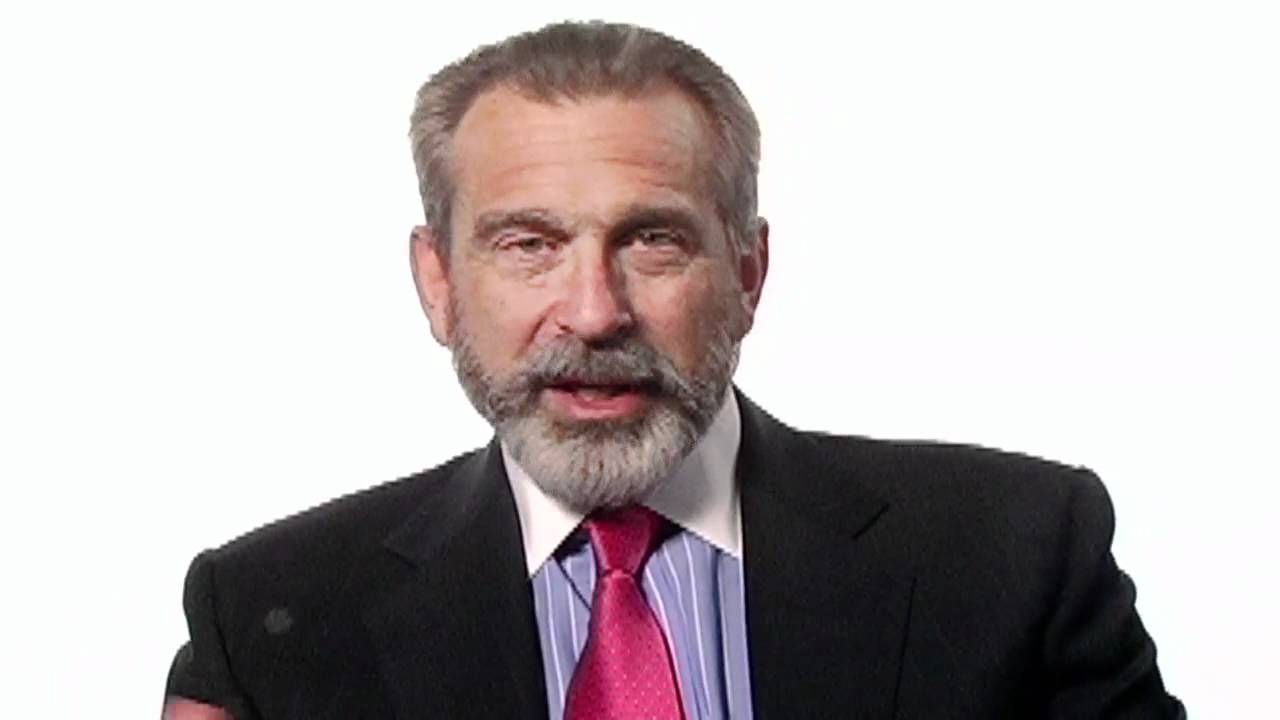
Big Think Interview With Thomas Hampson | Big Think
Posted
April 24, 2012
Views
4,202
Likes
62
Comments
4
Engagement
1.57%
April 24, 2012
4,202
62
4
1.57%
Every word spoken in this episode is indexed. Type any phrase to jump straight to the moment it was said.
Type any word or phrase that may have been spoken. Click a result to seek the player to that exact moment.
Try a name, a topic, or a quoted line
 26:58Now Playing
Big Think Interview With Thomas Hampson
New videos DAILY
Join Big Think Edge for exclusive videos
----------------------------------------------------------------------------------
A conversation with the classical musician and New York Philharmonic’s first Artist in Residence.
----------------------------------------------------------------------------------
Thomas Hampson:
American baritone Thomas Hampson enjoys a singular career as a recitalist, opera singer and recording artist, and maintains an active interest in teaching, music research and technology. He has performed in all of the world’s most important concert halls and opera houses with many of today's most renowned singers, pianists, conductors and orchestras; he is one of the most respected, innovative and sought-after soloists performing today.
Hampson has won worldwide recognition for his thoughtfully researched and creatively constructed programs that explore the rich repertoire of song in a wide range of idiomatic styles, languages and periods. He is one of the most important interpreters of German romantic song, especially the works of Schumann, Mahler and Wolf, and with his ongoing “Song of America”project he is the "ambassador" of American song. Through the Hampsong Foundation, founded in 2003, he employs the art of song to promote intercultural dialogue and understanding.
----------------------------------------------------------------------------------
TRANSCRIPT:
Question: What was your childhood like?
Thomas Hampson: Well, I grew up in the northwest, in Washington state, in the Tri-Cities. I grew up in an extremely musical atmosphere; my mother was a wonderful musician and organist and pianist, and light opera. I have two older sisters, and we were raised in a very musical environment and we all studied piano and raised in a parochial school system. So there was a lot of music and singing. I never really thought about one not singing, as a person. I've always sung and made music; played the trumpet and played the drums and played the piano and all of that. So the music was just self-understood.
But I never really thought about it as being a profession until quite a bit later in my life, in fact, studied other disciplines, literature, political science and have a degree in those studies. And then studied vocal repertoire and musical studies and have a Bachelor's of Fine Arts in Music. It was quite a bit later in my early 20's that I thought, "I'm young, and I can try this and see what the profession." The study of music and the profession of music are in a lot of ways two different things. That became clear in my early 20's.
My operatic debut was in fact, in Spokane, Washington. I was 19-years-old, I think. And by then, I was getting a lot of encouragement that I had a proper voice and could be properly trained, but still I was very much not thinking of going into operatic singing as a career. The local production was "Hansel and Gretel," and I sang the father.
Shortly thereafter, I went to Los Angeles and actually, Santa Barbara to the summer program at the Vision Academy of the West, and that's where I really started to see and study opera in scenes and in, sort of, full context. Most people in rural places in this country start probably their association to opera by singing "Arias." Mainly for competitions, and then trying to find money to study and this is until you get quite a bit farther in your studies and university before you probably are going to be involved in opera in some ways. I was actually in two opera corps before I ever saw a full opera, which was rather extraordinary.
Question: What was the first opera you saw?
Thomas Hampson: The first opera I ever saw was "Rigoletto." In Spokane, a visiting troop from Seattle, and then the other opera I actually went, I got a ticket and went, was Sir Galant Evans singing "Falstaff" in Seattle. That was extraordinary. The first two operas I was in with a chorus of "Cosi Fan Tutte," by Mozart, and "Le Barbier de Seville," of Rossini.
You tend not to forget being terrified. I enjoyed it a great deal and of course, being in a chorus was a lot of fun because you knew the people you were working with, but it seemed to be -- it was very exhilarating to me. Not because I wanted to be on stage and performing and all that sort of thing. That's not ever really been my instinct, as it were, but opera is such a complex environment of so many different things that are going on. The scenic atmosphere, the psychology of the characters, the historical perspective of the opera, the music, the structure of the music it's this amazing three and six dimensional mosaic that happens in real time. That was very clear to me at the very beginning. It just completely fascinated me.
Question: What’s the most challenging role you’ve played?
Read the full transcript at
Sentinel Indexing in Progress
Metadata and chapters are available. Claim extraction for this episode is pending.
All video content is delivered via YouTube embedded players in accordance with the YouTube Terms of Service. Sentinel provides research tools that promote discovery and accountability across political media.