Big Think
@bigthink·8.8M subscribers·10.1K videos
Big Think Interview With Tyler Volk | Big Think
Posted
April 24, 2012
Views
759
Likes
12
Engagement
1.58%
April 24, 2012
759
12
1.58%
Every word spoken in this episode is indexed. Type any phrase to jump straight to the moment it was said.
Type any word or phrase that may have been spoken. Click a result to seek the player to that exact moment.
Try a name, a topic, or a quoted line
 27:26Now Playing
Big Think Interview With Tyler Volk
New videos DAILY
Join Big Think Edge for exclusive videos
----------------------------------------------------------------------------------
A conversation with the author and professor of biology at New York University.
----------------------------------------------------------------------------------
Tyler Volk:
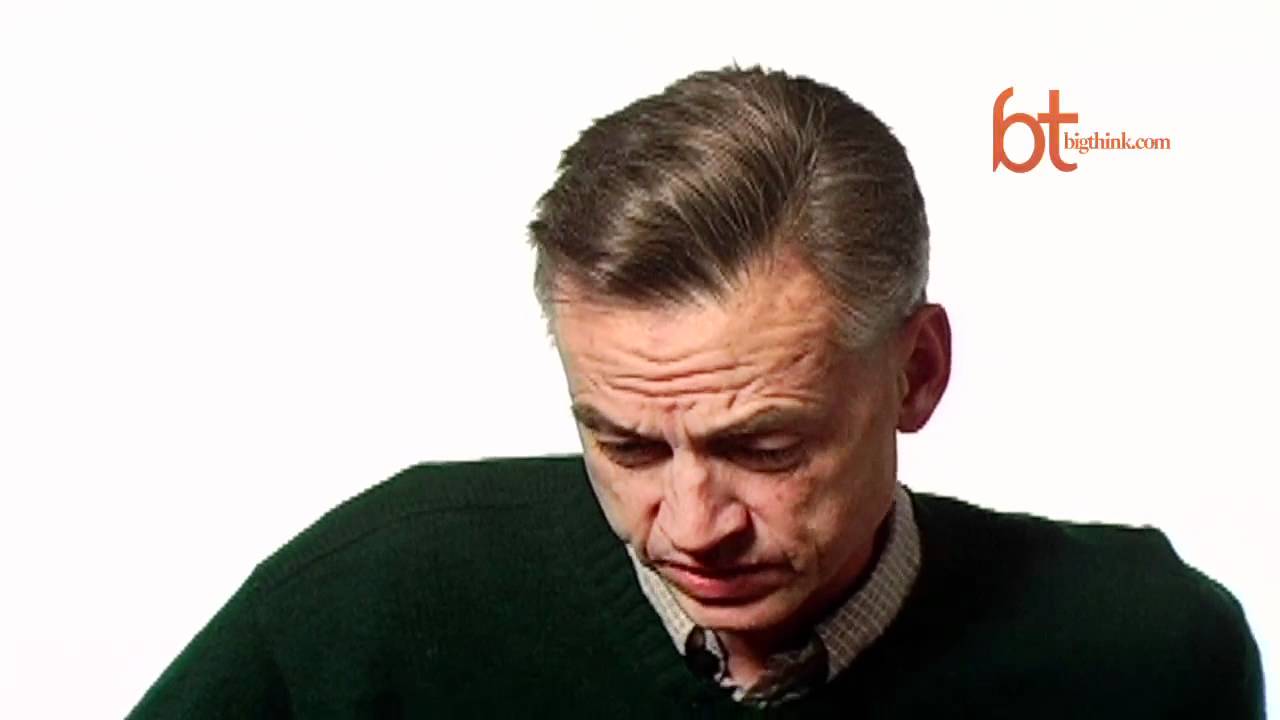
Tyler Volk is a Science Director of Environmental Studies and Professor of Biology at New York University. He is the author of "Death & Sex" (with co-author Dorion Sagan), "CO2 Rising: The World' Greatest Environmental Challenge," "Gaia's Body: Toward a Physiology of the Earth," and "Metapatterns: Across Space, Time, and Mind." Professor Volk is also lead guitarist for The Amygdaloids, a "heavy mental" band comprised of NYU scientists. He lives in New York.
----------------------------------------------------------------------------------
TRANSCRIPT:
Tyler Volk: I’m Tyler Volk, Professor of biology and Environmental Studies at New York University, Author of several books; Death and Sex, Gaia’s Body, Tour of Physiology of Earth, Meta-patterns Across Space, Time, and Mind.
Question: Why do atoms have such long lives, but organisms die?
Tyler Volk: Yeah, well atoms have such long lives because they are made of fundamental particles that themselves are long-lived to infinity. There are some issues about the proton having some kind of a long decay constant, but organisms are dynamical systems made of parts, enzymes that interact very volatility, they have to be rebuilt constantly, the organisms themselves have to have constant inputs of matter and energy in order to carry on to regenerate these complex internal dynamics that they have going all the time.
Question: On the molecular level, what causes humans to die?
Tyler Volk: The body wears down after a while. There are repair mechanisms that we have. You cut your skin; you’ll notice that your skin repairs. You break a bone; the bone repairs. Many of these repair mechanisms, as any of us who are aging know, become less efficient as we get older. And one reason that diseases become more statistically probable as we get older has to do with a general running out of these repair mechanisms; the efficiency of these repair mechanisms that were with us from our birth as human beings, but have themselves a kind of longevity that varies from individual to individual. But you can see, most people when they get to be around 70, 80, or 90, they’re going to look old. There are some certain expectations. So there is some commonality we have as humans as a species in terms of shared genetic capabilities of repair our bodies that wear down over time.
Question: Why do human beings have so much trouble embracing death?
Tyler Volk: We have a lot of trouble embracing death because we know it’s going to happen and this really flies in the face of our urge to live which we’re coming out of billions of years of organisms being successful at living and passing on progeny and suddenly in the last 30,000 years, 100,000 years, we don’t’ really know, some of the earliest detailed elaborate burials were 30,000 years ago. Human beings not only died, but they know they’re going to die. Of course, the world’s religions have not liked this fact and so try to build up various mythologies about afterlife. But I think the basic reason is just it’s abhorrent to us. We’ve built up the self. We’ve had, for the most part, enjoyable experiences. There’s more to experience. We have loved ones, we have roles in life and suddenly to know that that’s all going to ending; to be snuffed out at some point, really puts in a primal dilemma to our minds
Question: How do you explain scientific movements to end death?
Tyler Volk: Yeah. I think some of these urges to conquer death, or to live a long time, have to do with this primal fear of death itself. Of course, we want to stay healthy, it’s painful to get ill, it’s painful to get old, to have injuries that don’t heal so well, to have permanent pain. So, some of that is overcoming just the sense of un-wellbeing that happens to us. We want medicine to make progress and keep up healthy.
But the other factor is wanting to live for a long time and maybe forever. It’s not clear what we would do, or how that would affect our lives. Sometimes science fiction writers explore those kinds of themes. But I see that as incredibly natural and I do think it’s going to – not that we’re going to live forever necessarily, I don’t have an informed opinion about that.
Read the full transcript at
Sentinel Indexing in Progress
Metadata and chapters are available. Claim extraction for this episode is pending.
All video content is delivered via YouTube embedded players in accordance with the YouTube Terms of Service. Sentinel provides research tools that promote discovery and accountability across political media.