Big Think
@bigthink·8.8M subscribers·10.1K videos
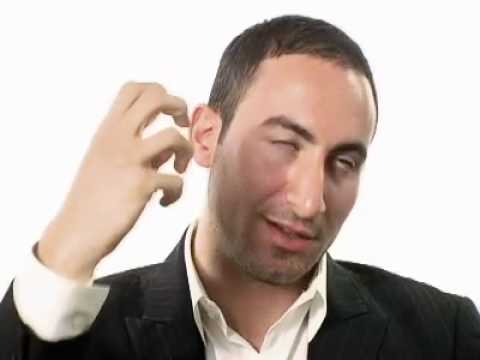
Clinton and Foreign Policy Derek Chollet | Big Think
Posted
April 24, 2012
Views
3,180
Likes
36
Engagement
1.13%
April 24, 2012
3,180
36
1.13%
Every word spoken in this episode is indexed. Type any phrase to jump straight to the moment it was said.
Type any word or phrase that may have been spoken. Click a result to seek the player to that exact moment.
Try a name, a topic, or a quoted line
Episode Timeline
Every episode in order around the one you’re watching — click any card and the page flips straight to it.
 5:33Now Playing
Clinton and Foreign Policy
New videos DAILY
Join Big Think Edge for exclusive videos
----------------------------------------------------------------------------------
The pillars of Clinton’s foreign policy, democracy promotion, trade, and the use of force when necessary are more controversial today than they were ten years ago
----------------------------------------------------------------------------------
Derek Chollet:
Derek Chollet is the Principal Deputy Director of the Secretary’s Policy Planning Staff. Prior to joining the State Department, he was a Senior Fellow at The Center for a New American Security (CNAS), a non-resident fellow in the Brookings Institution’s Global Economy and Development Program and an adjunct associate professor at Georgetown University. During the Bill Clinton administration, he served in the State Department in several capacities, including as Chief Speechwriter for U.S. Ambassador to the United Nations Richard Holbrooke, and Special Adviser to Deputy Secretary of State Strobe Talbott. Mr. Chollet also assisted former Secretaries of State James A. Baker III and Warren Christopher with the research and writing of their memoirs, Holbrooke with his book on the Dayton peace process in Bosnia, and Talbott with his book on U.S.-Russian relations during the 1990s. He was foreign policy adviser to Senator John Edwards (D-N.C.), both on his legislative staff and during the 2004 Kerry/Edwards presidential campaign.
Mr. Chollet has been a Fellow at the Center for Strategic and International Studies (CSIS), a Fellow at the American Academy in Berlin and a visiting scholar and adjunct professor at The George Washington University. He is the author, co-author or coeditor of five books on American foreign policy, including The Road to the Dayton Accords: A Study of American Statecraft (Palgrave Macmillan, 2005) and America Between the Wars: From 11/9 to 9/11, coauthored with James Goldgeier (PublicAffairs, 2008). His commentaries and reviews on U.S. foreign policy and politics have appeared in the Washington Post, Los Angeles Times, Financial Times, Washington Monthly, and many other books and publications. Educated at Cornell and Columbia, Mr. Chollet was raised in Lincoln, Nebraska.
----------------------------------------------------------------------------------
TRANSCRIPT:
Topic: Clinton and Foreign Policy
Derek Chollet: I think many people looking back on this history unfairly criticize Clinton for not having any foreign policy. That’s the conservative critique of Clinton, that it was sort of all ad hoc and that he didn’t really have a theory of the case, and that’s just not true and I hope what our book shows is that there was something that we call a Clinton Consensus around foreign policy that it took a while to get there and it was clumsy sometimes and it was a little haphazard but when Bill Clinton left office in 2001, there was a center of gravity on the left among Democrats on foreign policy and it did evolve around sort of three core issues. First was this idea of democracy promotion and Bill Clinton campaigned for president in 1992 arguing that the U.S. needed to do more to promote democracy around the world and, in fact, our victory in the Cold War was nothing more than an affirmation of the importance of promoting democracy around the world and that we shouldn’t be shy about it. Clinton came up with several phrases to try to kind of explain what that meant and one of them was Democratic enlargement, which was a theme that he and his administration pushed in the early 1990s and, of course, by the end of his term in office they created something called the Community of Democracies, which was an attempt to kind of institutionalize a partnership globally among democracies. In addition to the idea of promoting democracy, the other sort of second anchor was his approach to globalization. Clinton campaigned for president in 1992 and consistently as president pushed for trade agreements. This was very controversial within the Democratic party on the left. He pushed these agreements at some political risk to himself and some political cost to himself, I think. He was someone who believed very deeply in globalization. This was something that he, in the early days of his campaign in 1991 and 1992, he talked a lot about the change in global economy and how that meant changes not just for America abroad but how we needed to restructure our workforce and re-educate our workforce here at home.
Read the full transcript at
Sentinel Indexing in Progress
Metadata and chapters are available. Claim extraction for this episode is pending.
All video content is delivered via YouTube embedded players in accordance with the YouTube Terms of Service. Sentinel provides research tools that promote discovery and accountability across political media.