Big Think
@bigthink·8.8M subscribers·10.1K videos
Dacher Keltner Analyzes the Role of the State to Impact Morality | Big Think
Posted
April 24, 2012
Views
406
Likes
3
Engagement
0.74%
April 24, 2012
406
3
0.74%
Every word spoken in this episode is indexed. Type any phrase to jump straight to the moment it was said.
Type any word or phrase that may have been spoken. Click a result to seek the player to that exact moment.
Try a name, a topic, or a quoted line
See what was published immediately before and after this episode.
 6:15Now Playing
Dacher Keltner Analyzes the Role of the State to Impact Morality
New videos DAILY
Join Big Think Edge for exclusive videos
----------------------------------------------------------------------------------
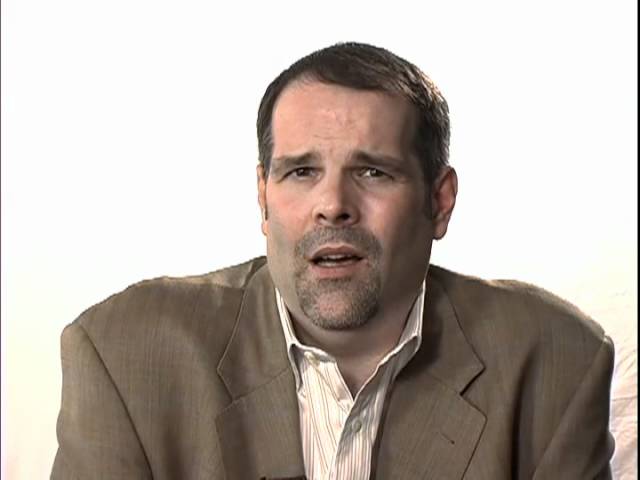
Dacher Keltner on government ethics.
----------------------------------------------------------------------------------
Dacher Keltner:
Dacher Keltner is a social psychologist who focuses on the prosocial emotions, such as love, sympathy and gratitude, and processes such as teasing and flirtation that enhance bonds. He has conducted empirical studies in three areas of inquiry. A first looks at the determinant and effects of power, hierarchy and social class. A second in concerned with the morality of everyday life, and how we negotiate moral truths in teasing, gossip, and other reputational matters. A third and primary focus in on the biological and evolutionary basis of the benevolent affects, including compassion, awe, love, gratitude, and laughter and modesty. Professor Keltner is Co-Director of The Greater Good Science Center and the author of Born to Be Good.
----------------------------------------------------------------------------------
TRANSCRIPT:
Question: Can government influence morality?
Keltner: Whether we like it in principle or not, you know, the manner in which the government protects the constitution and defines particular rights and legislates those rights clearly is there’s a moral direction to that kind of activity. But you know, what I’m interested in as a psychologist and I think there’s a new movement in thinking about the nature of morality, you know, there’s one sort of high, higher form of morality which is abstract principles of rights and equality and protecting those who’re vulnerable, and that really is the work of the government. But there’s all this everyday morality that we study in my lab of the ability to express compassion, the tendency to be grateful, to appreciate, the opportunity to revere and to feel wonder, and those are cultivated in our communities and in families and when the resources and opportunities, so the government is effecting that form of morality as well.
Question: Is a president responsible for setting a culture’s moral compass?
Keltner: Absolutely. You know, there are different conceptions of leaderships. There’s, you know, the symbolic form of leadership which says that’s where the President’s power really is and then there’s more of a kind of bureaucratic conception of leadership which is you lead behind the scenes and shifting policy and legislation. And, I think, you know, and I’ve talked to a lot of journalists in social fears about this that, you know, one of the striking things about Obama is his, pretty uniformly people believe there’s a sense of trust and goodwill at the core of this person and how it’s spreading out in rhetoric and in the manifestations of his character. If you read his inauguration speech, you know, the simple cooperative acts of extending an open hand to the Muslim world, referring to humility, new kinds of power, that’s shifted the cultural discourse enormously and that’s I think a moral responsibility.
Question: How does goodness differ from the individual to the institution?
Keltner: The execution of goodness at the individual level in my line of work suggest it really honors this evolutionary principles that have led to the design of the human being and those are principles like to be humble, to be grateful, to show compassion towards those in need, and those are the raw materials out of which groups form and institutions form. And when I worked with, you know, work place, organizations and schools, it is clear that those principles are in play at the institutional level but institutions can separate from the laws of face-to-face interaction and then, start to adopt their own principles.
Question: Should we legislate morality?
Keltner: We shouldn’t say we’re doing it but you know, I think if you take the words of Martin Luther King who said that you know the great ark of history is to our justice and you consider that in the context of what he was fighting for vis-à-vis the government, which is civil rights and the end of the Vietnam War. That says that the government, you know, in legislating is defining our moral terms and having moral effects. I think you know one of the things that we’ve learned in the study of morality in Psychology and it’s really something of a revolution is that, sure, they’re abstract moral principles guaranteed by the constitutions and the like, but morality is everywhere, right. It is in a child’s opportunity and have equal resources. It is in the pay that executives take.
Read the full transcript at
Sentinel Indexing in Progress
Metadata and chapters are available. Claim extraction for this episode is pending.
All video content is delivered via YouTube embedded players in accordance with the YouTube Terms of Service. Sentinel provides research tools that promote discovery and accountability across political media.