Big Think
@bigthink·8.8M subscribers·10.1K videos
Daniel Goleman Explores the State of the Environmental Movement | Big Think
Posted
April 24, 2012
Views
213
Likes
4
Engagement
1.88%
April 24, 2012
213
4
1.88%
Every word spoken in this episode is indexed. Type any phrase to jump straight to the moment it was said.
Type any word or phrase that may have been spoken. Click a result to seek the player to that exact moment.
Try a name, a topic, or a quoted line
See what was published immediately before and after this episode.
 2:01Now Playing
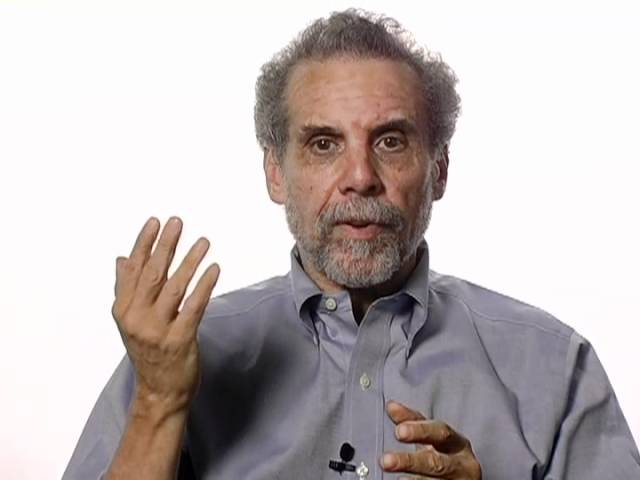
Daniel Goleman Explores the State of the Environmental Movement
New videos DAILY
Join Big Think Edge for exclusive videos
----------------------------------------------------------------------------------
The author says there is nothing special about Earth Day per se.
----------------------------------------------------------------------------------
Daniel Goleman:
Daniel Goleman is a psychologist, lecturer, and science journalist who has reported on the brain and behavioral sciences for The New York Times for many years. His 1995 book, Emotional Intelligence (Bantam Books) was on The New York Times bestseller list for a year and a half.
Goleman is also the author of Ecological Intelligence: How Knowing the Hidden Impacts of What We Buy Can Change Everything. The book argues that new information technologies will create “radical transparency,” allowing us to know the environmental, health, and social consequences of what we buy. As shoppers use point-of-purchase ecological comparisons to guide their purchases, market share will shift to support steady, incremental upgrades in how products are made – changing every thing for the better.
His latest book is Altered Traits: Science Reveals How Meditation Changes Your Mind, Brain, and Body, which he has co-authored with Richard Davidson reveals the science of what meditation can really do for us, as well as exactly how to get the most out of it.
----------------------------------------------------------------------------------
TRANSCRIPT:
Question: Where is the environmental movement today?
Daniel Goleman: Well, I think that the old kind of [IB] model of environmentalists versus big government, big business is really not functional, that we need to find a way… I was just with a remarkable Lama. His name is Karmapa. He’s talked about as maybe the successor to the Dalai Lama. And he’s very involved in the environment. And he came up with this symbol, which are 2 hands clasp like this, you know, man and nature. But I think we also need environmentalists in industry in a synergistic fashion, working together. And now, that we have the ability to help a multitude of individuals make better choices, they will shift market shares so that companies have to do the right thing. We finally found the synergism.
Question: Does Earth Day accomplish anything?
Daniel Goleman: I don’t think that Earth Day per se has a really very great positive direct impact. I think what it does is raise in the collective awareness like Christmas or Halloween, that we all ought to be doing something right now, we should regard something, we should pay attention something in a certain way. And with that collective awareness, comes all kinds of activities that can, specifically, have great impact on people, you know. You know, our city for Earth Day, we’re doing a clean up of the meadow that has all the plastic bags or whatever. Those concrete hands-on acts have a lot of impact on people who get involved in them. But Earth Day per se, I think, is not that interesting.
Sentinel Indexing in Progress
Metadata and chapters are available. Claim extraction for this episode is pending.
All video content is delivered via YouTube embedded players in accordance with the YouTube Terms of Service. Sentinel provides research tools that promote discovery and accountability across political media.