Big Think
@bigthink·8.8M subscribers·10.1K videos
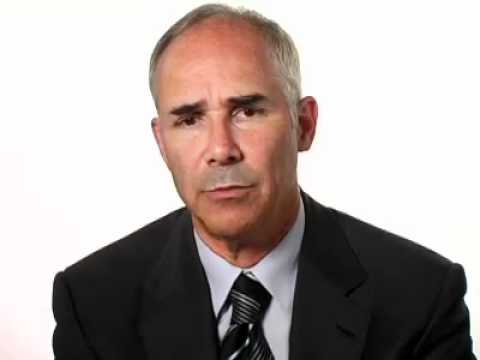
Edward Crane on Becoming a Libertarian | Big Think
Posted
April 24, 2012
Views
341
Likes
11
Engagement
3.23%
April 24, 2012
341
11
3.23%
Every word spoken in this episode is indexed. Type any phrase to jump straight to the moment it was said.
Type any word or phrase that may have been spoken. Click a result to seek the player to that exact moment.
Try a name, a topic, or a quoted line
See what was published immediately before and after this episode.
 5:37Now Playing
Edward Crane on Becoming a Libertarian
New videos DAILY
Join Big Think Edge for exclusive videos
----------------------------------------------------------------------------------
The Cato Institute CEO remembers reading Barry Goldwater’s Conscious of a Conservative.
----------------------------------------------------------------------------------
Ed Crane:
Ed Crane is the founder and president of the Cato Institute. Under his leadership, the Cato Institute has grown to become one of the nation's most prominent public policy research organizations. Crane has been a pioneer in framing the political debate as one, not between liberal and conservative, but rather between civil society (the voluntary sector) and political society (government power). He was at the forefront of promoting personal accounts in lieu of the current Social Security system, and was one of the first national leaders of the term limits movement. Crane is the coeditor of several books, publisher of Regulation magazine, serves on the Board of U.S. Term Limits, and is a member of the Mont Pelerin Society. He is a chartered financial analyst and former vice president at Alliance Capital Management Corp. Crane's writing has been published in the Wall Street Journal, the Washington Post, the New York Times and Forbes. He has been interviewed on NPR's Morning Edition and Talk of the Nation, C-SPAN's Washington Journal, Fox News Channel, MSNBC, and other media. Crane holds a B.S. from the University of California, Berkeley and an MBA from the University of Southern California.
----------------------------------------------------------------------------------
TRANSCRIPT:
Question: How did you develop your political philosophy?
Edward Crane: I read the Conscience of the Conservative by Goldwater. And I guess he didn’t really write the book, but he approved it, and it was a terrific read. It still is to this day, and it did influence me. It made me a limited government person, a constitutionalist. And from that, you get involved with people who agree with you on those issues and learn from them about Ludwig von Mises, F.A. Hayek, Ayn Rand, those-- I read all those people’s books and became very much a libertarian.
Question: What did you like about Goldwater?
Edward Crane: I don’t think that I was affected by what was actually going on in society so much as I was attracted to the logic of what he was saying, that people should be left alone and that the role of government was to protect your rights to life, liberty, and the pursuit of happiness. And I found that very compelling. I ended up going to Berkeley and saw a kind of attitude that the law didn’t matter in some of the sit-ins and certainly the riots and so forth, so that reinforced my views. But I’ve always thought I was a libertarian. I always believed that there was no justification for other people telling me how to live your life. And subsequently learned about the importance of private property and the rule of law and so forth, but I think-- my father was a conservative, so I disagreed with him on a lot of things. My mother was apolitical, but I’ve always been a libertarian.
Question: How did you first become active in politics?
Edward Crane: Well, I ran for student government at Berkeley on a platform of abolishing the student government. And I thought that was pretty radical, but I actually lost the election. Those were tough years for those who believed in less government on the Berkeley campus. And so I got involved with the Goldwater campaign in 1964. I was a member of Youth for Goldwater at Berkeley, which was a small group. And I actually was a precinct captain for two precincts in Berkeley, and I knew every single voter who was going to vote for Barry Goldwater. There was five one district, I think, and six in the other. But I’d knock on everyone’s door in the precincts, and they were, for the most part, civil to me, but some were a little hostile. And then Goldwater’s campaign itself disappointed me. He had originally said we need to privatize Social Security and then backed away from it very shortly thereafter. And I always thought he was too hawkish about Vietnam. So I figured I’m out of politics; I’m a libertarian. All there is out there is conservatives and liberals, and I don’t buy into either camp, and so I was going to get out of it.
Read the full transcript at
Sentinel Indexing in Progress
Metadata and chapters are available. Claim extraction for this episode is pending.
All video content is delivered via YouTube embedded players in accordance with the YouTube Terms of Service. Sentinel provides research tools that promote discovery and accountability across political media.