Big Think
@bigthink·8.8M subscribers·10.1K videos
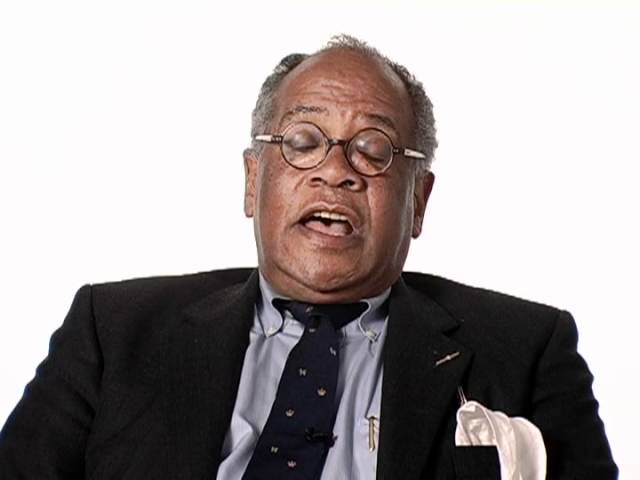
Ezekiel Emanuel On Global Warming | Big Think
Posted
April 24, 2012
Views
160
Likes
2
Comments
1
Engagement
1.88%
April 24, 2012
160
2
1
1.88%
Every word spoken in this episode is indexed. Type any phrase to jump straight to the moment it was said.
Type any word or phrase that may have been spoken. Click a result to seek the player to that exact moment.
Try a name, a topic, or a quoted line
See what was published immediately before and after this episode.
 1:36Now Playing
Ezekiel Emanuel On Global Warming
New videos DAILY
Join Big Think Edge for exclusive videos
----------------------------------------------------------------------------------
The technology exists; the political will does not.
----------------------------------------------------------------------------------
Ezekiel Emanuel:
Ezekiel Emanuel is the Chair of the Department of Bioethics at the Warren G. Magnuson Clinical Center at the National Institutes of Health. Dr. Emanuel is a well-known authority on the ethics of clinical research, end of life care issues, euthanasia and the ethics of managed care.
He has published in the New England Journal of Medicine, The Lancent, JAMA, and many other medical journals. His book The Ends of Human Life: Medical Ethics in a Liberal Polity received an honorable mention for the Rosenhaupt Memorial Book Award by the Woodrow Wilson Foundation. Dr. Emanuel was educated at Amherst College, Oxford University and Harvard University, from which he holds both an MD and PhD in political philosophy. He also served on the ethics section of President Clinton's Health Care Task Force, on the National Bioethics Advisory Committee, and on the bioethics panel of the Pan American Health Organization.
----------------------------------------------------------------------------------
TRANSCRIPT:
Question: What is the problem?
Ezekiel Emanuel: Look. You can’t be conscious and not worry about global warming, and about what we’re doing to our planet, and about the use of resources. You also have to be really horrified about our inability in this country to tackle that problem. It’s not a . . . I mean there is a classic case of where we have the technology to solve the problem. We have the insight as to how to marshal that. If we let researchers go wild and support that, we would have a lot more technology. And yet we have not created the infrastructure, or the steady stream of funding, or the political will to actually do that. And that has to sour you on the notion of democracy. That fact that we can’t seem to address a very critical problem where we . . . Again, the issue isn’t so much, “Is this gonna pay off?” It’s gonna pay off hugely. The issue isn’t, “Do we have the technology?” We already have the technology to do this. The problem is we can’t seem to organize it. And that, for me, is a recurring theme in lots of problems. I mentioned it in relationship to the healthcare system. And I think that is something which really does bother me about the United States; that we can see the problems, we can have the ability to solve the problems; and we can’t seem to marshal the forces – social and political forces – to get it right.
Sentinel Indexing in Progress
Metadata and chapters are available. Claim extraction for this episode is pending.
All video content is delivered via YouTube embedded players in accordance with the YouTube Terms of Service. Sentinel provides research tools that promote discovery and accountability across political media.