Big Think
@bigthink·8.8M subscribers·10.1K videos
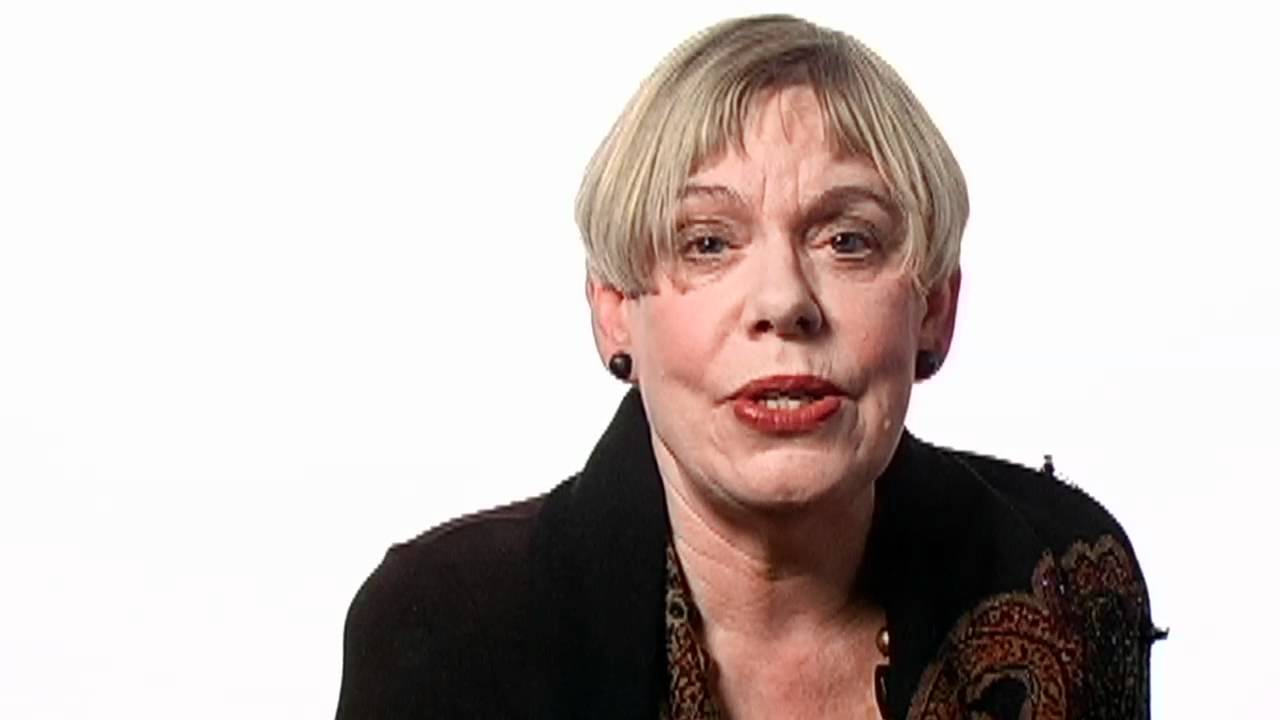
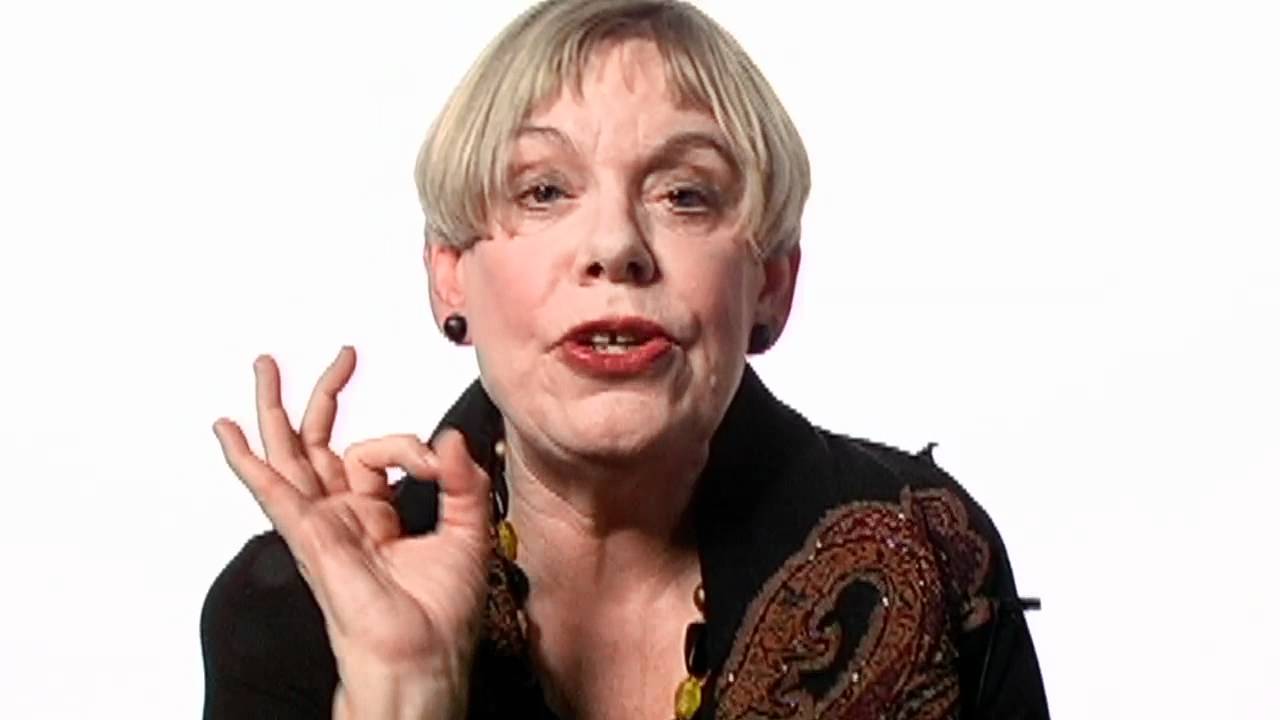
Holding the World to the Golden Rule | Karen Armstrong | Big Think
Posted
April 24, 2012
Views
562
Likes
8
Engagement
1.42%
April 24, 2012
562
8
1.42%
Every word spoken in this episode is indexed. Type any phrase to jump straight to the moment it was said.
Type any word or phrase that may have been spoken. Click a result to seek the player to that exact moment.
Try a name, a topic, or a quoted line
Episode Timeline
Every episode in order around the one you’re watching — click any card and the page flips straight to it.
 1:19
1:19 7:17Now Playing
Holding the World to the Golden Rule
New videos DAILY
Join Big Think Edge for exclusive videos
----------------------------------------------------------------------------------
All human societies have some version of the Golden Rule. What does Karen Armstrong’s “Charter for Compassion” hope to accomplish by codifying it?
----------------------------------------------------------------------------------
Karen Armstrong:
Born in England in 1944, Karen Armstrong is a TED Prize-winning scholar of comparative religion best known for her bestselling 1993 volume "A History of God." A Catholic nun from 1962 through 1969, she left the order to become a student of English literature at Oxford amidst a struggle with then-undiagnosed epilepsy, a period of her life discussed in her 2004 autobiography "The Spiral Staircase." In 2008 she called for a council of world religious leaders to draw up a "Charter for Compassion" based on the moral principles embodied in the Golden Rule. In November 2009, she unveiled the Charter in Washington, DC and online.
----------------------------------------------------------------------------------
TRANSCRIPT:
Question: Can the Golden Rule be separated from faith?
Karen Armstrong: Look, the Golden Rule lies at the heart of every religious and of every ethical system of morality, it what makes us look at one another. The religions have all adopted it independently, Chinese, Indian, Muslim, Christian, Jewish, because they find it works and because it says something very deep about the structure of our humanity. This is the way human beings work, and if we do it consistently, all day and every day, not when we just happen to feel like it, but even when it's utterly inconvenient, or it goes against our self-interest, then if we do that consistently we discover an enhanced capacity of human mind. The trouble is that most people don't. And so, one of the reasons why I started my Charter for Compassion, was to bring the Golden Rule back to the center of religion and morality and not put other's secondary goals, less demand goals, into the forefront.
Question: How do you hope to affect global policy by codifying the Golden Rule?
Karen Armstrong: Well, look. This a huge question. But it seemed to me for a long time that unless we now learn to implement the Golden Rule globally, so that we treat all peoples, all nations, whoever they are and however distant they may seem to us in terms of either distance or ideology, as we wish to be treated ourselves, we are not going to have a viable world to hand on to the next generation.
We are now linked together as never before, electronically, financially, economically, politically. What happens in Afghanistan or Gaza today can now have repercussions in New York or London tomorrow. It's no longer "trouble spots are over there"; we're all bound together and yet our world is deeply polarized. And a huge imbalance of wealth, and this is both a religious and a moral problem that should concern us all.
There's a huge imbalance in power and that has resulted in the alienation, rage, fury, and awful amoral terrorism that has erupted and is erupting at the present time. And in order to counter this, we need to make the compassionate voice of religion and morality a dynamic force in our world. And often it has been frustrating to me as a historian for religion that the religions which should be making, because of their ethos of the Golden Rule, a major contribution to this very crucial endeavor of our time, main task of our time are often seen as part of the problem and often when religious people get together all they talk about is doctrines or – I want to change that. And the more aggressive our ideologies become, the more aggressive our discourse whether it's in the United States, from Washington D.C., or whether it's from Tehran, or from some underground Al-Qaeda cell. The more aggressive that discourse is, the more people of moderate persuasion have to organize and speak a voice of compassion. That means to feel with the other.
And that doesn't just mean that we all fall into each other's arms. This requires dedicated practice. In order to always treat others, as we would wish to be treated ourselves, we have to learn about each other. Not just relying on an op-ed piece we may have read here, or a half-remembered interview on the television program there that happens to chime with our own views. We have to make a disciplined effort to find out what our governments are doing in these various parts of the world and what is actually happening. We have to learn to listen to each other's stories. Something we are not very good at.
Read the full transcript at
Sentinel Indexing in Progress
Metadata and chapters are available. Claim extraction for this episode is pending.
All video content is delivered via YouTube embedded players in accordance with the YouTube Terms of Service. Sentinel provides research tools that promote discovery and accountability across political media.