Big Think
@bigthink·8.8M subscribers·10.1K videos
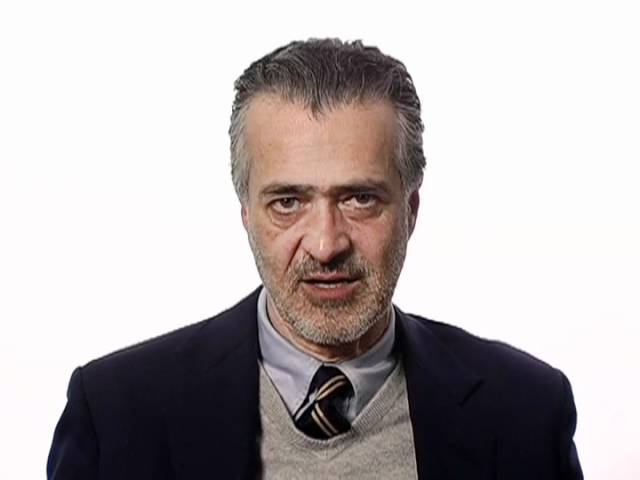
Hooman Majd Explains Iran's Role in the Arab World | Big Think
Posted
April 24, 2012
Views
3,727
Likes
35
Comments
11
Engagement
1.23%
April 24, 2012
3,727
35
11
1.23%
Every word spoken in this episode is indexed. Type any phrase to jump straight to the moment it was said.
Type any word or phrase that may have been spoken. Click a result to seek the player to that exact moment.
Try a name, a topic, or a quoted line
See what was published immediately before and after this episode.
 1:25
1:25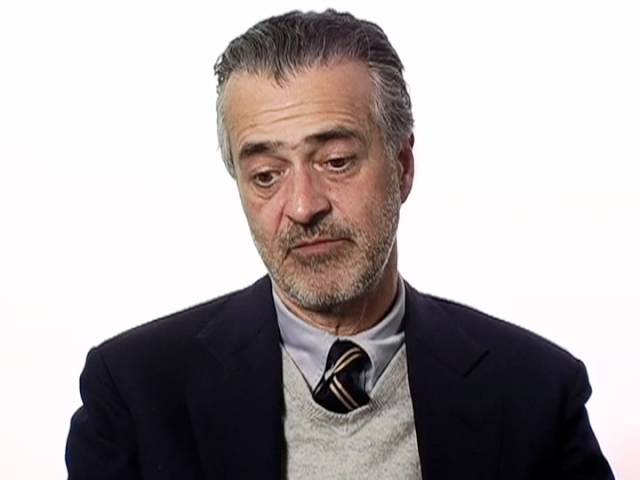 4:39Now Playing
Hooman Majd Explains Iran's Role in the Arab World
New videos DAILY
Join Big Think Edge for exclusive videos
----------------------------------------------------------------------------------
The writer describes Iran’s relations with Syria, Egypt, and Iraq.
----------------------------------------------------------------------------------
Hooman Majd:
Hooman Majd was born in Tehran, Iran in 1957, and lived abroad from infancy with his family who were in the diplomatic service. He attended boarding school in England and college in the United States, and stayed in the U.S. after the Islamic Revolution of 1979.
Majd had a long career in the entertainment business before devoting himself to writing and journalism full-time. He worked at Island Records and Polygram Records for many years, with a diverse group of artists, and was head of film and music at Palm Pictures, where he produced The Cup and James Toback's Black and White.
He has written for GQ, The New York Times, The New Yorker, The New York Observer, Interview, and Salon, and has been a regular contributor to The Huffington Post from its inception. A contributing editor at Interview magazine, he lives in New York City and travels regularly back to Iran.
----------------------------------------------------------------------------------
TRANSCRIPT:
Question: How do other Arab countries regard Iran?
Majd: Well, Syria and Lebanon is very good. Syria is a very close ally, it’s the only Arab country that supported Iran in the Iran-Iraq war, all the way back at 1980. Its relations with other Arab countries is ebbs and flows, it could be very good at times, it could be very bad at times. Right now, it’s not very good with Egypt, it’s not very good with Bahrain, there was a bit of problem recently ‘cause a former official in Iran claimed Bahrain as part of Iranian territory, Morocco just broke off relations with Iran, a lot of the Sunni countries in the region have been for 30 years, they’ve been weary of this powerful Shiite country. In the early days of the revolution, one of the reasons that Saddam Hussein invaded, with the support of all the Arab countries and with the money given to him by the Arab countries, invaded Iran was the idea of, you know, let’s clamp down on this Islamic revolution ‘cause it’s a dangerous thing, these people could come into our country or they could stir trouble among the Shiites… Saudi Arabia has 3 million Shiites for example who are an underclass in Saudi Arabia so there’s a weariness of Iranian power partly because they’re not Arab, it’s the Persian Empire, they have a long history, it’s the only country in the region, only nation in the region that’s been a country for longer than a 100 years as a nation’s state. So there’s weariness but Iran has made efforts in the past under President Rafsanjani and then following that after… under President Khatami, there was a great effort to mend relations with Saudi Arabia with a lot of the other countries in the region and they were successful with that, under Ahmadinejad it’s been a little bit bumpier I would say. Egypt is a specific problem going all the way back to the Al-Sha’b, being admitted into Egypt by Anwar Sadat, the assassination of Anwar Sadat, there’s a major boulevard in Tehran named after Anwar Sadat’s assassin, there’s a billboard of him as a martyr hero, the Egyptians have always said, “You have to change the name of that street,” the Iranians at one point said, “Okay, we will,” but it’s still there, the name of the street and my cousin’s office is there, I’d go there all the time. Those are little issues that are problematic for the Egyptians and they feel that the Iranians are, you know, supporting anti-Egyptian forces throughout the region and Egypt is an important Arab country. Now, that said, there are… you know, Ali Rafsanjani was a speaker of Parliament when to Egypt last year, Khatami has been to Egypt, there has been efforts to fix the problem of the relations between Egypt and Iran, Saudi Arabia the same thing, whenever there’s a problem, you know, somebody goes to Saudi Arabia or the Saudi Arabia foreign minister comes to Iran so they try to work it out but in general there’s a weariness among the Arab populations… Arab leaderships, sorry, in the region, a weariness of the Iran leadership and the power that Iran has.
Question: Could Iran’s secularism be a model for the rest of the Arab world?
Majd: Is it a model for other countries, I mean, I would say that it might be a model for Iraq to some degree, Iraq doesn’t want to have what they call the Vela De Fatti which means the rule of the jurisprudence which is the supreme leader, they have their supreme leader, they don’t call them a supreme leader as the Ayatollah Sistani who is the most senior cleric…
Read the full transcript at
Sentinel Indexing in Progress
Metadata and chapters are available. Claim extraction for this episode is pending.
All video content is delivered via YouTube embedded players in accordance with the YouTube Terms of Service. Sentinel provides research tools that promote discovery and accountability across political media.