Big Think
@bigthink·8.8M subscribers·10.1K videos
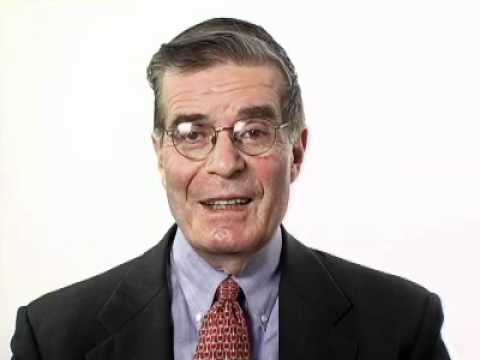
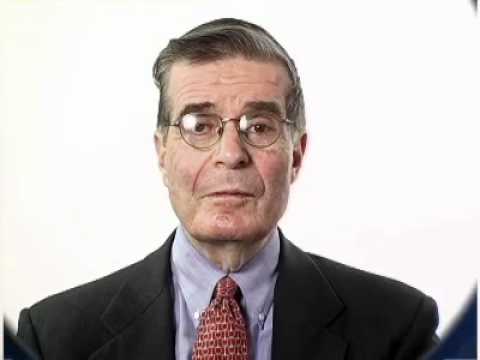
How have politics changed since JFK's presidency? Theodore C. Sorensen | Big Think
Posted
April 24, 2012
Views
481
Likes
10
Comments
2
Engagement
2.49%
April 24, 2012
481
10
2
2.49%
Every word spoken in this episode is indexed. Type any phrase to jump straight to the moment it was said.
Type any word or phrase that may have been spoken. Click a result to seek the player to that exact moment.
Try a name, a topic, or a quoted line
Episode Timeline
Every episode in order around the one you’re watching — click any card and the page flips straight to it.
 7:03Now Playing
How have politics changed since JFK's presidency?
New videos DAILY
Join Big Think Edge for exclusive videos
----------------------------------------------------------------------------------
The era of eloquence and comity has passed, says Sorensen.
----------------------------------------------------------------------------------
Theodore C. Sorensen:
Theodore C. Sorensen, former special counsel and adviser to President John F. Kennedy and a widely published author on the presidency and foreign affairs, practiced international law for more than 36 years as a senior partner, and now of counsel, at the prominent U.S. law firm of Paul, Weiss, Rifkind, Wharton & Garrison LLP. The former chairman of the firm’s International Practice Committee, he has represented U.S. and multinational corporations in negotiations with governments all over the world and advised and assisted a large number of foreign governments and government leaders, ranging from the late President Sadat of Egypt to former President Mandela of South Africa.
Mr. Sorensen and his team at Paul, Weiss have advised U.S. corporations on factories in Russia and Africa, pipelines in the Caribbean and Latin America, and disputes in the Middle East and North America, and negotiated on their behalf with government officials at the highest level in dozens of countries. He has advised foreign corporations from five continents on investments in the United States and elsewhere, foreign governments on problems with the World Bank, the United Nations, the U.S. government and foreign investors, and on changes in their respective mining, petroleum, investment and election codes, and constitutions.
In 2002, Mr. Sorensen was a fellow at the Institute of Politics at Harvard University’s Kennedy School of Government. Mr. Sorensen is on the advisory board of the Foreign Policy Leadership Council, a director of the Council on Foreign Relations (until 2004) and the Century Foundation, a member of the advisory board of the Partnership for a Secure America and an honorary co-chair of the ABA Commission on the Renaissance of Idealism in the Legal Profession. Mr. Sorensen is the author of the 1965 international best seller Kennedy, seven other books on the presidency, politics or foreign policy and numerous articles on those subjects in Foreign Affairs, The New York Times and other publications. As an active figure in the Democratic Party, he has participated in 10 of the last 12 Democratic Party National Conventions and served in a number of governmental, political and civic posts. Appointed by President Bill Clinton, he served on the boards of the Central Asian-American Enterprise Fund (covering Kazakhstan, Kyrgyzstan, Uzbekistan, Tajikistan and Turkmenistan) and the Commission on White House Fellows. He is experienced in the ways of Washington, the United Nations and the multilateral (World Bank, IFC, etc.) and U.S. (AID, OPIC, etc.) financing institutions.
Mr. Sorensen was born in Lincoln, Nebraska in 1928. He is father of three sons, one daughter and is married to Gillian Martin Sorensen, a former New York City commissioner, a former United Nations under-secretary general and current senior advisor and national advocate at the United Nations Foundation. Mr. Sorensen's memoirs, Counselor: A Life at the Edge of History, were published by HarperCollins in May of 2008.
----------------------------------------------------------------------------------
TRANSCRIPT:
Question: How have politics changed since JFK’s presidency?
Ted Sorensen: I would say it’s changed in two ways. First to stick to public speaking, the age of eloquence has disappeared. We now have a president who barely knows the language. We have speeches from political candidates and leaders which are pedestrian at best. They are not inspirational. They have very few new substantive ideas. Some are substantive and not new. Some are new but not substantive. So it’s too bad, and I think television gets part of the blame. Television is supposedly the cool medium that comes into the living room, the bedroom. For people to sound like John F. Kennedy today would seem old fashioned. And now it’s such an informal, casual era in the way we talk; the way we dress; the way we communicate with each other. There are almost no standards. There are some of course, but our leaders are not held to them. So in terms of eloquence, a lot has changed. Secondly, in terms of relations between the parties, a lot has changed. John F. Kennedy is the man who, when he refused to support the nominee of his own party for governor in his home state of Massachusetts, said, “Sometimes party asks too much.” Well today party seems to ask everything of everybody. And the candidates – even on the Senate floor – have forgotten what comity . . .
Read the full transcript at
Sentinel Indexing in Progress
Metadata and chapters are available. Claim extraction for this episode is pending.
All video content is delivered via YouTube embedded players in accordance with the YouTube Terms of Service. Sentinel provides research tools that promote discovery and accountability across political media.