Big Think
@bigthink·8.8M subscribers·10.1K videos
How The Internet Could Change Government
Posted
April 24, 2012
Views
562
Likes
7
Comments
2
Engagement
1.60%
April 24, 2012
562
7
2
1.60%
Every word spoken in this episode is indexed. Type any phrase to jump straight to the moment it was said.
Type any word or phrase that may have been spoken. Click a result to seek the player to that exact moment.
Try a name, a topic, or a quoted line
You’re on April 24, 2012. Earlier episodes are to the left, later ones to the right — the row keeps loading as you go. Click any card to open it.
 Apr 24, 20123:30Now Playing
New videos DAILY
Join Big Think Edge for exclusive video lessons from top thinkers and doers
----------------------------------------------------------------------------------
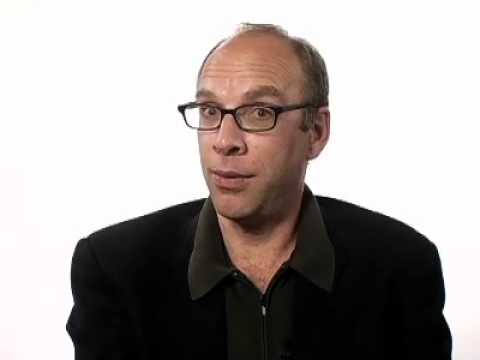
The church was the first news magnate, says tech entrepreneur Oliver Luckett. It was a top-down centralized network where just few people could access the word of God, and would disseminate that information to the masses. Centuries later another top-down network emerged: print and later television media boomed and set the agenda, relaying information with authority from just a handful of networks. Today’s communication system has a different architecture: it’s holonic, says Luckett, or horizontally disseminated – everyone with a signal and a device can produce, contribute, dispute and report news. So in which system are we better off? Are we any closer to the truth now than we were then? Luckett contends that human emotion has become the editor-in-chief of today’s news, and that to steer us away from misinformation, fake news, and opinion masquerading as fact, it will require a concerted effort in social responsibility – something that we may not be capable of en masse. Oliver Luckett and Michael J. Casey's book is The Social Organism: A Radical Understanding of Social Media to Transform Your Business and Life.
----------------------------------------------------------------------------------
OLIVER LUCKETT
Oliver Luckett is a technology entrepreneur and currently CEO of ReviloPark, a global culture accelerator. He has served as Head of Innovation at the Walt Disney Company and co-founder of video sharing platform Revver. As CEO of theAudience, Luckett worked with clients such as Obama for America, Coachella, Pixar, and American Express. He has helped managed the digital personae of hundreds of celebrities and brands, including Star Wars, The Chainsmokers, Steve Aoki, and Toy Story 3.
His book is The Social Organism: A Radical Understanding of Social Media to Transform Your Business and Life.
----------------------------------------------------------------------------------
TRANSCRIPT:
Oliver Luckett: For all of the history up until this point, our communication structures have for the most part, especially mass media systems, have been very top down and they've been controlled by a few people that had distribution control. If you look back the church was really the first broadcast network. The church built out a very defined architecture of communication that was coming from a centralized place where very few people could have the word of God come down to them and they had the ability to transcribe – this was at a point when literacy was very rare and so you had only a few people that were illiterate that could transcribe this holy word – and then they would distribute it out to a local market where you had a big impressive building that had lots of iconography and lots of beautiful images inside of it and the tallest building usually in the town and they would ring with the steeple at 8:00 a.m. and we would all congregate for mass and we would listen to one message from one incontrovertible truth, from one source.
And that's not too dissimilar from television architecture. You have a group of people in suits in New York or in Los Angeles and they're deciding what's going to be on television and then they distribute it to those towers. And at 7:00 p.m. prime time we aggregate around a television that's been brought into our home and we watch this one incontrovertible truth and this signal from a top down approach. And when the Internet started enabling people first with this underlying network architecture of TCP/IP that allowed us to transcend time and distance, that allowed any node on the network to contribute to the system, and then we started seeing things like video sharing and a photo sharing that allowed us all to become publishers. And then we had this kind of this layer of social that is redefining everything where every single person is now a contributing node on the network, and every person that is part of that uses emotions and memes and content to distributor things in a horizontal fashion. And so what that's doing is destroying the ability to discern what is authentic; what is not, what's real; what's fake, what's commercial; what's non-commercial, what's sponsored; what's non-sponsored, what's a good idea versus a bad idea. And so when we exist in this freeform society where every node on the network can contribute something to the network, and it has no checks and balances if you will, there is no top down authority that's editing it or deciding what's real or not – then suddenly it becomes every node on the network's responsibility. We’re all having to learn a ...
For the full transcript, check out
Sentinel Indexing in Progress
Metadata and chapters are available. Claim extraction for this episode is pending.
All video content is delivered via YouTube embedded players in accordance with the YouTube Terms of Service. Sentinel provides research tools that promote discovery and accountability across political media.