
Big Think
@bigthink·8.8M subscribers·10.1K videos
Is there an absolute truth? | Big Think
Posted
April 24, 2012
Views
3,770
Likes
14
Comments
13
Engagement
0.72%
April 24, 2012
3,770
14
13
0.72%
Every word spoken in this episode is indexed. Type any phrase to jump straight to the moment it was said.
Type any word or phrase that may have been spoken. Click a result to seek the player to that exact moment.
Try a name, a topic, or a quoted line
Episode Timeline
Every episode in order around the one you’re watching — click any card and the page flips straight to it.
 6:04Now Playing
Is there an absolute truth?
New videos DAILY
Join Big Think Edge for exclusive videos
----------------------------------------------------------------------------------
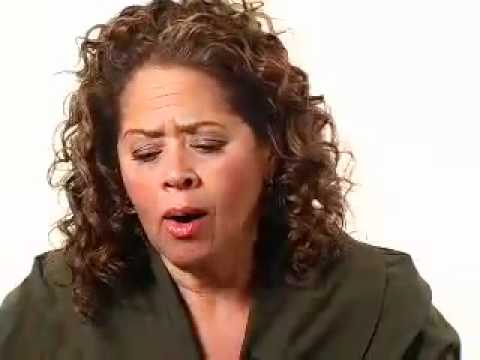
Anna Deavere Smith says there isn’t.
----------------------------------------------------------------------------------
Anna Deavere Smith:
Anna Deavere Smith is an actor, a teacher, a playwright, and the creator of an acclaimed series of one-woman plays based on her interviews with diverse voices from communities in crisis. She has won two Obie Awards, two Tony nominations for her play Twilight: Los Angeles, 1992, and a MacArthur Fellowship.
She was a Pulitzer Prize finalist for her play Fires in the Mirror. She has had roles in the films Philadelphia, An American President, The Human Stain, and Rent, and she has worked in television on The Practice, Presidio Med, and The West Wing. The founder and director of the Institute on the Arts and Civic Dialogue, she teaches at New York University and lives in New York City.
----------------------------------------------------------------------------------
TRANSCRIPT:
Question: Is there absolute truth?
Anna Deavere Smith: No. No.
I can never remember whether it’s in Mark or John in the Bible where Pontius Pilate is supposedly seeking truth about Christ. And he says, “What is truth?” You know, “Is it the truth?” You know, “Is the truth about this man, or is the truth about what will happen if I make the wrong decision." I’m quoting it very badly here.
So I think that there probably is not absolute truth. But that doesn’t mean that we shouldn’t seek to find facts. It doesn’t mean that we should lie. I think the reason lying becomes so serious is because to make a society to do things, make buildings stand, to do a heart transplant, to do anything that is important, we have to know that the people around us are telling us things that are real, if not true. We have to be able to rely on the things that we are told as fact because we want to believe that someone went and tried something first and therefore learned of that.
And then they come and say, “Well I’ve been outside, and it’s raining today.” So we’re willing to trust that and make decisions upon that fact.
So I don’t know if I’m really a seeker of truth in terms of is someone telling me truth. I think I’m a student of human beings. That’s a better way of putting it than I’m a seeker of truth. I’m a student of human beings and their motivations, and what causes them to do what they say they’re going do, or what gets in the way of that.
Sentinel Indexing in Progress
Metadata and chapters are available. Claim extraction for this episode is pending.
All video content is delivered via YouTube embedded players in accordance with the YouTube Terms of Service. Sentinel provides research tools that promote discovery and accountability across political media.


