Big Think
@bigthink·8.8M subscribers·10.1K videos
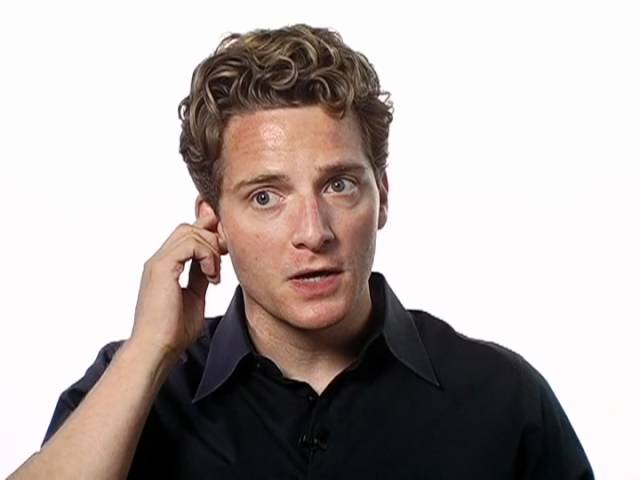
Jeffrey Zeldman Dissects Online Journalism | Big Think.
Posted
April 24, 2012
Views
1,021
Likes
13
Comments
1
Engagement
1.37%
April 24, 2012
1,021
13
1
1.37%
Every word spoken in this episode is indexed. Type any phrase to jump straight to the moment it was said.
Type any word or phrase that may have been spoken. Click a result to seek the player to that exact moment.
Try a name, a topic, or a quoted line
See what was published immediately before and after this episode.
 1:14
1:14 5:51Now Playing
Jeffrey Zeldman Dissects Online Journalism
New videos DAILY
Join Big Think Edge for exclusive videos
----------------------------------------------------------------------------------
The increasing need for interactive, seamless advertising online may put journalistic integrity at risk, says Jeffrey Zeldman.
----------------------------------------------------------------------------------
Jeffrey Zeldman:
Jeffrey Zeldman was one of the first designers, bloggers, and independent publishers on the web, and one of the first web design teachers. In 1998, he co-founded—and from 1999 to 2002 he directed—The Web Standards Project, a grassroots coalition that helped bring standards to our browsers.
He publishes A List Apart “for people who make websites;” has written two books (notably the foundational web standards text, Designing With Web Standards, 2nd Edition); co-founded the web design conference An Event Apart; and founded and is executive creative director of Happy Cog™, an agency of web design and user experience specialists.
----------------------------------------------------------------------------------
TRANSCRIPT:
Question: What's the future of online journalism?
Zeldman: I like, I’m proud of for what it is, it’s a very focus magazine with editorial policies probably you know that’s one way to do it. When you have to put news out there I think the people who do it best and have been doing it best for about 2 years are the New York Times. I worry about every newspaper, I worry about the financial undertaking and I worry that somehow the loss of the sale of the paper version will affect their ability to have journalists and editors and producers. We really need those. The New York Times seems to… and I mean, it’s a way of words towards information graphics which were amazing. If you remember a couple of years ago when they… that plane flew into the building and you felt awful like, wow that was such a horrible tragedy, we’re really digging this graphic you know, what I mean, you just kind of felt bad. But it’s really the way they lay articles out, the way you can find types of content, the way they have, you know, I think they’re doing it brilliantly I think, New York Magazine with Creative Director Ian Adelman is doing it brilliantly. There are a lot of magazines that don’t know how to do it, how to communicate online and one of the problems, I mean the biggest problem they are having .. There are two problems they are having. If you don’t have a web strategy and they all sort of to figure it out in the 90s that you need one but a lot of them just bugged down arguing about it, they don’t know how to have one or they hire the wrong consultant, did the wrong designer, they hire the designer, that gives something that looked awesome but wasn’t really strategic and wasn’t a way forward. One problem that we have that they have is money and the other is the web. Those are the two problems so, the money problem is, you know I mean there was awhile back we did… we design Ad age and then we redesign Ad age they were going through that phase that every paper goes through where maybe we can charge for our content and if the web have evolved that way the answer would be yes instead of paying $40 a year for a paper subscription I’ll pay $35 subscription for digital subscription, that would have worked and it should work and the information is just as valuable but whether you’re paying for it or not but people expect web content to be free and even though people keep saying it’s the end of free, I don’t foresee the end of free. They still think they can go online and get it free and if they can’t get it they would go somewhere else. New York Times have archives and they were charging for the archives, they gave up on that, like they gave up all there. Ad age had archives and they’re sort of, you know, when they needed to go that way all we could advice them to do is keep that as simple as possible and make it really clear all this stuff is free and this stuff isn’t and here’s what it costs. And you know, give them you know, one time fee or subscription and you know, make the value of subscribing clear and that’s it. But we really advised them to be free. The problem now is if you’re free, you’ve got to work with advertising. But in the New York Times you need to make a lot of money.
To read the transcript, please go to.
Sentinel Indexing in Progress
Metadata and chapters are available. Claim extraction for this episode is pending.
All video content is delivered via YouTube embedded players in accordance with the YouTube Terms of Service. Sentinel provides research tools that promote discovery and accountability across political media.