Big Think
@bigthink·8.8M subscribers·10.1K videos
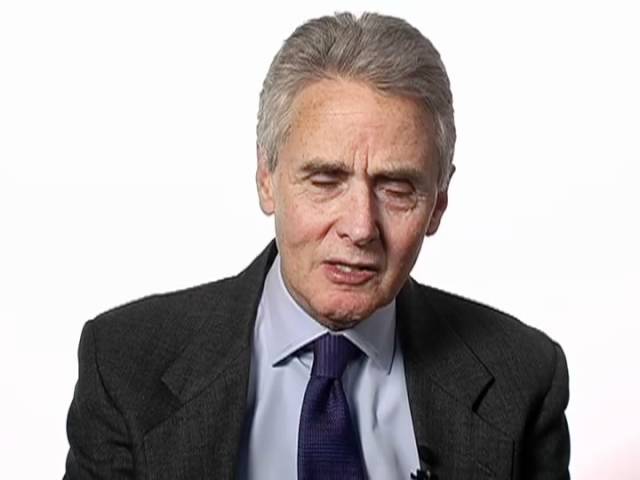
John Cacioppo on Human Nature and Happiness | Big Think
Posted
April 24, 2012
Views
1,752
Likes
28
Engagement
1.60%
April 24, 2012
1,752
28
1.60%
Every word spoken in this episode is indexed. Type any phrase to jump straight to the moment it was said.
Type any word or phrase that may have been spoken. Click a result to seek the player to that exact moment.
Try a name, a topic, or a quoted line
 4:59Now Playing
John Cacioppo on Human Nature and Happiness
New videos DAILY
Join Big Think Edge for exclusive videos
----------------------------------------------------------------------------------
John Cacioppo discusses the importance of living a connected life.
----------------------------------------------------------------------------------
John T. Cacioppo:
John T. Cacioppo is the Tiffany and Margaret Blake Distinguished Service Professor at The University of Chicago, the Director of the University of Chicago Center for Cognitive and Social Neuroscience, and the Director of the Arete Initiative at the University of Chicago. He is the author of Loneliness: Human Nature and the Need for Social Connection.
Professor Cacioppo is a Big Think Delphi Fellow.
----------------------------------------------------------------------------------
TRANSCRIPT:
Question: How do you define happiness?
Cacioppo: Happiness is typically defined by asking people about whether they are happy and whether they are satisfied with their life, sometimes it’s called subjective well-being, and sometimes it’s called life satisfaction, sometimes it’s called happiness, so that we got all three of those aspects in the items that constitute that question. And, what the research on happiness tends to show a meaningful life and a connected life are critically important. If you have no money, if you’re a destitute, that makes you unhappy. If your [disease] that makes you unhappy. But above those minimum requirements, having a meaningful life that also was connected to others turns out to be fairly critical. And when you think about it, at the moment of your death, it doesn’t really matter how much material stuff you leave behind. When I was young, I was in a very bad automobile accident and I had that moment where I thought about my life at that point. And I can tell you that all the achievements, all the material items meant absolutely nothing. The thing that I thought last about were the individuals who I loved and that was a small number. And my only concern at that point was really just with them. And that’s something I think most people, if not everyone, goes through it at the end, and it’s, you know, in some ways it was a gift for me to realize that when I still had a lifetime lived. And I think if we can realize that, then that contributes to a greater happiness as well.
Question: How do you define human nature?
Cacioppo: Human nature is defined variously by different authors and scientists, so it’s worth trying to define what I mean by it. Some describe human nature, I think what you mean by human nature as the genetics, as what’s biologically determined and that is not how I’m using the term. Human nature to me is what is our nature as humans, as simple as that. Donald Hebb, a psychologist in the middle of the 20th century at McGill University asked whether nature or nurtured genes or environment were important to behavior said, that’s a little bit like asking whether the length or the width of a triangle contributes more to the are of the rectangle. It’s both. So, we are genetic machines but those genes have been selected by environments, by cultures. They promote adaptive behavior in environments and in cultures. They’re deeply interactive when it comes to mind and behavior with the environment and with culture. And so, I think about human nature as what is the biological machinery we have, what can we do socially and culturally, and how did those combined to create the mind and behavior that we see in everyday life.
Question: What do you hope people will take from your book?
Cacioppo: I wrote the book for two reasons and I wrote the book with Bill Patrick who is a wonderful, wonderful friend and colleague now, and so I’ll say we wrote the book for two reasons. One reason was because I think loneliness is badly misunderstood, and that’s to the deterrent of 60 million people in America. That’s about 20% of the individuals feel lonely at any one point in time and that’s a lot of people that [are] miserable for perhaps unnecessary reasons. And I thought that science was at a point where we could perhaps with an intelligent help them. But there was a deeper reason and that is it’s a book about social neuroscience. It’s a book about who are we as humans, and I think the focus on the solitary individual and about us as cognitive machine, as solitary computers is wrong. I mean, fundamentally, I think it’s the wrong idea. We are not solitary computers. We are information processing devices but we’re much more like the internet, and that the capacity comes from our ability to connect with other similar devices out there and they’re reconfigured.
Read the full transcript at
Sentinel Indexing in Progress
Metadata and chapters are available. Claim extraction for this episode is pending.
All video content is delivered via YouTube embedded players in accordance with the YouTube Terms of Service. Sentinel provides research tools that promote discovery and accountability across political media.