Big Think
@bigthink·8.8M subscribers·10.1K videos
Kenji Yoshino: The Challenge of Constitutional Interpretation | Kenji Yoshino | Big Think
Posted
April 24, 2012
Views
1,318
Likes
4
Engagement
0.30%
April 24, 2012
1,318
4
0.30%
Every word spoken in this episode is indexed. Type any phrase to jump straight to the moment it was said.
Type any word or phrase that may have been spoken. Click a result to seek the player to that exact moment.
Try a name, a topic, or a quoted line
 9:39Now Playing
Kenji Yoshino: The Challenge of Constitutional Interpretation
New videos DAILY
Join Big Think Edge for exclusive videos
----------------------------------------------------------------------------------
The dichotomy between strict constructionists and those who advocate a living; Constitution is a false one, says Yoshino.
----------------------------------------------------------------------------------
Kenji Yoshino:
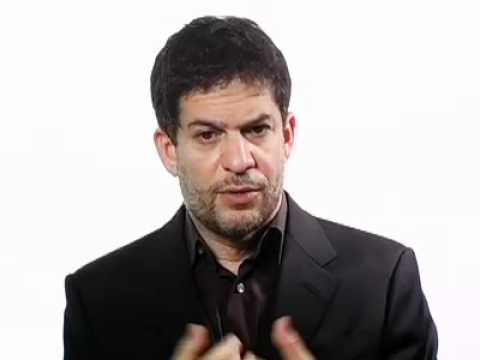
Kenji Yoshino is the Chief Justice Earl Warren Professor of Constitutional Law at the NYU School of Law. Prior to moving to NYU, he was the inaugural Guido Calabresi Professor of Law and Deputy Dean of Intellectual Life at Yale Law School, where he taught from 1998 to 2008. He received his undergraduate degree from Harvard College, took a Rhodes Scholarship to Oxford University, and earned his law degree at Yale Law School. A specialist in constitutional law, antidiscrimination law, and law and literature, Yoshino has published in major academic journals such as the Columbia Law Review, the Stanford Law Review, and the Yale Law Journal. He has also written extensively in other popular venues, such as The Boston Globe, The Los Angeles Times, The New York Times, and The Washington Post. He has appeared on The O'Reilly Factor, Washington Journal, and The Tavis Smiley Show.
He is the author of Covering: The Hidden Assault on Our Civil Rights (2006) and A Thousand Times More Fair: What Shakespeare's Plays Teach Us About Justice (2011).
----------------------------------------------------------------------------------
TRANSCRIPT:
Question: What is the challenge of Constitutional interpretation?
Kenji Yoshino: :Well I think increasingly the challenge of constitutional interpretation today is going to be how to interpret the Constitution in a polity that is increasingly diverse. So I should say there are many, many challenges. This is just my cut on it because of the issues that I’m interested in. But if you look at the Constitution, one of the things that we know about the Constitution and constitutional interpretation is that those interpretations have to change according to broad, irreversible trends in American society. So let me just give you three examples. If we have the Internet, that means that First Amendment obscenity doctrine has to change. Because obscenity doctrine used to be based on what was obscene as defined by a particular community in which you lived. But if we have the Internet, then we have one national community; and indeed a global community for that, so that’s gonna have to change. If we had a war on terror in a post-9/11 world, civil liberties is gonna have to change. And people on the other side of this – the civil libertarians – can argue until they’re blue in the face. But 20 years from now the landscape of what can be done under Fourth Amendment search and seizure, or under the Second Amendment . . . sorry, the Article II, the presidential powers provision is gonna change. When we get into my bailiwick, which is civil rights, the dominant challenge for constitutional interpretation is going to be the broad and irreversible trend of explosive pluralism in American society. So what do I mean by explosive pluralism? I mean that we used to think about race in simple black and white terms. So if you go back to Brown v. Board of Education in 1954, that was African American school children vis-à-vis white school children, and that was the debate. Now starting with the 2000 racial census we have 63 different racial categories, because we have five separate racial categories and then different permutations because you can check more than one box. That is an utterly different landscape than what we were confronting in Brown v. Board 50 years ago. Similarly Diana Eck, a professor at Harvard, has told us that we’ve never been here before with respect to the diversity of religions, because we’re now not only the most diverse religious . . . religiously diverse country in the world; we’re the most religiously diverse country in world history. And so in the same way that First Amendment doctrine is gonna have to change with respect to the Internet; and Article II is gonna have to change because of the war on terror; so too do all of the civil rights provisions of the Constitution have to take into account the fact that we’re encountering explosive pluralism within the United States.
Question: Strict constructionism vs. a “living” Constitution
Read the full transcript at
Sentinel Indexing in Progress
Metadata and chapters are available. Claim extraction for this episode is pending.
All video content is delivered via YouTube embedded players in accordance with the YouTube Terms of Service. Sentinel provides research tools that promote discovery and accountability across political media.