Big Think
@bigthink·8.8M subscribers·10.1K videos
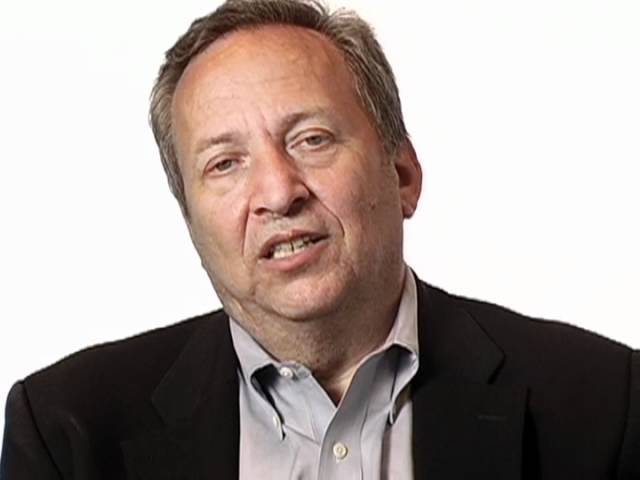
Lawrence Summers on the Problems of Academia | Big Think
Posted
April 24, 2012
Views
1,958
Likes
5
Comments
1
Engagement
0.31%
April 24, 2012
1,958
5
1
0.31%
Every word spoken in this episode is indexed. Type any phrase to jump straight to the moment it was said.
Type any word or phrase that may have been spoken. Click a result to seek the player to that exact moment.
Try a name, a topic, or a quoted line
See what was published immediately before and after this episode.
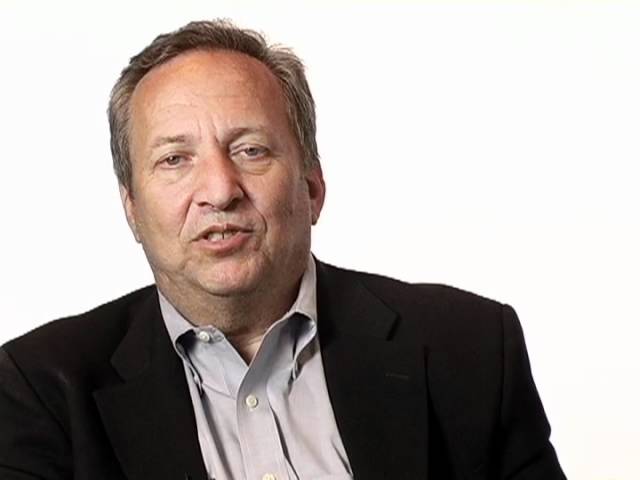 2:02Now Playing
Lawrence Summers on the Problems of Academia
New videos DAILY
Join Big Think Edge for exclusive videos
----------------------------------------------------------------------------------
Larry Summers on why academics rely more on theory than on data analysis.
----------------------------------------------------------------------------------
Lawrence H. Summers:
Lawrence H. Summers is an American economist. He is the Charles W. Eliot University Professor and President Emeritus at Harvard University, where he became one of the university's youngest tenured faculty at age 28.
The author of over 150 journal articles, Dr. Summers' wide-ranging contributions to economic research were recognized with the John Bates Clark Medal, given every two years to the outstanding American economist under the age of 40. He was also the first social scientist to receive the National Science Foundation’s Alan T. Waterman Award for outstanding scientific achievement.
Beyond his academic career, Dr. Summers has held a number of distinguished appointments in government. He previously served as Director of the National Economic Council for the Obama Administration, Secretary of the Treasury for the Clinton Administration, and Chief Economist of the World Bank.
Lawrence Summers received his S.B. from MIT and his Ph.D. in economics from Harvard. He and his wife Elisa New, a professor of English at Harvard, have six children.
----------------------------------------------------------------------------------
TRANSCRIPT:
Question: What is wrong with academia?
Lawrence Summers: I think in some cases, it’s a comfortable world view if you lack the analytic techniques to deal with data and evidence, that it’s comfortable to develop theories that render them less relevant. And that, I think, is certainly a part of the story.
I think another part of the story is that people develop a conviction that you can’t know things and, in some ultimate, philosophical sense that may be true. But decisions have to be made and people do make decisions. And it seems to me that it’s better to think about more informed decisions than less informed decisions. But with the luxury of not needing to decide, it’s easier to take the relaxed view of what constitutes truth, and what need there is for evidence than when there are consequential choices that, if made more wisely, will either have enormous benefits for people or have enormous costs to people.
So I think the feeling of responsibility for action – which I’ve been fortunate to have in my time outside and inside the university – probably creates a greater sense of responsibility to debate.
Sentinel Indexing in Progress
Metadata and chapters are available. Claim extraction for this episode is pending.
All video content is delivered via YouTube embedded players in accordance with the YouTube Terms of Service. Sentinel provides research tools that promote discovery and accountability across political media.