Big Think
@bigthink·8.8M subscribers·10.1K videos
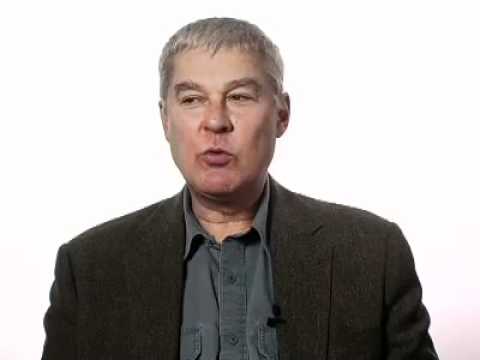
Neale Martin on How to Set Goals | Big Think
Posted
April 24, 2012
Views
1,127
Likes
11
Engagement
0.98%
April 24, 2012
1,127
11
0.98%
Every word spoken in this episode is indexed. Type any phrase to jump straight to the moment it was said.
Type any word or phrase that may have been spoken. Click a result to seek the player to that exact moment.
Try a name, a topic, or a quoted line
 4:26Now Playing
Neale Martin on How to Set Goals
New videos DAILY
Join Big Think Edge for exclusive videos
----------------------------------------------------------------------------------
Neale Martin envisions long-term customer retention.
----------------------------------------------------------------------------------
Neale Martin:
Dr. Neale Martin is an expert in consumer behavior, customer satisfaction, and bridging the gap between new technologies and markets. As a consultant and executive educator, he has spent the last decade helping communications and networking companies launch some of the past century's most innovative products and services. Martin speaks on topics ranging from creating new markets to customer service. It is his eclectic background in psychology, journalism, and dog training that gave him the insights needed to connect recent research in neurobiology and cognitive psychology to today's greatest marketing challenges.
----------------------------------------------------------------------------------
TRANSCRIPT:
Martin: You should be thinking about what’s the behavior and it’s not just [worth] the sale, you know, it’s not just, oh, I sold something, because that’s really not your long-term goal. Your long-term goal is repeat sale. Your long-term goal is having that customer for as long as you can have that customer, because it cost me, you know, maybe hundreds of dollars to acquire that customer in the first place, so the only way that becomes profitable is if I have that customer for months or years and, you know, I mean, we talk about this in terms of the lifetime value of a customer, but what I’m talking about is what are the behaviors that allow that customer to, you know, make me their habit, their way of getting something done. And marketing off and gets knocked around for sort of being unethical and that, you know, it’s like, you know, the sizzle or whatever. But, I come from the exact opposite framework that what marketing really does is it helps us design products that work really well for our customer, and it really is about this two-way communication between a market place and a company to make sure I’m designing the right products at the right places and put them in a right distribution channels and communicating what I’ve done, and try to solve those problems well. And so, you know, when we look at all of that from a behavioral perspective, what I’m trying to do is I’m trying to get my customers to automate their decisions for whatever there is they’re doing on me within this context, and so, for me to do that, they have to trust me. Then they’ll trust me, then every decision becomes a conscious decision. I remember a stockbroker I had made a recommendation that I knew was in this favor with the investing community, but we’ll give him a very good commission, it was over. I mean, as soon as he did one thing that made me not trust him, then I knew I was going to have to evaluate consciously every decision, and if I’m consciously evaluate decisions, what do I need him for, right? So, the idea here of companies doing anything that would violate their trust is from a marketing perspective the stupidest thing that a company can do. So, in many ways, marketing is going to keep the company honest. They had a part of this is that so many times the conscious brain basically creates organizational charts. You know, the conscious brain marvelous in being able to handle the complex problems. Unfortunately, a lot of times, it creates these complex solutions without appreciation for the unconscious mind’s need to actually deal with the result. So, it’s very hard, for example, for a lot of companies to create habit forming products because their own organizational structure is contrary to this principle. So, if I’ve got, you know, the [siloed] organizations, so I’ve got somebody over here doing this piece of software, somebody over here doing this hardware and somebody over here doing the pricing and somebody over here working on channels of the advertising.
Read the full transcript at
Sentinel Indexing in Progress
Metadata and chapters are available. Claim extraction for this episode is pending.
All video content is delivered via YouTube embedded players in accordance with the YouTube Terms of Service. Sentinel provides research tools that promote discovery and accountability across political media.