Big Think
@bigthink·8.8M subscribers·10.1K videos
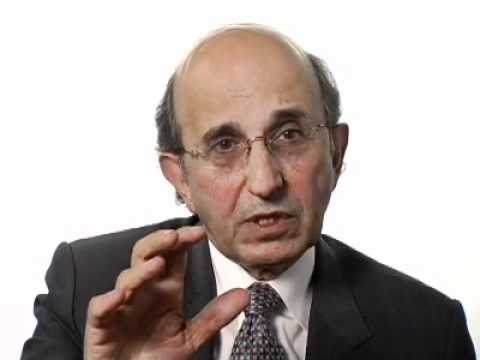
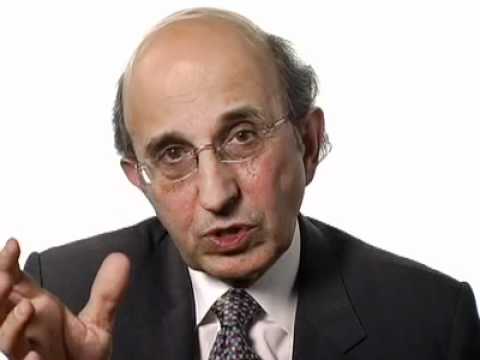
Niall Ferguson: How will this age be remembered? | Big Think
Posted
April 24, 2012
Views
8,093
Likes
51
Comments
1
Engagement
0.64%
April 24, 2012
8,093
51
1
0.64%
Every word spoken in this episode is indexed. Type any phrase to jump straight to the moment it was said.
Type any word or phrase that may have been spoken. Click a result to seek the player to that exact moment.
Try a name, a topic, or a quoted line
See what was published immediately before and after this episode.
 2:50Now Playing
Niall Ferguson: How will this age be remembered?
New videos DAILY
Join Big Think Edge for exclusive videos
----------------------------------------------------------------------------------
All of history is the history of empires.
----------------------------------------------------------------------------------
Niall Ferguson:
Niall Ferguson, MA, D.Phil., is the Milbank Family Senior Fellow at the Hoover Institution, Stanford University, and a senior fellow of the Center for European Studies, Harvard, where he served for 12 years as the Laurence A. Tisch Professor of History. He is also a visiting professor at Tsinghua University, Beijing, and the Diller-von Furstenberg Family Foundation Distinguished Scholar at the Nitze School of Advanced International Studies in Washington, DC.
He is the author of 14 books. His first, Paper and Iron: Hamburg Business and German Politics in the Era of Inflation 1897-1927, was short-listed for the History Today Book of the Year award, while the collection of essays he edited, Virtual History: Alternatives and Counterfactuals, was a UK bestseller. In 1998 he published to international critical acclaim The Pity of War: Explaining World War One and The World’s Banker: The History of the House of Rothschild. The latter won the Wadsworth Prize for Business History and was also short-listed for the Jewish Quarterly/Wingate Literary Award and the American National Jewish Book Award.
His latest book is The Square and the Tower: Networks and Power, from the Freemasons to Facebook (2017).Niall Ferguson, MA, D.Phil., is the Milbank Family Senior Fellow at the Hoover Institution, Stanford University, and a senior fellow of the Center for European Studies, Harvard, where he served for 12 years as the Laurence A. Tisch Professor of History. He is also a visiting professor at Tsinghua University, Beijing, and the Diller-von Furstenberg Family Foundation Distinguished Scholar at the Nitze School of Advanced International Studies in Washington, DC.
He is the author of 14 books. His first, Paper and Iron: Hamburg Business and German Politics in the Era of Inflation 1897-1927, was short-listed for the History Today Book of the Year award, while the collection of essays he edited, Virtual History: Alternatives and Counterfactuals, was a UK bestseller. In 1998 he published to international critical acclaim The Pity of War: Explaining World War One and The World’s Banker: The History of the House of Rothschild. The latter won the Wadsworth Prize for Business History and was also short-listed for the Jewish Quarterly/Wingate Literary Award and the American National Jewish Book Award.
His latest book is The Square and the Tower: Networks and Power, from the Freemasons to Facebook (2017).
----------------------------------------------------------------------------------
TRANSCRIPT:
Niall Ferguson: Well the only ever has been one age of empire, and it began with the dawn of civilization. All of history is the history of empires. There really isn’t much else.
There’s prehistory, and we can try and work out what non-literate hunter-gathers thought, but it’s a tough assignment.
But history is the study of what we sometimes call civilization. It’s the study of life in settlements, very often life in cities. And it doesn’t go much further back than 4,000 years ago. Now for most of the 4,000-year period, the historians concern themselves with when they are writing about civilization, the main political actors are empires, and they dominate the life of the historian. Because empires are so much better at generating evidence, enduring documents, enduring architecture than other politicss. They just last longer, and they build more, and they write more.
So the notion that there is such a thing as a discreet age of empire that isn’t coterminous with the history of civilization is, of course, absurd. There’s no point in the history of civilization when there wasn’t at least one empire, and usually there were more, competing, all coexisting in ignorance of one another’s existence.
In our time there was a wonderful illusion which was generated by thinkers on the left – not only Marxists but also radical liberals – that a thing called imperialism had come into existence quite recently, as recently as the 19th century, and in the 20th century it died, or was going to die. This was the central hypothesis of Jay Hopson of Lenin, and of generations of writers on the left.
But imperialism is something different. Imperialism is a term of abuse that you throw at empires. Empires are always with us. And even when imperialism was proclaimed to be dead, after World War II, both the reigning empires that emerged victorious - the Soviet Union and the United States – carried on behaving like empires.
Read the full transcript at
Sentinel Indexing in Progress
Metadata and chapters are available. Claim extraction for this episode is pending.
All video content is delivered via YouTube embedded players in accordance with the YouTube Terms of Service. Sentinel provides research tools that promote discovery and accountability across political media.