Big Think
@bigthink·8.8M subscribers·10.1K videos
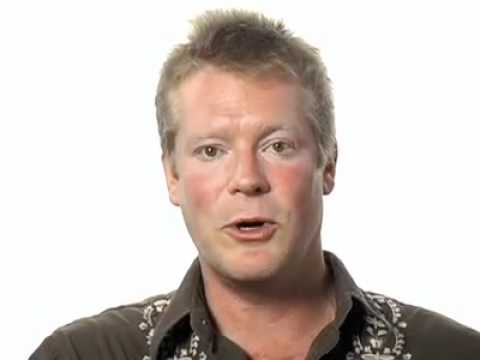
Nicholas Lemann: Can newspapers survive the digital revolution? | Big Think
Posted
April 24, 2012
Views
804
Likes
4
Comments
1
Engagement
0.62%
April 24, 2012
804
4
1
0.62%
Every word spoken in this episode is indexed. Type any phrase to jump straight to the moment it was said.
Type any word or phrase that may have been spoken. Click a result to seek the player to that exact moment.
Try a name, a topic, or a quoted line
Episode Timeline
Every episode in order around the one you’re watching — click any card and the page flips straight to it.
 2:41Now Playing
Nicholas Lemann: Can newspapers survive the digital revolution?
New videos DAILY
Join Big Think Edge for exclusive videos
----------------------------------------------------------------------------------
Newspapers will survive, but they won’t be understood as newspapers.
----------------------------------------------------------------------------------
Nick Lemann:
Nick Lemann is the Dean of the Columbia University School of Journalism and a former New Yorker staff writer. While at Harvard – where he graduated in 1976 – Lemann served as President of the Crimson. He has worked as a reporter and editor at The Washington Monthly, Texas Monthly, The Atlantic Monthly and The Washington Post, focusing primarily on national affairs.
Lemann is the author of The Promised Land: The Great Black Migration and How It Changed America, The Big Test: The Secret History of the American Meritocracy, about the SAT, and most recently, Redemption: The Last Battle of the Civil War, about the failure of Reconstruction. At Columbia, where he was hired as Dean of the Journalism School in 2003, Lemann implemented a two-year curriculum and has focused on teaching alternative journalistic mediums in the Internet age.
----------------------------------------------------------------------------------
TRANSCRIPT:
Nicholas Lemann: I think news organizations can survive the digital revolution. This is a very fast moving picture. I would say if you asked me to predict as of today, then my prediction might be different in three months. Let’s say you’re the Cleveland...dealer. What are you gonna look like in 25 years? You will be the dominant news gathering organization in Cleveland, Ohio probably. You (15:43) will have somewhat fewer employees on the news side than you do now, but you’ll still exist and you’ll still be profitable. You’ll be exploring creative arrangements – you know freelance, contract, part time – all the things that those of us who come from the magazine business know and love so well in the newspaper business. You will have your primary audience on the Internet. Your print audience will be much smaller than it is now. You’ll be charging three, four, five times as much for daily newspaper delivery as you do now. And as a result the daily newspaper will be a more sort of elite product that offers more kind of specialized analytic information. It’ll feel more like a sort of mini New York Times. It’ll be pitched to advertisers as such. One the Internet you’ll have a free Home page that has . . . is more sort of general and has a big circulation. And then inside of that there will be what’s known in the trade as verticals or channels that are about very, very thinly shaved, specific interests, and you’ll probably have to pay to enter those – something about your high school football team; very specific information about the suburb where you live; things like that. I mean the New York Times is sort of a magazine. It has the feel of a magazine. So in that sense, yes, it will be a magazine. It won’t be printed like a magazine, but it will feel more “magazine” and less “newspapery”. But the main thing is I think these news organizations will live on as news organizations in their communities. They won’t just go out of business. But they won’t be understood as newspapers.
Sentinel Indexing in Progress
Metadata and chapters are available. Claim extraction for this episode is pending.
All video content is delivered via YouTube embedded players in accordance with the YouTube Terms of Service. Sentinel provides research tools that promote discovery and accountability across political media.