Big Think
@bigthink·8.8M subscribers·10.1K videos
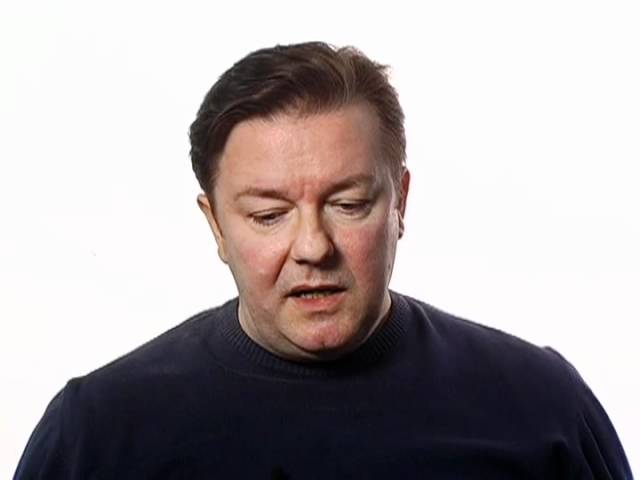
Ross Bleckner Counsels Young Artists | Big Think
Posted
April 24, 2012
Views
2,722
Likes
31
Comments
1
Engagement
1.18%
April 24, 2012
2,722
31
1
1.18%
Every word spoken in this episode is indexed. Type any phrase to jump straight to the moment it was said.
Type any word or phrase that may have been spoken. Click a result to seek the player to that exact moment.
Try a name, a topic, or a quoted line
See what was published immediately before and after this episode.
 3:38Now Playing
Ross Bleckner Counsels Young Artists
New videos DAILY
Join Big Think Edge for exclusive videos
----------------------------------------------------------------------------------
Ross Bleckner on unleashing your inner artist.
----------------------------------------------------------------------------------
Ross Bleckner:
Ross Bleckner received his Bachelor of Arts degree from NYU and his Master of Fine Arts degree from the California Institute of the Arts in Valencia California. He is well-known for his large-scale paintings in the art world and his works have been shown in esteemed public collections throughout the world, including MoMA, MoCA, Astrup Fearnley, Museo National Centro de Arte Reina Sofia, and the Whitney Museum of American Art. Mr. Bleckner is also recognized as the youngest artist ever to have a solo exhibition at the Guggenheim Museum in New York.
In addition to Mr. Bleckner's works, he has taught at many of the nation's most prestigious universities. Additionally, he is president of Community Research Initiative on AIDS (CRIA), a non-profit community-based AIDS research and treatment education center.
----------------------------------------------------------------------------------
TRANSCRIPT:
Question: What advice do you have for artists beginning their careers?
Bleckner: I would love, someone else when they see it, to not only say it’s beautiful but hopefully to say that the experience beyond that. I mean, because beauty in the art world, particularly, let’s say, in the kind of academic art world, is a dismissive term, which, essentially, would mean decorative. And I say to students, I say, well, I hate to tell you guys but you can make it as rigorous as you want, you can make it as theoretical as you want but don’t make it that hermetic. Let other people in. You know, remember who are you talking to. You just want to talk to yourself, you want to talk to a few art professionals, or as Barnett Newman said, “You want to hit the ball out of the field.” And I think that’s really important. I think that is a really important part of being an artist. You know, I always had a sense of who I was talking to in my work, who my audience was. It was always very limited. It’s the voices in our head. We all have voices in our head. That’s what I mean by the kind of the weight of consciousness, who those voices are, how they change. Over the years, they change. Sometimes, in my head, those voices… A matter of fact, most of the time, unfortunately those voices are very harsh. They render, really, very astringent criticism, you know, which any artist will tell you. They are their own worst critic. I don’t have to read criticism to know everything that’s wrong with my work. There’s never a critic who said something bad about my work that I didn’t disagree, that I disagree with because I knew, when I read it, that I could do it better. As a matter of fact, when I’ve read good things, it kind of upsets me. I don’t know why, it’s just the way I am. When you talk to students, you tell them… you know, in the end, you could do whatever you want but don’t let these terms and don’t let the academic part of being an artist, the kind of graduate… the graduate school mentality, oppress you because that’s exactly why you became an artist. You know, it’s kind of peeling back of layers. It’s, hopefully, a path to some kind of liberation, some kind of map of how you could find your way out of the, what I consider, the unnecessary suffering that goes on in a lot of our minds all the time.
Sentinel Indexing in Progress
Metadata and chapters are available. Claim extraction for this episode is pending.
All video content is delivered via YouTube embedded players in accordance with the YouTube Terms of Service. Sentinel provides research tools that promote discovery and accountability across political media.