Big Think
@bigthink·8.8M subscribers·10.1K videos
Searching for Meaning | Big Think
Posted
April 24, 2012
Views
993
Likes
17
Engagement
1.71%
April 24, 2012
993
17
1.71%
Every word spoken in this episode is indexed. Type any phrase to jump straight to the moment it was said.
Type any word or phrase that may have been spoken. Click a result to seek the player to that exact moment.
Try a name, a topic, or a quoted line
Episode Timeline
Every episode in order around the one you’re watching — click any card and the page flips straight to it.
 5:41Now Playing
Searching for Meaning
New videos DAILY
Join Big Think Edge for exclusive videos
----------------------------------------------------------------------------------
Philosophy does not explain the meaning of life, psychology does.
----------------------------------------------------------------------------------
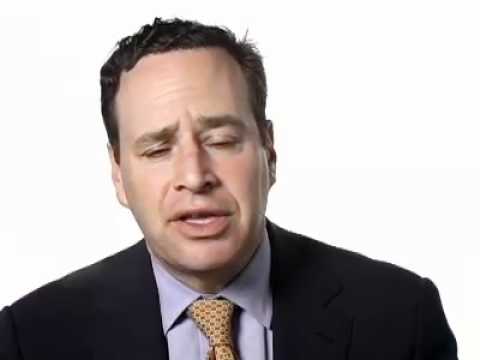
Jonathan Haidt:
Jonathan Haidt is the Thomas Cooley Professor of Ethical Leadership at New York University’s Stern School of Business. He is the author of The Righteous Mind and The Happiness Hypothesis.
----------------------------------------------------------------------------------
TRANSCRIPT:
Jonathan Haidt: I happened to take a Psych 101 class in college. The teacher was great. Her name was Faye Crosby. And I just thought it was so interesting I ended up taking a few more.
I was dead set on being a philosophy major, because I wanted to figure out the meaning of life. Four years later I realized philosophy had really nothing to say about the meaning of life, and psychology and literature are really where it’s at.
Question: How do happiness and psychology fit in together?
Jonathan Haidt: I don’t know that all these recent books on happiness fit together.
My own book was originally titled “Twelve Great Truths: Insights Into Mind and Heart from Ancient Cultures and Modern Psychology.” As I ran out of time in writing it, we changed the title to “Ten Great Truths: Insights Into Mind and Heart.” And then the publishers made up the title, “The Happiness Hypothesis.”
I didn’t really know what it meant at first. Ultimately I was able to link together all these great truths in a way that led to a formulation for how one can be happy.
The many other books about happiness, a lot of them grow out of a common body of recent research on happiness. So there’s a lot of new scholarship and a lot of people with different angles on it.
Question: What is the relationship between philosophy and moral psychology?
Jonathan Haidt: Well, I think moral philosophy is speculation on how we ought to live together done by people who have very little clue how people work. So I think most moral philosophy is disconnected from the species that we happen to be. In fact, they like it that way. Many moral philosophers insist that morality grows out of our rationality, that it applies to any rational being anywhere in the universe, and that it is not based on contingent or coincidental facts about our evolution.
So I think that moral philosophy is useful for framing questions, but terrible at answering them. I think moral psychology is booming right now, and we’re making a lot of progress on understanding how we actually work, what our moral nature is.
Question: Does moral philosophy inform psychology?
Jonathan Haidt: I would have to say generally no. Moral philosophy does give us certain questions that we can anchor around, but that is as much an obstacle as a benefit. There is just too much work; looking at say the Kantian theory of ethics, focusing on moral reasoning, stages of moral reasoning.
I take more of a naturalistic approach to morality. It’s a fact about us, just like our sexuality or our language. And I don’t think studying ancient linguistic theories from the Greeks does a lot to help us understand language. I would rather read Steve Pinker than the ancients on that. And the same thing about morality. I think studying the ancients on philosophy doesn’t help us very much, except for the few who were really great psychologists, such as David Hume.
Question: Who in psychology is teaching us great things?
Jonathan Haidt: I think a lot of the work on how we are not particularly rational creatures. We are creatures of habit and intuition and emotion. So the work of Dan Kahneman and the late Amos Tversky, and others who are looking into all the various biases and errors that the mind makes.
I think the greatest work in social psychology from the 1950s and ‘60s is enormously important. I wish every high school kid could take a course in social psychology. I think we’re making enormous strides in understanding the brain. These aren’t yet giving us great insights, but I feel like we’re on the verge of it. In five or ten years this basically searching the brain is really going to change things.
Question: Why is social psychology important?
Jonathan Haidt: Social psychology’s the study of how we live together, influence each other, and our influenced by each other.
Read the full transcript at
Sentinel Indexing in Progress
Metadata and chapters are available. Claim extraction for this episode is pending.
All video content is delivered via YouTube embedded players in accordance with the YouTube Terms of Service. Sentinel provides research tools that promote discovery and accountability across political media.