Big Think
@bigthink·8.8M subscribers·10.1K videos
Seth Berkley On AIDS in Africa | Big Think
Posted
April 24, 2012
Views
454
Likes
2
Comments
1
Engagement
0.66%
April 24, 2012
454
2
1
0.66%
Every word spoken in this episode is indexed. Type any phrase to jump straight to the moment it was said.
Type any word or phrase that may have been spoken. Click a result to seek the player to that exact moment.
Try a name, a topic, or a quoted line
See what was published immediately before and after this episode.
 2:31Now Playing
Seth Berkley On AIDS in Africa
New videos DAILY
Join Big Think Edge for exclusive videos
----------------------------------------------------------------------------------
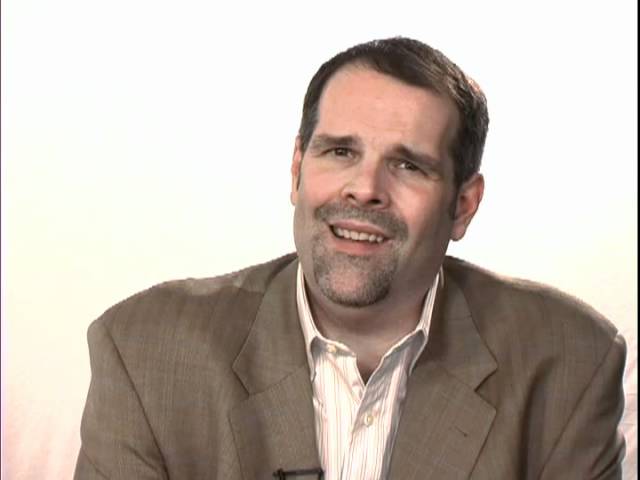
Seth Berkley ponders why the disease spreads faster in certain areas.
----------------------------------------------------------------------------------
Seth Berkley:
Seth Berkley, President and founder of the International AIDS Vaccine Initiative, is a medical doctor specializing in infectious disease epidemiology and international health. The author of over 85 publications, the opening line of one of his articles encapsulates his life's work: "History will not judge HIV/AIDS kindly...the harshest words will be reserved for how the world responded, or rather failed to respond, to the epidemic."
Prior to founding IAVI in 1996, Dr. Berkley was the Associate Director of the Health Sciences Division at The Rockefeller Foundation. Dr. Berkley is also an adjunct Professor of Public Health at Columbia University and an adjunct Professor of Medicine at Brown University. He received his undergraduate and medical degrees from Brown University and trained in Internal Medicine at Harvard University. He has worked for the Center for Infectious Diseases of the U.S. Centers for Disease Control, the Massachusetts Department of Public Health, and for the Carter Center, where he was assigned as an epidemiologist at the Ministry of Health in Uganda. He sits on a number of international steering committees and corporate and not-for-profit boards and has consulted or worked in over 25 countries in Asia, Africa and Latin America.
He is also an opinion leader, speaking frequently on health technology, development, AIDS and international health. In his words, "It is long past due to add HIV/AIDS to the list" of eradicated diseases.
Prior to founding IAVI in 1996, Dr. Berkley was the Associate Director of the Health Sciences Division at The Rockefeller Foundation. Dr. Berkley is also an adjunct Professor of Public Health at Columbia University and an adjunct Professor of Medicine at Brown University. He received his undergraduate and medical degrees from Brown University and trained in Internal Medicine at Harvard University. He has worked for the Center for Infectious Diseases of the U.S. Centers for Disease Control, the Massachusetts Department of Public Health, and for the Carter Center, where he was assigned as an epidemiologist at the Ministry of Health in Uganda. He sits on a number of international steering committees and corporate and not-for-profit boards and has consulted or worked in over 25 countries in Asia, Africa and Latin America.
He is also an opinion leader, speaking frequently on health technology, development, AIDS and international health. In his words, "It is long past due to add HIV/AIDS to the list" of eradicated diseases.
----------------------------------------------------------------------------------
TRANSCRIPT:
Seth Berkley: One of the questions is why did the virus spread initially here in the United States and in Europe in men who were having sex with men and IV drug users, and have heterosexual spread occur here, but to a lesser degree, but in the developing world, these massive epidemics heterosexually. There’s been a lot of questions about that. Some people have postulated maybe the viruses, which are different -- the viruses that circulate different parts of the world so maybe the viruses perhaps were better adapted to heterosexual transmission in the developing world. Other people have postulated it’s because they were more other sexually transmitted infections or people’s immune systems were activated. But the answer is we really don’t understand why that is, but that being said, the explosions of disease in some places in Southern Africa, you have 30 to 40% of the adults infected and that’s all heterosexual transmission and it exploded from a time in Southern Africa 20 years ago when there was almost no epidemic. So there clearly is a different dynamic in those places.
Question: Are African strains more deadly?
Seth Berkley: Southern Africa is infected with a CLAID-C virus. CLAID-C virus is also the virus that infects India and that area of the world. Some people have postulated that that particular strain might be a strain that transmits better to heterosexuals but somehow, we’ve been unable to prove that in a study. There had been other things that have come out of South Africa that have been of concern.
Read the full transcript at
Sentinel Indexing in Progress
Metadata and chapters are available. Claim extraction for this episode is pending.
All video content is delivered via YouTube embedded players in accordance with the YouTube Terms of Service. Sentinel provides research tools that promote discovery and accountability across political media.