Big Think
@bigthink·8.8M subscribers·10.1K videos
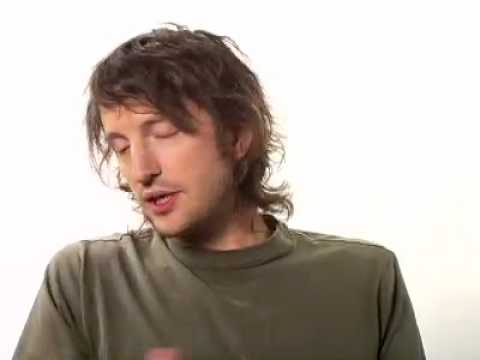
The Gap Between Who We are and Who We Want to Be | Sam Gosling | Big Think
Posted
April 24, 2012
Views
603
Likes
13
Comments
2
Engagement
2.49%
April 24, 2012
603
13
2
2.49%
Every word spoken in this episode is indexed. Type any phrase to jump straight to the moment it was said.
Type any word or phrase that may have been spoken. Click a result to seek the player to that exact moment.
Try a name, a topic, or a quoted line
Episode Timeline
Every episode in order around the one you’re watching — click any card and the page flips straight to it.
 3:46Now Playing
The Gap Between Who We are and Who We Want to Be
New videos DAILY
Join Big Think Edge for exclusive videos
----------------------------------------------------------------------------------
It is easiest to spot the people who are trying to change their habits, says Sam Gosling.
----------------------------------------------------------------------------------
Sam Gosling:
Sam Gosling, Ph.D., is an associate professor of psychology at the University of Texas at Austin. His work has been widely covered in the media, including The New York Times, Psychology Today, NPR, and "Good Morning America," and his research is featured in Malcolm Gladwell's "Blink." Gosling is the recipient of the American Psychological Association's Distinguished Scientific Award for Early Career Contribution. His first book, Snoop, was a New Scientist Editor's Pick for top books of 2008. His most recent research has focused on how animal psychology can inform theories of human personality and social psychology.
----------------------------------------------------------------------------------
TRANSCRIPT:
Question: What about people who are trying to change their habits?
Sam Gosling: Well, that’s very interesting- so you can spot that kind of thing in a space, often. So there really is a difference between somebody who’s messy and totally cool with it, and somebody who’s messy and wishes they weren’t. And one of the ways you can do that is looking for efforts- but, invariably, failed efforts, to get their acts together. And you often see that- you see people- “okay, I’m gonna get all the color-coded files and I’m gonna get the paper clips and I’m gonna get the organizers”- and you see that stuff, and either- and they have a calendar!
You see it- so they get in there, but if you look closely, you see that the calendar is actually twenty days out of date, they haven’t turned it over, you’ll see that they started to use the- put all the accounts in the red files, but then they just didn’t anticipate how many red files they needed, so they use a blue file, instead. And you just see these things begin to break down.
I’m like that, too- I said, okay, I’m gonna get organized, I’m going to get some tea- I’m going to go to IKEA and I’m gonna get some CD boxes, and these lovely CD drawers, and I did that. And if you came into my house, you’d think, “oh, how organized he is.” But if you took a closer look, you’d see that after two days, my organizational system broke down because I’m playing one thing, then I’m not thinking about it and start to put on another CD, and I just can’t maintain it. And I think that’s one of the reasons why physical spaces are so revealing, and so interesting, is because it really reflects long-term behaviors that’s very hard to fake. In order to- we saw this in some of the spaces- we found real differences between a tidy room, a structurally deep, tidy space and a tidied space.
Because if if the boss is coming over or prospective- there’s only so much you can do in a hour or a day even, to do that. And one of the reasons is, as I said, because it takes so long to construct a space and make it deeply tidy. Another reason is that people with different personalities just see the world differently. So I remember assessing a colleague’s office, and saying, oh, well, you seem to be high on this conscientiousness trait, which I call the “air traffic controllers.” You want your air traffic controllers to be high in this trait.
They come to work on time, they focus, they’re task-oriented and all that stuff- so I said, I bet you seem to be high on this trait, I predict that you would be very punctual for your classes, and she goes, “No!” She said, “I’m not! I’m not at all punctual- you got that wrong.”
And I said, well, what do you mean by that? And she goes, “Well actually lately things have been going downhill. I now only show up fifteen minutes before my class instead of the usual thirty.” Right? So she just- so part of her personality, though, was having a different standard for judging it. I’ve never shown up fifteen minutes before my class- ever. I mean, because I can’t get my act together. So- and I think this reveals an important point- is when you- it’s when you talk to people about their personality- part of their personality affects how they see their personality, which is why we often ask other people about them- not just self-reports.
Recorded on: June 13, 2008.
Sentinel Indexing in Progress
Metadata and chapters are available. Claim extraction for this episode is pending.
All video content is delivered via YouTube embedded players in accordance with the YouTube Terms of Service. Sentinel provides research tools that promote discovery and accountability across political media.