Big Think
@bigthink·8.8M subscribers·10.1K videos
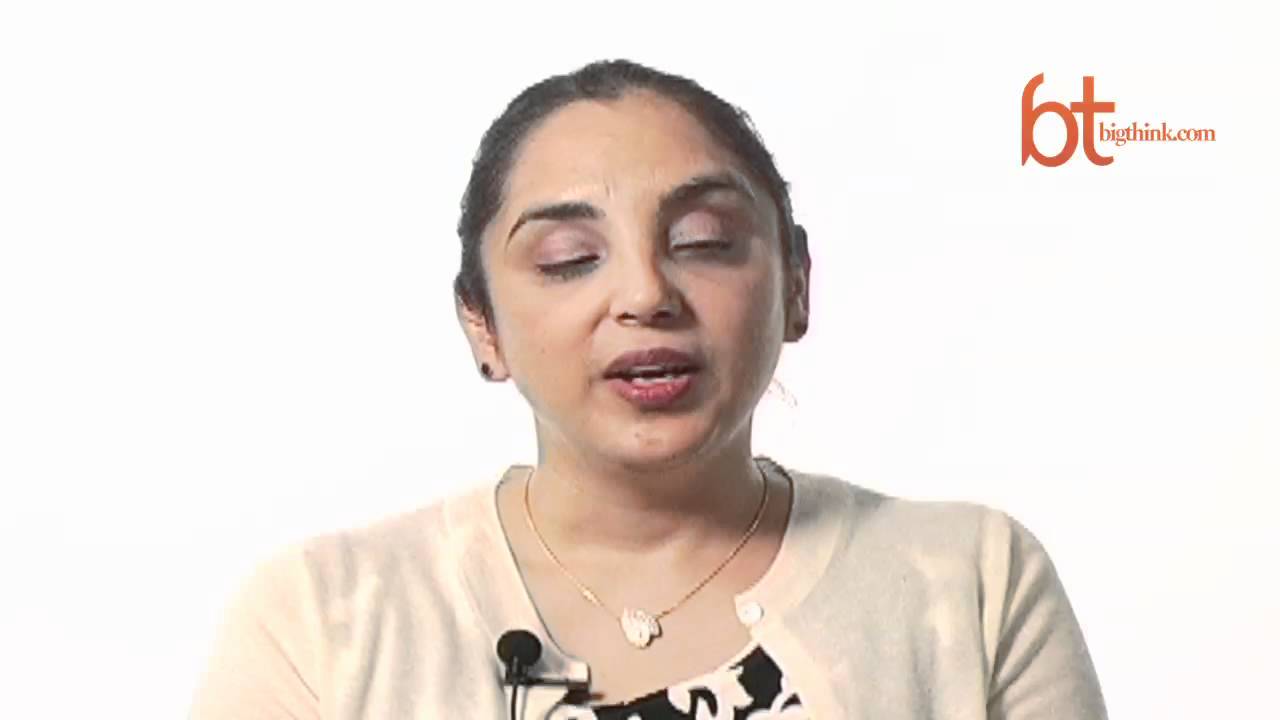
The Limits of Blindness on Choice | Sheena S. Iyengar | Big Think
Posted
April 24, 2012
Views
2,441
Likes
9
Comments
1
Engagement
0.41%
April 24, 2012
2,441
9
1
0.41%
Every word spoken in this episode is indexed. Type any phrase to jump straight to the moment it was said.
Type any word or phrase that may have been spoken. Click a result to seek the player to that exact moment.
Try a name, a topic, or a quoted line
 9:20Now Playing
The Limits of Blindness on Choice
New videos DAILY
Join Big Think Edge for exclusive videos
----------------------------------------------------------------------------------
Growing up in a Sikh-American family, the business professor became fascinated with decisions. As she gradually grew blind, she wondered how much her own choices would be diminished.
----------------------------------------------------------------------------------
Sheena S. Iyengar:
Sheena S. Iyengar is the inaugural S. T. Lee Professor of Business in the Management Division of the Columbia Business School. She has earned an Innovation in the Teaching Curriculum award for teaching Leadership Development at Columbia. One of the world's experts on choice, Professor Iyengar received a dual degree from the University of Pennsylvania in 1992, consisting of a B.S. in Economics from the Wharton School of Business and a B.A. in psychology with a minor in English from the College of Arts and Sciences. In 1997 she completed her Ph.D. in social psychology from Stanford University. Her dissertation, entitled "Choice and Its Discontents," received the prestigious Best Dissertation Award for 1998 from the Society of Experimental Social Psychology. Her first book, "The Art of Choosing," was recently published and is an exploration of the mysteries of choice in everyday life.
----------------------------------------------------------------------------------
TRANSCRIPT:
Question: How did you come to study choice?
Sheenarn Iyengar: I think I was always informally thinking about choice rnfrom when I was a very young child because I was born to Sikh immigrant rnparents, so I was constantly going back and forth between a Sikh rnhousehold and an American outside world, so I was going back and forth rnbetween a very traditional Sikh home in which you had to follow the Fivern K’s. You know never cut your hair, always carry around a comb, never rntake off your underwear other than… I mean never take off your rnunderwear even if it was in the shower, dress very conservatively and sorn I was living, growing up in a very traditional household and yet at thern same time I was going to school in the United States where I was taughtrn the importance of personal preference, so at home it was all about rnlearning your duties and responsibilities whereas in school it was all rnabout well you get to decide what you want you want to eat. You get to rndecide how you’re going to look and what you’re going to be when you rngrow up and when people learned that my parents actually had an arrangedrn marriage people thought that was the most horrific thing on earth. I rnmean how could anybody allow their marriage of all things to be rnprescribed by somebody else? And you know I went home and they seemed… rnmy parents seemed normal. They didn’t seem to feel like somehow they rnhad been victims of some Nazi camp or something. So it was constantly rngoing back and forth between these two cultures that kept raising the rnquestion, well, how important is personal freedom? And I think that hasrn always been of interest to me.
Then, the other thing that rnaffected my interest in choices growing up was the fact that I was goingrn blind and that meant that there were lots of questions that constantly rnkept arising about how much choices I actually could have. So on the onern hand in school you’re teachers are constantly telling you that you can rnbe whatever it is you want to be as long as you put your mind and heart rnto it, and yet at the same time I was also getting the clear message of,rn well, what can you do really? I mean can you walk to school on your rnown? Can you study science? Can you study math? Can you go to a rnnormal school? Do you need to go to a special school? What is going torn become of you when you grow up? Are you going to have to live on rnsocial security and SSI? Are you going to be able to shave your legs? rnAre you going to be able to get married? So it was constantly thinking rnabout both choice in terms of possibilities–I mean because choice is thern thing that is supposed to enable you to be whatever it is you want to rnbe–and yet, at the same time you have to think about choice in terms of rnits limitations. And I think that too ended up affecting a lot of the rndifferent research questions that I later asked was really was about rnwell to what extent… How do we balance choice as possibility and choicern as limitations?
Question: Do you approach choice rndifferently from people who have sight?
Read the full transcript at
Sentinel Indexing in Progress
Metadata and chapters are available. Claim extraction for this episode is pending.
All video content is delivered via YouTube embedded players in accordance with the YouTube Terms of Service. Sentinel provides research tools that promote discovery and accountability across political media.