Big Think
@bigthink·8.8M subscribers·10.1K videos
The Rise of the Productive Consumer | Big Think
Posted
April 24, 2012
Views
218
Likes
7
Engagement
3.21%
April 24, 2012
218
7
3.21%
Every word spoken in this episode is indexed. Type any phrase to jump straight to the moment it was said.
Type any word or phrase that may have been spoken. Click a result to seek the player to that exact moment.
Try a name, a topic, or a quoted line
See what was published immediately before and after this episode.
 2:53Now Playing
The Rise of the Productive Consumer
New videos DAILY
Join Big Think Edge for exclusive videos
----------------------------------------------------------------------------------
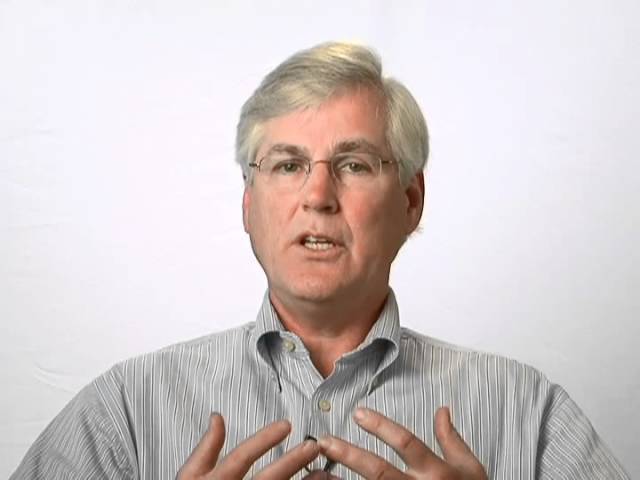
Paul Saffo analyses the shift in power from producers in the industrial economy, to marketers in the consumer economy. He predicts that new “economic actors” who create and consume simultaneously will be more powerful than manufacturers and advertisers.
----------------------------------------------------------------------------------
Paul Saffo:
Paul Saffo is a forecaster and essayist with over two decades experience exploring long-term technological change and its practical impact on business and society. He teaches at Stanford University and is a Visiting Scholar in the Stanford Media X research network.
He was the founding chairman of the Samsung Science Board and serves on a variety of other boards including the Long Now Foundation, the Singapore National Research Foundation Science Advisory Board, and the Pax Group. He has served as an advisor and Forum Fellow to the World Economic Forum since 1997.
He is a columnist for ABCNews.com, and his essays have appeared in numerous publications including The Harvard Business Review, Fortune, Wired, The Los Angeles Times, Newsweek, The New York Times, and the Washington Post. He is a Fellow of the Royal Swedish Academy of Engineering Sciences, and holds degrees from Harvard College, Cambridge University and Stanford University.
----------------------------------------------------------------------------------
TRANSCRIPT:
Topic: Forecasting the Future Economic Landscape
Paul Saffo: There is a profound change in the economy today. And to make sense of what’s happening now you have to go back a hundred years. A hundred years ago we had an emerging industrial economy, the central actor was the worker and the symbol of that economy was the time clock because companies then, the big industrial concerns, were utterly preoccupied with making enough stuff cheaply enough to satisfy the demands of an emergent working class and middle class and we spent 50 years perfecting the industrial economy.
And after World War II, when companies returned back to making things for consumers, they discovered to their horror they had gotten so good at making stuff that they were now making more stuff than people wanted.
And that was the end of the industrial economy and the birth of a new economy, the consumer economy, in which power shifted from the heads of manufacturing, those who produce, to the heads of sales and marketing, those who created desire and demand for products. And power in the market place shifted from worker, the person who produced, to the consumer, the person who purchased. And the symbol of that economy was the credit card, that vehicle that allowed people to buy things even if they didn’t have any money.
Well, that economy ended last fall with Black Sunday and the beginning of another financial collapse because we discovered we had so inflamed desires over the last 50 years that now people wanted more things than they could possibly ever use or possibly ever afford.
This new economy that’s just emerged has a new central economic actor. It’s not the worker, the person who produces, nor the person who consumes, the purchaser. It’s a new actor that does both things at the same time, call them a creator. They both create and consume in the same single act, and we’re just beginning to see the shape of this new economy and it changes not just the economy itself, it’s going to change the whole nature of the work relationship.
I’m not sure the notion of employee or job is going to survive the transition over the next couple of decades. The very notion of a fulltime job will seem as quaint in 20 years as the notion of someone getting a gold watch at their retirement in the 1950s.
Sentinel Indexing in Progress
Metadata and chapters are available. Claim extraction for this episode is pending.
All video content is delivered via YouTube embedded players in accordance with the YouTube Terms of Service. Sentinel provides research tools that promote discovery and accountability across political media.