Big Think
@bigthink·8.8M subscribers·10.1K videos
The Worst Day at General Electric | Ben Heineman, Jr. | Big Think
Posted
April 24, 2012
Views
392
Likes
6
Engagement
1.53%
April 24, 2012
392
6
1.53%
Every word spoken in this episode is indexed. Type any phrase to jump straight to the moment it was said.
Type any word or phrase that may have been spoken. Click a result to seek the player to that exact moment.
Try a name, a topic, or a quoted line
Episode Timeline
Every episode in order around the one you’re watching — click any card and the page flips straight to it.
 3:15Now Playing
The Worst Day at General Electric
New videos DAILY
Join Big Think Edge for exclusive videos
----------------------------------------------------------------------------------
When the Israeli press uncovered a scandal at America’s largest company, former general counsel Ben Heineman was on the case. The first lesson he learned: take your head out of the sand.
----------------------------------------------------------------------------------
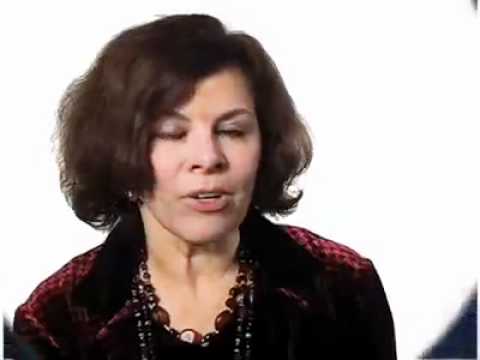
Ben Heineman, Jr.:
From 1987-2003, Mr. Heineman was the Senior Vice President-General Counsel for General Electric. He then served as Senior Vice President for Law and Public Affairs until his retirement at the end of 2005. Mr. Heineman was responsible for managing a team of 1,100 in-house lawyers in over 100 countries around the world. Under his guidance, GE's legal department became world-renowned for its excellence, not only in legal service, but also for the major role that its attorneys play in business and management.
Prior to joining General Electric, Mr. Heineman was a managing partner at Sidley & Austin, focusing on Supreme Court and test case litigation. Previously, he served as Assistant Secretary for Planning and Evaluation with the US Department of Health, Education, and Welfare under President Carter. Mr. Heineman began his career as a staff attorney for the Center for Law & Social Policy in Washington, D.C., and moved on to become a litigator at Williams & Connolly.
----------------------------------------------------------------------------------
TRANSCRIPT:
Question: What was one of the most difficult days at GE?
Ben Heineman: One of the most difficult days was a Sunday in the early 90's when I got a call saying that the Israeli press had a story that the head of procurement for the Israeli Air Force, a General, a former fighter pilot/hero/general, and our foreign sales manager in Israel had a joint bank account in Switzerland with about $8 million in it, which suggested there was some embezzlement and fraud going on. It turned into a very large scandal. So that day, when I got the phone call on a Sunday, I knew that we were in for a long journey as we tried to investigate discipline, change the processes and systems and then go to the government and work what turned out to be, because it was a very serious case, both a civil resolution with the SEC and a criminal resolution with the Justice Department.
As leaders, our job is not to deny the facts; our job is to file the facts. So, the first thing we did was create both an inside and outside investigative team and when we got into it, we discovered that certain people in the company had done bad things. Rather than put our head in the sand, we had to confront those directly and deal with them. And I'd like to think that we did.
Question: How did you communicate the crisis to the public?
Ben Heineman: Well, we first had to investigate and we had to work things out with the government. But once that happened, we made this showcase in the company about candor, about how things can go wrong and about what the consequences were.
Let me give you two ways in which that happened. It’s a good question because the communication of these things is often as important as the resolution of them.
One way we communicated when it was all over was that Jack Welch at the time, asked me to present this case at the annual meeting of the senior managers of the company. I have spoken to groups many times in my life, I've never been in front of a group that was a quiet as this because what happened was the senior manager in the military engines business was fired. So, the senior managers were tremendously attendant to what I was saying. So, that's one way of communicating, explaining what happened, how we fixed it, what went wrong to the senior managers.
A different way we did it was that we developed a training film that was shown to every single employee when they started. We are fortunate in that a part of GE is NBC. So we had a NBC crew do a short video on integrity with Ann Curry, who was then and I think still is the News Reader on The Today "Show." Presented a very high production value and we began with the Israeli case explaining what went wrong. And what I thought was good about the film, which I obviously had a lot to do with was we didn't dwell on our virtues, we dwelled on our problems. And that created a sense among the employees that we were serious about this, that we were candid, that we were talking about things that were going wrong, that were ugly, that were messy. That training film, which actually won some awards, was remarkably effective in dealing with the situation and talking about it candidly.
Recorded on November 3, 2009
Sentinel Indexing in Progress
Metadata and chapters are available. Claim extraction for this episode is pending.
All video content is delivered via YouTube embedded players in accordance with the YouTube Terms of Service. Sentinel provides research tools that promote discovery and accountability across political media.