Big Think
@bigthink·8.8M subscribers·10.1K videos
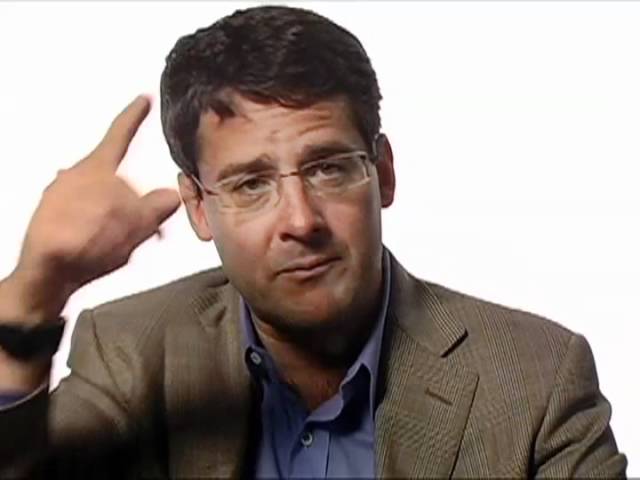
Timberland's CEO: "The Status Quo Sucks" Jeffrey Swartz | Big Think
Posted
April 24, 2012
Views
2,935
Likes
7
Comments
4
Engagement
0.37%
April 24, 2012
2,935
7
4
0.37%
Every word spoken in this episode is indexed. Type any phrase to jump straight to the moment it was said.
Type any word or phrase that may have been spoken. Click a result to seek the player to that exact moment.
Try a name, a topic, or a quoted line
Episode Timeline
Every episode in order around the one you’re watching — click any card and the page flips straight to it.
 5:13Now Playing
Timberland's CEO: "The Status Quo Sucks"
New videos DAILY
Join Big Think Edge for exclusive videos
----------------------------------------------------------------------------------
Jeff Swartz thinks banning bottled water at his company shows employees that something big is coming.
----------------------------------------------------------------------------------
Jeffrey Swartz:
Jeffrey Swartz has been Timberland's President and Chief Executive Officer since June 1998. Jeffrey Swartz is the son of Sidney Swartz. Jeffrey Swartz serves as a director of Limited Brands Inc., a publicly traded specialty retailer of women's intimate apparel, beauty and personal care products and accessories.
----------------------------------------------------------------------------------
TRANSCRIPT:
Question: How important is sustainability in business?
Jeff Swartz: I guess it depends what the stakeholders’ point of view is. If you’re an employee sustainable means that they will be humble and powerful and excellent and they’ll adapt and I’ll keep my job and I’ll build a career and I can count on that, not count on that as Japanese, but count on that as long as I do my part in this relationship they’ll do theirs.
Unsustainable is let’s get excited about some really bad idea. Let’s convince ourselves we’re right. Let’s not listen. Let’s power down the path and let’s fire you for my decision. That’s not sustainable and so if you’re an employee as a stakeholder sustainable is better than not. If you’re a consumer sustainable is important both from a product perspective and from an environmental perspective. If you’re a shareholder I don’t know about that to tell you the truth because despite all the conversation with social responsibility investment it doesn’t show up from my perspective and so most of our shareholders are predicated on knowing when it is no longer sustainable. Most of the people who do business in Timberland stock or anybody’s stock do it on the basis of I buy it before you know what it’s worth and I sell it before you know what it’s worth and so it’s absolutely not a sustainable notion. What is sustainable there is I know something you don’t know. I have an insight you don’t have and so if Timberland is consistent and predictable that is… That takes the fun out of it for the folks that invest in turning over their positions. So with the exception of the shareholder on the level of financial results sustainable seems to me and all win, no loss proposition.
Well the way the shareholder values sustainable is if we can generate a return for it, so if we can create a culture where the men and women who are Timberland are committed to it, not just in loyal terms, but in engagement terms, we’ll be more innovative than our competitors. If we can create products that are more innovative than our competitors and find ways through different media strategies, which is innovative again, to make the consumer care about Earthkeeper Footwear from Timberland then we’ll outsell our competitors and then our shareholders will say sustainable is interesting to us in so far as it generates superior returns. I don’t believe that the enlightened shareholders at hand yet. The enlightened consumer is much closer to hand than enlightened shareholder and so my view of that is… Bill Clinton said this once. He said, “The world is made of yes, no and maybe, spend just the minimum amount of time with yes you need to feel reinforced, ignore no and focus everything on maybe.” And so if the shareholders’ view is like whatever then my view is fight for the consumer. The conversation is if I can convince you that Mountain Athletic, lighter faster, further, sexier and green is a unique proposition and you will buy our trail running shoes, not North Face’s the shareholder will think whatever you’re doing you keep doing it and I sound borderline cynical there. I’m surely skeptical. I think the shareholder is going to get… The shareholders should have woken up by now, but they haven’t.
Topic: Getting rid of bottled water at Timberland
Jeff Swartz: I saw something on Twitter about bottled water or something like that and our team made the mistake of letting me do Twitter and so I can like get around my handlers and so I just blasted a note that said I’m getting rid of bottled water. I can’t solve the world’s… universe’s problems right this minute, but it makes no sense for our employees to be buying bottled water and no, it’s not big brother. It’s none of that crap. I’m just telling you I can give our employees a raise by banning bottled water and so I thought that would be cool and it would be hip and my kids would be impressed. None of it worked. It was like,
Read the full transcript at
Sentinel Indexing in Progress
Metadata and chapters are available. Claim extraction for this episode is pending.
All video content is delivered via YouTube embedded players in accordance with the YouTube Terms of Service. Sentinel provides research tools that promote discovery and accountability across political media.