Big Think
@bigthink·8.8M subscribers·10.1K videos
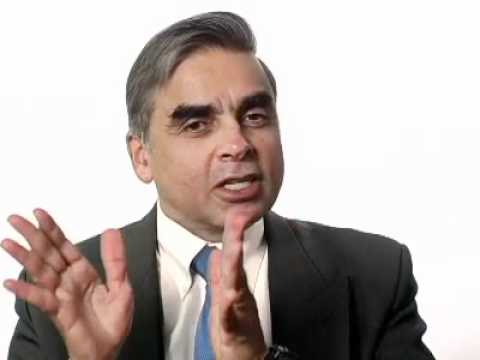
Tommy Thompson on the State Children's Health Insurance Program | Tommy Thompson | Big Think
Posted
April 24, 2012
Views
517
Likes
2
Engagement
0.39%
April 24, 2012
517
2
0.39%
Every word spoken in this episode is indexed. Type any phrase to jump straight to the moment it was said.
Type any word or phrase that may have been spoken. Click a result to seek the player to that exact moment.
Try a name, a topic, or a quoted line
 3:47Now Playing
Tommy Thompson on the State Children's Health Insurance Program
New videos DAILY
Join Big Think Edge for exclusive videos
----------------------------------------------------------------------------------
Likening Medicare reform to base closings, Tommy Thompson sees a tough road ahead.
----------------------------------------------------------------------------------
Tommy Thompson:
From 1987 to 2001, Tommy Thompson served as the 42nd Governor of Wisconsin, having been elected to an unprecedented four terms. Thompson's initiatives during his 13 years as governor of Wisconsin included his Wisconsin Works welfare reform program and school choice program, which allowed low-income Milwaukee families to send children to the private or public school of their choice at taxpayer expense. He also created the BadgerCare program, designed to provide health coverage to those families whose employers don't provide health insurance but make too much money to qualify for Medicaid. Through the federal waiver program, Thompson helped replicate this program in several states when he was appointed Secretary of Health and Human Services by President George W. H. Bush in 2001, a position he would hold for four years. Thompson began his career in public service in 1966 as a representative in Wisconsin's state Assembly. He was elected assistant Assembly minority leader in 1973 and Assembly minority leader in 1981. Thompson has received numerous awards for his public service, including the Anti-Defamation League's Distinguished Public Service Award. In 1997, he received Governing Magazine's Public Official of the Year Award, and the Horatio Alger Award in 1998. Thompson has also served as chairman of the National Governors' Association, the Education Commission of the States and the Midwestern Governors' Conference. Thompson also served in the Wisconsin National Guard and the Army Reserve. Currently, he is an independent senior advisor of the Deloitte Center for Health Solutions and a partner at the law firm of Akin Gump Strauss Hauer & Feld.
----------------------------------------------------------------------------------
TRANSCRIPT:
Topic: Tommy Thompson on the State Children's Health Insurance Program
Tommy Thompson: Medicare is going to be extremely difficult to fix and there are real partisan differences on how to fix Medicare. But when you look at a system that’s going broke that is cost about $450 billion a year and going up about 10% a year, you got to realize that there has to be some really tough decisions making. And so, on that one, I would set up a base closing commission, and what I mean by that is the way we close military bases in America, we have an equal number of Republicans and equal number of Democrats sitting down and saying this base can be closed, because if you leave it up to Congress, no Congressman will ever vote for a base to be closed. But if you have a commission and you can only vote it up or down, you’re able to succeed. And so on Medicare, I would do the same thing, I would put a Medicare base closing commission together which is going to make the tough decisions such as age, such as taxes, such as when you’re on your death bed, what sort of treatments do you get, and when you get in the last 12 months of your life where 30% of the cost of Medicare dollars are expended. And these are tough decision no Republican or Democrat will make those kinds of decision, but if you have a base closing commission in which you got in front of you is a list of things that have to be done and you can only vote it up or down, we have a chance to save Medicare. The second thing you have to do is you have to fix SCHIP. This is the program for poor children and you got to be able to put together a bipartisan support on SCHIP and I think that’s imminently doable. And the third thing you have to do is you have to fix what we call the reimbursement formula for doctors. It has been postponed now for five years, and every year that it’s postponed, it’s causing more money and that’s got to be fixed. And then number 4, we got to do something about Information Technology and have national standards for an electronic medical record and put the cost to credits in there that’s going to be the inducement for doctors to use electronic medical records and actually prescribe using a computer instead of handwriting. I make the joke that doctors have to get straight A’s to get into medical school except for one grade and that’s handwriting, and their handwriting hasn’t improved at all in the last 50 years.
Read the full transcript at
Sentinel Indexing in Progress
Metadata and chapters are available. Claim extraction for this episode is pending.
All video content is delivered via YouTube embedded players in accordance with the YouTube Terms of Service. Sentinel provides research tools that promote discovery and accountability across political media.