Big Think
@bigthink·8.8M subscribers·10.1K videos
Unique Choreography | Big Think
Posted
April 24, 2012
Views
395
Likes
5
Engagement
1.27%
April 24, 2012
395
5
1.27%
Every word spoken in this episode is indexed. Type any phrase to jump straight to the moment it was said.
Type any word or phrase that may have been spoken. Click a result to seek the player to that exact moment.
Try a name, a topic, or a quoted line
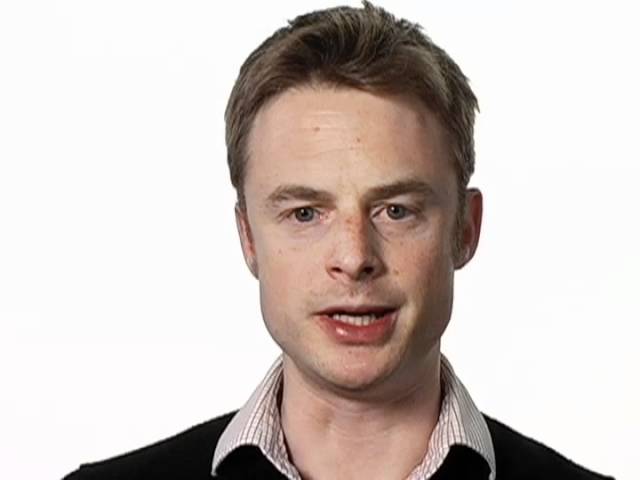 3:29Now Playing
Unique Choreography
New videos DAILY
Join Big Think Edge for exclusive videos
----------------------------------------------------------------------------------
“Dance is a Universal Form of Communication,” says Christopher Wheeldon
----------------------------------------------------------------------------------
Christopher Wheeldon:
Internationally acclaimed choreographer Christopher Wheeldon is Artistic Director and Co-Founder of Morphoses/The Wheeldon Company. A former dancer with The Royal Ballet and soloist with New York City Ballet (where he served as Resident Choreographer from 2001 to 2008), Wheeldon founded Morphoses in 2007 with the goal of introducing a new spirit of innovation to classical ballet by fostering collaboration among choreographers, dancers, visual artists, designers, composers, and others who can bring new life and perspective to ballet.
Born in Yeovil, Somerset, England, Wheeldon began his ballet training at eight years old and began studying at The Royal Ballet School at eleven. Wheeldon joined The Royal Ballet in 1991 and won the Gold Medal at the Prix de Lausanne competition that year. In 1993, Wheeldon was invited to become a member of New York City Ballet, where he was promoted to soloist in 1998. Wheeldon choreographed his first work for NYCB, Slavonic Dances, for the 1997 Diamond Project and, in collaboration with artist Ian Falconer, created Scènes de Ballet for the School of American Ballet's 1999 Workshop Performances and NYCB's 50th anniversary season.
Wheeldon was the recipient of the Dance Magazine Award and the London Critics' Circle Award for Best New Ballet for Polyphonia in 2005; a performance of the work by NYCB dancers received the Olivier Award. In 2006, DGV (Danse à Grande Vitesse) was nominated for an Olivier Award. Additional honors include the Martin E. Segal Award from Lincoln Center and the American Choreography Award.
----------------------------------------------------------------------------------
TRANSCRIPT:
Question: Why are you so passionate about dance?
Wheeldon: Dance is a universal form of communication, and it doesn’t matter what language you speak. Everyone kind of understands certain aspects of movement. I think for me, I grew up in a sort of theatrical family, so I was definitely headed for the theater, and I started taking ballet classes when I was pretty young. I was seven years old, and I saw it on TV, and it just appealed to me. I don’t really know why. I guess I liked the costumes, and it was actually a ballet that had chickens in it, so I remember, “Oh, maybe it would be cool to be a chicken.” That’s kind of a strange thing, I know. And it’s an amazing thing to be able to hear music and kind of, I guess, be able to translate that music through physicality, and then somehow make that translation seem resonant to a viewer, to an audience member, and that’s kind of what drove me from becoming a dancer to becoming a choreographer. That sort of desire to somehow move people or transport them somewhere through this, you know, fantastic, unspoken art form. I describe sometimes choreography like a way of visualizing or painting music for an audience. Quite often you can take a really complex piece of music that you might sit down at home or, you know, turn on the radio and hear as being very sort of rhythmically complex or atonal, or not particularly attractive to the ear, and you take a piece like that, and you start to sort of sculpt it using bodies, and it can become really accessible to an audience that way.
Question: How is your process unique?
Wheeldon: I don’t really use my choreography to sort of announce any kind of political agenda, or, you know, what I do is really try to create escapes for people, to create a world that can be challenging in whatever way, but ultimately is kind of beauty through movement and music. I guess my process, some choreographers like to work on themselves. You know, they go into a room, and with a particular idea and some music, and they work on the material on steps, on their own bodies, and then call dancers at a later date, and kind of work with them, and shape it onto them. I prefer to do it directly onto the dancers themselves. I find kind of standing in the room staring at myself in the mirror pretty uninspiring, whereas if I’ve got two really beautiful people, or four, or six, or eight really beautiful people that often my interaction with them is the starting point, or the catalyst for, you know, how the work develops.
Sentinel Indexing in Progress
Metadata and chapters are available. Claim extraction for this episode is pending.
All video content is delivered via YouTube embedded players in accordance with the YouTube Terms of Service. Sentinel provides research tools that promote discovery and accountability across political media.