Big Think
@bigthink·8.8M subscribers·10.1K videos
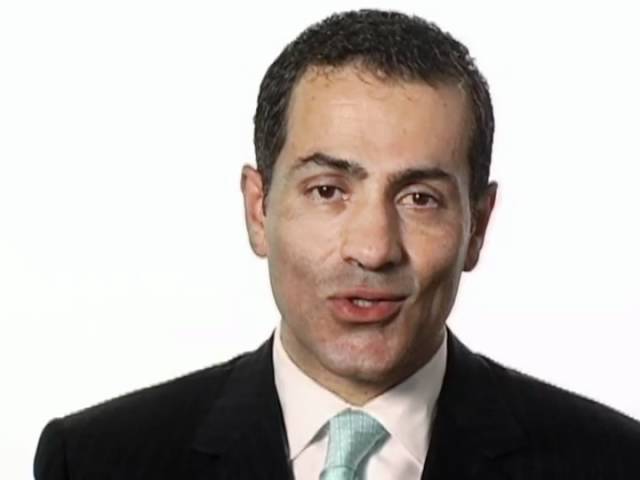
Vali Nasr: Is there a place for religion in politics? | Big Think
Posted
April 24, 2012
Views
1,731
Likes
30
Comments
3
Engagement
1.91%
April 24, 2012
1,731
30
3
1.91%
Every word spoken in this episode is indexed. Type any phrase to jump straight to the moment it was said.
Type any word or phrase that may have been spoken. Click a result to seek the player to that exact moment.
Try a name, a topic, or a quoted line
Episode Timeline
Every episode in order around the one you’re watching — click any card and the page flips straight to it.
 3:35Now Playing
Vali Nasr: Is there a place for religion in politics?
New videos DAILY
Join Big Think Edge for exclusive videos
----------------------------------------------------------------------------------
“There is a big difference about American secularism or European secularism.”
----------------------------------------------------------------------------------
Vali Nasr:
Vali Nasr is an Iranian-American political commentator and scholar of contemporary Islam. Born in Iran, Nasr and his family immigrated to the United States following the 1979 Islamic Revolution. Nasr received a BA from Tufts University in 1981 and a masters from the Fletcher School of Law and Diplomacy in 1984. He earned his PhD from MIT in political science in 1991.
Known for his view that wars within Islam will shape the future, Nasr has testified before Congress and has advised the President and Vice-President regarding sectarian violence in Iraq. Nasr is the author The Shia Revival, Democracy in Iran, and The Islamic Leviathan.
He has taught at the University of San Diego and the Naval Postgraduate School, and is currently a Senior Fellow at the Belfer Center at Harvard and Professor of International Politics at Tufts. A Life Member of the Council on Foreign Relations, Nasr has been published in Foreign Affairs, The New Republic, Foreign Policy, Time, the New York Times, and the Washington Post, among others. He is an editor of the Oxford Dictionary of Islam and has appeared on CNN, the BBC, National Public Radio, and not least of all The Daily Show with Jon Stewart and The Colbert Report.
----------------------------------------------------------------------------------
TRANSCRIPT:
Question: Is there a place for religion in politics?
Vali Nasr: First of all I think there is a big difference about American secularism or European secularism.
American definition of secularism is not that they expect religion to die, or to rid people to be personally secular. But that there’s a belief that there should be an observation of separation of church and state into equal domains; that religion ought to be protected from politics, and politics ought to be protected from religion.
In Europe it’s a very different definition. Secularism, first of all, means that state will rule over religion. It will control religion. It will appoint its clergy. It will control the revenues. It will control the institutions, etc. It will legislate for religious activity.
But also in Europe it goes beyond just separation. There’s an expectation that God would not exist in society; that religion would be a matter of very strictly private practice, and people’s religious views would be private to them. And on top of it, that religion itself actually would reform in a manner to secularize from within. So some strands of Protestantism, reformed Judaism, or the Vatican to reforms in the Catholic Church, were all sort of reflections of this kind of pressure.
Now the question is, which one are we talking about in the Muslims? And I don’t think Americans are clear. It looks to Muslims that the Americans are not asking for a separation of church and state. They’re asking Muslims to be more secular personally than Americans are, and that’s part of the whole problem.
This might be a misperception, but Muslims say who are the favorite Muslim thinkers of Americans? It’s always somebody who’s talking about reforming Islam. Or now it is somebody who is actually a Muslim who is anti-Muslim. That tends to be the most popular books.
And also the perception that America actually wants to “destroy” Islam is more than destroying Islamic institutions or Islamic power. It also is a perception that what America really wants from Muslims is not to believe in Islam; that a good Muslim is one that doesn’t believe in Islam.
This has to do with a perception that the West really believes that the problem is not just separation of institutions of church and state, but Islam as a religion is a problem. It’s pro-jihadist extremist. It’s anti-democratic. It’s misogynist, etc. And therefore Muslims should really stop being Muslims.
I think the whole discourse about what is it that we mean by secularism in the Muslim world has been itself extremely corrosive to U.S. relations in the Muslim world. And partly because it’s not properly defined in America as to what it is that we mean by secularism.
Sentinel Indexing in Progress
Metadata and chapters are available. Claim extraction for this episode is pending.
All video content is delivered via YouTube embedded players in accordance with the YouTube Terms of Service. Sentinel provides research tools that promote discovery and accountability across political media.