Big Think
@bigthink·8.8M subscribers·10.1K videos
Vali Nasr: What is the nature of the Iranian threat? | Big Think
Posted
April 24, 2012
Views
2,943
Likes
28
Comments
2
Engagement
1.02%
April 24, 2012
2,943
28
2
1.02%
Every word spoken in this episode is indexed. Type any phrase to jump straight to the moment it was said.
Type any word or phrase that may have been spoken. Click a result to seek the player to that exact moment.
Try a name, a topic, or a quoted line
See what was published immediately before and after this episode.
 8:54Now Playing
Vali Nasr: What is the nature of the Iranian threat?
New videos DAILY
Join Big Think Edge for exclusive videos
----------------------------------------------------------------------------------
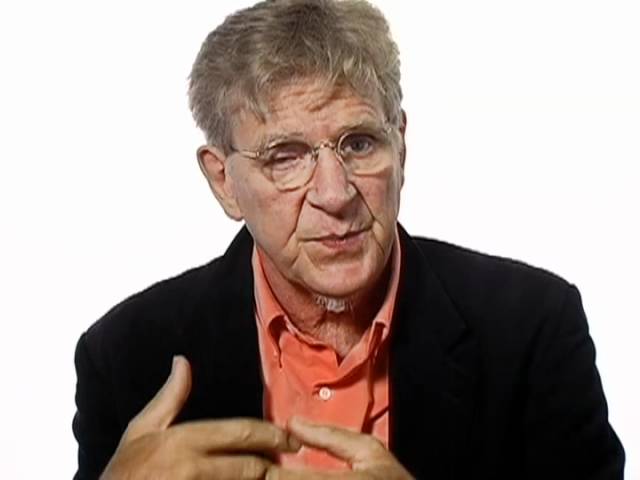
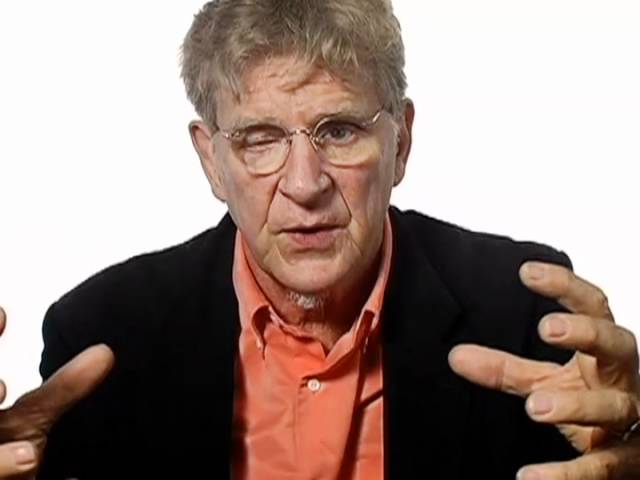
Iran has emerged, Nasr says, as a great power in the region.
----------------------------------------------------------------------------------
Vali Nasr:
Vali Nasr is an Iranian-American political commentator and scholar of contemporary Islam. Born in Iran, Nasr and his family immigrated to the United States following the 1979 Islamic Revolution. Nasr received a BA from Tufts University in 1981 and a masters from the Fletcher School of Law and Diplomacy in 1984. He earned his PhD from MIT in political science in 1991.
Known for his view that wars within Islam will shape the future, Nasr has testified before Congress and has advised the President and Vice-President regarding sectarian violence in Iraq. Nasr is the author The Shia Revival, Democracy in Iran, and The Islamic Leviathan.
He has taught at the University of San Diego and the Naval Postgraduate School, and is currently a Senior Fellow at the Belfer Center at Harvard and Professor of International Politics at Tufts. A Life Member of the Council on Foreign Relations, Nasr has been published in Foreign Affairs, The New Republic, Foreign Policy, Time, the New York Times, and the Washington Post, among others. He is an editor of the Oxford Dictionary of Islam and has appeared on CNN, the BBC, National Public Radio, and not least of all The Daily Show with Jon Stewart and The Colbert Report.
----------------------------------------------------------------------------------
TRANSCRIPT:
Vali Nasr: Well what happened in the past five, six years is that all the wars and changes in the Middle East actually strengthened Iran’s position. Iran has sort of emerged, if you would, as a great power in the region.
Now there are many people who say that’s not really true. This is nothing that Iran did that gave it this status. It actually is a weak country. It has a weak economy. It has a divided society.
All of that might be true, but it takes 10 minutes being in the Middle East to know that the Iranians think they are a great power, and the Arabs around them think they are a great power.
And a lot of politics is about perception. The perception in the region is that the glass is half full for Iran; it’s half empty for the Arab world.
But compared to 2001 or 2002, Iran’s influence in the region has expanded, and the influence of the Arab world has declined; that Iran militarily feels that it has much more elbow room if the U.S. wasn’t there. The Arab countries now feel vulnerable that Iran has effectively penetrated the Arab world. It controls Southern Iraq. It wields a lot of influence in Iraq.
Iran is big player now in Lebanon, much more so than before 2006.
And look, the Palestinians are now completely divided into two territories. And guess what? The Arab governments are only influential in one territory, and the Iranians are influential in the other one. Iran has a lot more influence than it had in the past. It has much more capability than it had in the past.
The other issues are really a reaction of a reflection of this. In other words, the sectarian issues are becoming more important because it falls right in the middle of an Iranian-Arab rivalry. The language of the Arabs in the region is anti-Iran, anti-Shiia. And so long as the Iranians and the Arabs are in this rivalry, the Iranians are Shiias; most of the Arabs are Sunni. Sectarianism is an issue. Relations is an issue. Nationalism becomes very important.
The other issue is even the Palestinian issue has become now a political football between Arabs and Iranians. I mean, people argue that the whole purpose for an Annapolis Conference and a new peace effort was to create a united Arab front against Iran. So Iran was really the ulterior motive; the bigger fish in the picture.
Now for everybody in the region, Iran poses a challenge. For the Arab countries, this is classical balance of power issue. It’s not necessarily just about the Iranian regime. It’s a country of 70 million people; very wealthy, very large, very nationalistic with imperial ambitions going back.
It now feels that it’s being let loose in the Persian Gulf. And any country – whether it’s Egypt, Saudi Arabia – any country reacts to a relative loss of power with anxiety.
So everybody looks and says, “Can we go back to re-balancing Iran?” That’s a natural reaction.
Read the full transcript at
Sentinel Indexing in Progress
Metadata and chapters are available. Claim extraction for this episode is pending.
All video content is delivered via YouTube embedded players in accordance with the YouTube Terms of Service. Sentinel provides research tools that promote discovery and accountability across political media.