Big Think
@bigthink·8.8M subscribers·10.1K videos
Venture Philanthropy | Mark Kramer | Big Think
Posted
April 24, 2012
Views
1,873
Likes
14
Comments
1
Engagement
0.80%
April 24, 2012
1,873
14
1
0.80%
Every word spoken in this episode is indexed. Type any phrase to jump straight to the moment it was said.
Type any word or phrase that may have been spoken. Click a result to seek the player to that exact moment.
Try a name, a topic, or a quoted line
 7:22Now Playing
Venture Philanthropy
New videos DAILY
Join Big Think Edge for exclusive videos
----------------------------------------------------------------------------------
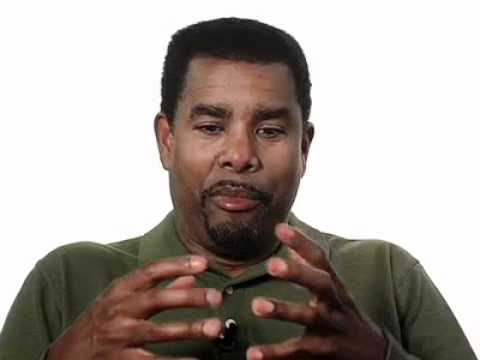
Mark Kramer on the future of philanthropy and social entrepreneurship.
----------------------------------------------------------------------------------
Mark Kramer:
Mark Kramer is the founder and managing director of FSG Social Impact Advisors, a non-profit organization that works with other companies "to accelerate the pace of social progress." He is also a Senior Fellow in the Corporate Social Responsibility Initiative of the Mossavar-Rahmani Center for Business in Government at Harvard's Kennedy School of Government. He has written many articles on philanthropy for Harvard Business Review. Kramer matriculated at Brandeis University for his bachelor's degree; he received his M.B.A. from The Wharton School and his J.D. from the University of Pennsylvania. He thinks the bifurcation between non-profit and for-profit companies is crumbling.
----------------------------------------------------------------------------------
TRANSCRIPT:
Question: What’s next?
Mark Kramer: There’s a new type of entity that was just adopted in Vermont and North Carolina called an L3C which is a low-profit corporation, which is a way of incorporating in the United Sates with a combined social mission in a for-profit entity. It’s brand new, it’s just in the last month or so that it was passed. I don’t know that there are any of them out there yet. It’ll be interesting to see what develops. It’s really hard, I have to say, to balance a profit motive and a social objective but we do see that it’s possible and that it can be aligned. Actually, I’m beginning to believe that the difference between the for-profit sector and nonprofit sector may begin to blur over time.
We grew up as a generation thinking that business makes money, doesn’t worry about social issues; nonprofits solve social issues, don’t try and make money. But in fact, we see companies like GE saying our growth with eco-imagination is going to be in solving social problems. We see companies like Whole Foods saying we can differentiate ourselves from grocery stores by offering healthier products. Then we see nonprofit or social enterprises like Waste Concern building a significant scale international business, solving huge humanitarian buildings. So this line between the two I really believe is beginning to blur.
Topic: Social entrepreneurs
Mark Kramer: I think there is a core of people really in the social entrepreneurship movement and in some ways it grows out of the venture philanthropy movement in the United States. They’re folks like Mario Marino and Paul Schumacher who I think of as leaders in the venture philanthropy movement in the US. Certainly Muhammad Unis, you mentioned, leader in micro finance and Accion and other major micro finance companies, which incidentally is an interesting story in itself of a successful business enterprise. I’ll digress for a moment but it’s a really interesting story.
Accion helped start a nonprofit bank in Mexico called Compartmentos and it was doing micro finance loans, very poor people, very small amounts. About six years ago, they decided to convert to a for-profit bank in order to be able to offer a wider range of services and they raised about $6 million of capital to do it. They grew very rapidly and they went public about a year ago and they went public with a $3 billion capitalization. Accion, the nonprofit, made about $300 million on its investment and a lot of the employees of this bank made a lot of money.
The reason they were so profitable is they had a 50% return on equity and the reason they had a 50% return equity is the interest rate they were charging on their micro finance loans was somewhere around 80% a year. It’s a really interesting ethical question. They say this is lower than what people could borrow at elsewhere and by showing how profitable it is to make money available to the poor, we’re going to create a huge industry here. Lots of other players will come in.
The profit margins will go down with competition but will build a huge industry. Others and really Muhammad Unis take a very different point of view and says we should be charging the least amount we need to charge to cover our costs. But it’s hard to tell which is the right answer here. Again, I think that gets to some of the dilemmas of trying to balance a social mission with a for-profit enterprise.
Topic: The GE case study
Read the full transcript at
Sentinel Indexing in Progress
Metadata and chapters are available. Claim extraction for this episode is pending.
All video content is delivered via YouTube embedded players in accordance with the YouTube Terms of Service. Sentinel provides research tools that promote discovery and accountability across political media.