Big Think
@bigthink·8.8M subscribers·10.1K videos
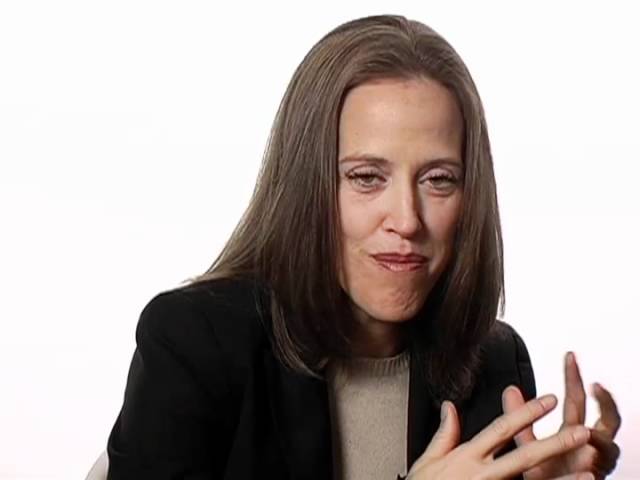
Wendy Kopp on Education Policy | Big Think
Posted
April 24, 2012
Views
519
Likes
3
Engagement
0.58%
April 24, 2012
519
3
0.58%
Every word spoken in this episode is indexed. Type any phrase to jump straight to the moment it was said.
Type any word or phrase that may have been spoken. Click a result to seek the player to that exact moment.
Try a name, a topic, or a quoted line
See what was published immediately before and after this episode.
 7:56Now Playing
Wendy Kopp on Education Policy
New videos DAILY
Join Big Think Edge for exclusive videos
----------------------------------------------------------------------------------
The founder of Teach For America talks about the importance of local leadership for implementing government directives.
----------------------------------------------------------------------------------
Wendy Kopp:
Wendy Kopp proposed the creation of Teach For America in her undergraduate senior thesis in 1989 and has spent the last 19 years working to sustain and grow the organization. In the 2008-2009 school year, more than 6,200 corps members are teaching in our country's neediest communities, reaching approximately 400,000 students. They join more than 14,000 Teach For America alumni who—still in their 20s and 30s—are already assuming significant leadership roles in education and social reform. Under Kopp's leadership, Teach For America is in the midst of an effort to grow to scale while maximizing the impact of corps members and alumni as a force for short- and long-term change. Kopp also serves as the chief executive of Teach For All, which is supporting the development of Teach For America's model in other countries. She is the author of One Day, All Children: The Unlikely Triumph of Teach For America and What I Learned Along the Way, and holds a bachelor's degree from Princeton University, where she participated in the undergraduate program of the Woodrow Wilson School of Public and International Affairs.
----------------------------------------------------------------------------------
TRANSCRIPT:
Question: What is your Education Action Plan?
Kopp: Well, the first thing I would say is that, I guess, we’ve come to think that, you know, the reason we have educational inequity is it’s a function of many things working together, you know? It’s a function of the fact that the kids in low income communities are facing huge extra challenges that kids in other communities simply aren’t facing, just as a function of growing up in poverty, largely, you know, the kids we’re serving are kids of color who face all sorts of other challenges as a function of societal discrimination, etc. And then, they’re showing up at schools and school systems that arguably have not historically have the mission and certainly don’t have the resources and the capacity to take kids who face extra challenges and actually put them on a level playing field. So… And why do we have all of that? Because of, you know, our policies and practices, and really the prevailing ideology of our country. So, as we step back and think about, okay, so how do we solve the problem? We think, well, you know, on the one hand, we need to do a lot to take some of the pressure off of schools, you know. If we can improve the quality of, you know, economies in urban and rural areas and the quality of social services and health services and such, you know, we can do a lot to make our work easier. At the same time, what the teachers have been talking about and the school leaders are showing us is that even as our socio-economic disparities persist, it’s within our power as a society to build the capacity within our schools and school systems to actually take kids who face extra challenges and truly put them on a level playing field, and I guess what we’ve come to see over time is that, you know, as I said before, there’s nothing magical or elusive about it, right? Like if you go into one of these very high performing schools and ask the person running the school, “What’s going on here? How are you all…?” I mean, you know, I think about a guy named Chris Barbick who had started a now collection of schools in Houston, Texas. You know, 7% of the kids in this low income community in Houston actually graduate from college and the kids who go to Chris’ middle school, which turns into a high school, 90% of them graduate from college, so you just think, okay. There’s something different going on in this school. What is it? And if you ask Chris, he would say, “Nothing magical,” you know? And you think, “What?” But, no, it’s true. There’s the school leader who deeply knows that the kids he’s working with have every bit as much potential as the kids in, you know, River Oaks, which is the kind of wealthier community in Houston, and absolutely could graduate from college and have a world of opportunities open to them. He has attracted teachers at every level of his school who deeply believe the same thing and are willing to do whatever it takes to ensure that their kids fulfill their potential. He’s built an incredibly powerful culture in his school, a culture of achievement,
Read the full transcript at
Sentinel Indexing in Progress
Metadata and chapters are available. Claim extraction for this episode is pending.
All video content is delivered via YouTube embedded players in accordance with the YouTube Terms of Service. Sentinel provides research tools that promote discovery and accountability across political media.