Big Think
@bigthink·8.8M subscribers·10.1K videos
What is America's biggest challenge?
Posted
April 24, 2012
Views
213
Likes
3
Comments
1
Engagement
1.88%
April 24, 2012
213
3
1
1.88%
Every word spoken in this episode is indexed. Type any phrase to jump straight to the moment it was said.
Type any word or phrase that may have been spoken. Click a result to seek the player to that exact moment.
Try a name, a topic, or a quoted line
 1:38Now Playing
New videos DAILY
Join Big Think Edge for exclusive video lessons from top thinkers and doers
----------------------------------------------------------------------------------
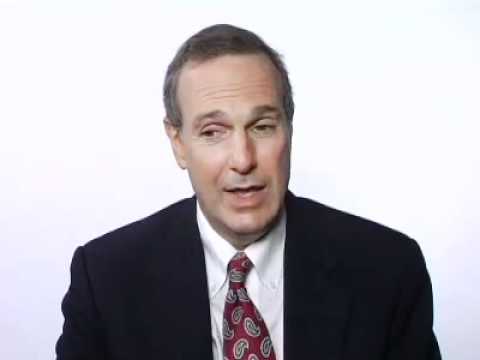
America seems to have forgotten a crucial fact about war: the human toll on both sides. William Ruger, Vice President for Research and Policy, Charles Koch Foundation, asserts that it would be naive to think that there is never an appropriate time for war—WWII demanded it, for example—but America's wars in recent decades appear to lack objectives, or at least objectives that are suitable to the amount of lives, funding, and global upheaval that these wars have cost. The U.S. can engage with the world without the military, says Ruger—spreading democracy is not a divine mission. Instead, let's trade, practice diplomacy, exchange the best of our culture, and most of all be humble on the world stage. The Charles Koch Foundation aims to further understanding of how US foreign policy affects American people and societal well-being. Through grants, events, and collaborative partnerships, the Foundation is working to stretch the boundaries of foreign policy research and debate by discussing ideas in strategy, trade, and diplomacy that often go unheeded in the US capital. For more information, visit charleskochfoundation.org.
----------------------------------------------------------------------------------
WILLIAM RUGER
Dr. William Ruger serves as the Vice President for Research and Policy at the Charles Koch Institute and the Vice President for Research at the Charles Koch Foundation. Before coming to CKI and CKF, he was most recently an Associate Professor in the Department of Political Science at Texas State University and an Adjunct Assistant Professor at the LBJ School of Public Affairs at the University of Texas-Austin.
He earned his Ph.D. in Politics from Brandeis University and an A.B. from the College of William and Mary. Ruger is the author of a biography titled Milton Friedman and co-author of two books on state politics: The State of Texas: Government, Politics, and Policy and Freedom in the 50 States: An Index of Personal and Economic Freedom. His recent scholarly articles appeared in International Studies Quarterly, Civil Wars, Review of Political Economy, and State Politics and Policy Quarterly.
Ruger has been interviewed frequently for television and radio, including appearances on MSNBC, Fox News, and Fox Business; his op-eds have been published across the country by, among others, USA Today, Investor’s Business Daily, and the New York Daily News. His research has been highlighted or cited by over a hundred news outlets, including ABC News, CNN, NPR, the Wall Street Journal, the Boston Globe, and the New York Post. He is also currently a Research Fellow in Foreign Policy Studies at the Cato Institute. Ruger is a veteran of the Afghanistan War and an officer in the U.S. Navy (Reserve Component).
----------------------------------------------------------------------------------
TRANSCRIPT:
William Ruger: As a realist, I’m not naïve about the world. It can be a dangerous place and that’s one of the reasons why we have to have a strong national defense. And it sometimes means we have to actually use our military power against other countries and other organizations that might threaten us or that have attacked us—that’s the reality of the world.
But we really do need to think about a foreign policy that is careful to focus on our interests and is cognizant of those human costs. And I think that it isn’t being mushy-headed to say: look, there are people—real people—harmed by our activities.
You can think about those soldiers killed overseas. Now it’s one thing if they’re killed in a war like World War II—a war that was necessary for America to fight for its safety against a really bad regime like Nazi Germany—and another thing to think about a situation where we’re trying to engage in regime change against a country that offers very little threat to the United States, and may be a bad regime, like in the case of Saddam Hussein’s Iraq, but a regime that has not directly attacked us and is not necessarily a threat to core American interests. And we need to think hard about what those costs would be in that situation. And the human costs are quite powerful, and we can see that here in America, if you visit a military hospital you can see people who have lost limbs or you could see it in communities where there are people suffering from things like PTSD that are less obvious to the eye.
But you also see it down range and oftentimes we read the newspaper and it says, “three American soldiers killed here or there." But those are people with families that care ab...
For the full transcript, check out
Sentinel Indexing in Progress
Metadata and chapters are available. Claim extraction for this episode is pending.
All video content is delivered via YouTube embedded players in accordance with the YouTube Terms of Service. Sentinel provides research tools that promote discovery and accountability across political media.