Big Think
@bigthink·8.8M subscribers·10.1K videos
What is religion's proper role in government? | Big Think
Posted
April 24, 2012
Views
1,609
Likes
18
Comments
6
Engagement
1.49%
April 24, 2012
1,609
18
6
1.49%
Every word spoken in this episode is indexed. Type any phrase to jump straight to the moment it was said.
Type any word or phrase that may have been spoken. Click a result to seek the player to that exact moment.
Try a name, a topic, or a quoted line
See what was published immediately before and after this episode.
 1:48Now Playing
What is religion's proper role in government?
New videos DAILY
Join Big Think Edge for exclusive videos
----------------------------------------------------------------------------------
Your beliefs will affect your decisions anyway, Warren says.
----------------------------------------------------------------------------------
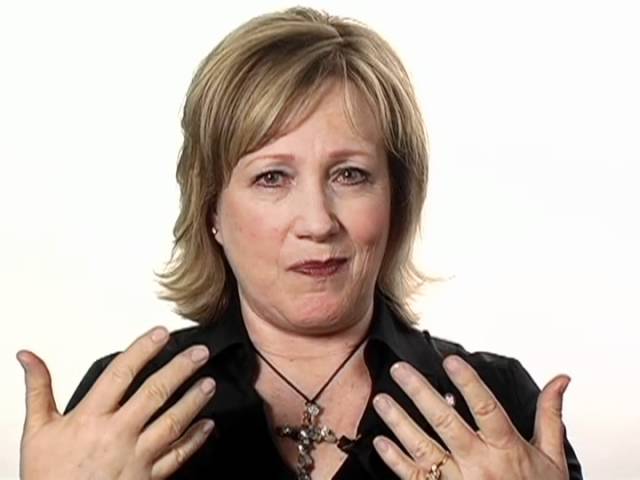
Kay Warren:
Kay Warren is an evangelical leader, author, AIDS activist, and co-founder of Saddleback Church in Southern California. Along with her husband, Rick, Warren founded Saddleback in 1980 with just a single family to fill the pews. Today it has 120-acre campus, 22,000 weekly attendees, and has provided spiritual guidance and source material to over 400,000 ministers worldwide.
In 2002, Warren became "seriously disturbed" by the scope of the AIDS epidemic; she has since set up an AIDS ministry at Saddleback and spoken out about the disease around the world. Warren is the co-founder and co-director (with her husband) of The Global PEACE Fund, which fights poverty, disease, and illiteracy.
Warren has spoken to the United Nations Global Coalition on Women and AIDS. In 2006, Warren was among eight women honored for their humanitarian efforts at the CNN Inspire Summit. Warren is the author of Foundations Participant's Guide and Dangerous Surrender: What Happens When You Say Yes to God.
----------------------------------------------------------------------------------
TRANSCRIPT:
Question: What is religion’s proper role in government?
Warren: I get a little confused when I hear people say, “Well I have religious faith, but it doesn’t have anything to do with my politics.” And I wanna go, “What?” My faith influences everything I do. And I believe if you have a personal faith, whatever it is, to act as though it doesn’t influence your decision-making is very naïve and disingenuous. I realize people are trying to say, “I have faith, but I’m not gonna . . . I’m not gonna let anybody else tell me what to do.” I understand that, but . . . but I think that we have to really just honestly acknowledge that either your faith or your lack of faith, or your beliefs or your lack of beliefs color every decision you make. Your worldview is colored by your beliefs. My beliefs about God – the fact that I believe that God is a creator; my beliefs that . . . that He cares about everybody that He’s made; my beliefs that Jesus is the Savior of the world – those things color and shape every single decision I make. And I think then that politicians are shaped in exactly the same way – by whatever their religious beliefs are. And I don’t know how you can separate those. Neither do I think that . . . As I’ve said, I don’t think it’s the role of government to change culture. I think it’s the role of the church to change culture. So I’m not insisting that a politician have the same necessarily . . . necessarily the same belief system I do. I just want them to acknowledge that their belief system will influence their decisions, whatever that is.
Sentinel Indexing in Progress
Metadata and chapters are available. Claim extraction for this episode is pending.
All video content is delivered via YouTube embedded players in accordance with the YouTube Terms of Service. Sentinel provides research tools that promote discovery and accountability across political media.